

Subscribe To Our Newsletter!
Subscribe to the newsletter to stay up to date with the latest news and most useful
Newsletter
↑
Back to Top



Product Overview |
|---|
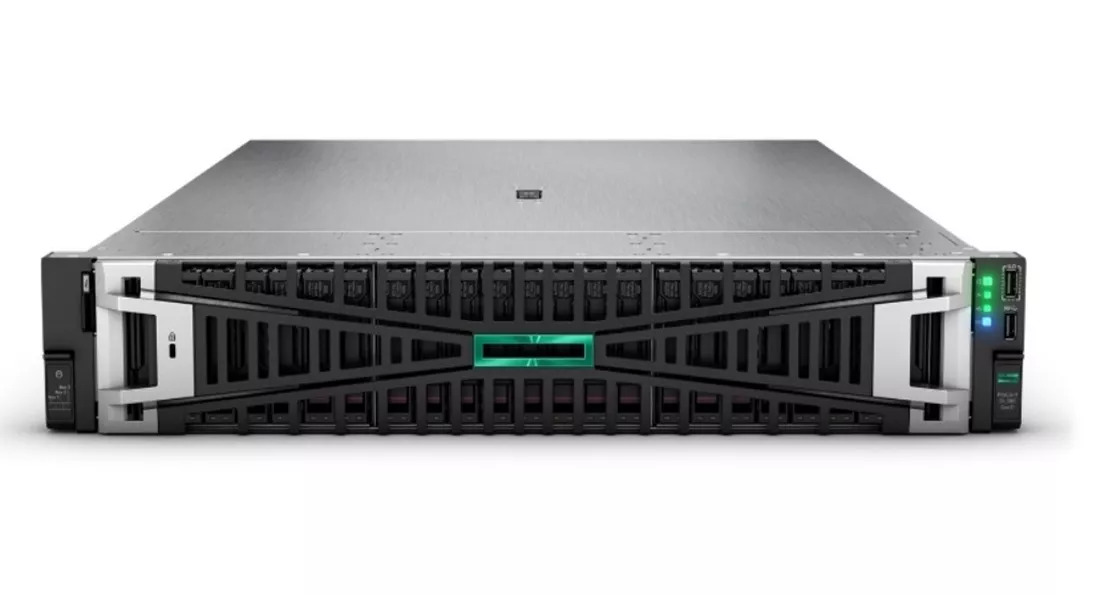
The HP ProLiant DL380 Gen11 combines a high-performance Intel Xeon processor with ample memory and flexible storage options. It fits well in settings where dependable computing power and storage scalability are needed, such as enterprise servers or virtualized environments. |
General Information |
|
|---|---|
| Brand | HPE |
| Part Number | P52564-B21 |
Technical Information |
|
|---|---|
| Memory | 32GB RDIMM ECC (1 x 32GB) |
| Processor | AMD EPYC 5415+ 2.9 GHz, 8-core, single-socket (1P) |
| Storage | HPE Smart Array MR408i-o RAID controller (MR408io); 8 x SFF (2.5") hot-plug drive bays; drives not included |
Physical Characteristics |
|
|---|---|
| Weight | 5.00 |
| Condition | Refurbished |
Product Description |
|---|
The HP ProLiant DL380 Gen11 server is built for enterprise environments requiring robust processing power and scalable storage. Often found in data centers and business-critical applications, it handles demanding workloads with ease. Designed for IT professionals and system administrators, this server supports virtualization, databases, and cloud computing tasks efficiently. Its compact 1-processor setup balances performance and energy use well. Key Features
This model is typically deployed in medium to large business environments where reliability and expandability are crucial. It supports various operating systems and workloads, making it a flexible backbone for IT infrastructure. Real-world benefits include streamlined data handling, improved application response times, and dependable uptime for critical services. |
Use Cases |
|---|
The HPE Intel Xeon 5415 2.9GHz 8-Core server with 32GB RAM and 8SFF storage is tailored for medium to large-scale IT environments requiring balanced compute performance and storage flexibility. It is particularly suited for enterprise data centers and virtualization platforms where reliable processing and efficient resource allocation are critical. How It's Used:
This server configuration aids operational efficiency by balancing compute and storage capabilities to meet evolving workload demands. Its design supports scalability and reliable performance, ensuring it can adapt to increasing data processing needs within enterprise and distributed IT settings. |
 Shipping Options
 International Delivery
Requires a UPS, FedEx, or DHL account. Customers may arrange pickup from our US warehouse.
 Payment Methods
We accept Visa, Mastercard, AMEX, Discover, and Wire Transfer.
 Purchase Orders
We process purchase orders for government agencies, enterprises, data centers, and SMBs.