

Subscribe To Our Newsletter!
Subscribe to the newsletter to stay up to date with the latest news and most useful
Newsletter
↑
Back to Top



Product Overview |
|---|
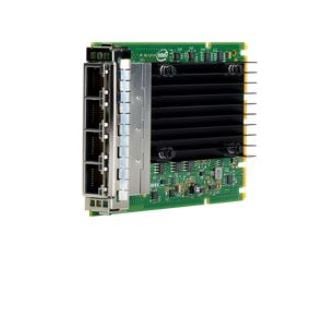
The HP BCM5719 Quad Port 1GbE OCP3 Ethernet Network Adapter provides four dedicated gigabit Ethernet connections designed to fit HP ProLiant servers using the OCP3 interface. It balances performance and efficiency, making it a practical choice for server networking needs where space and power considerations matter. |
General Information |
|
|---|---|
| Brand | HPE |
| Part Number | P51182-B21 |
Technical Information |
|
|---|---|
| Chipset/Controller | Broadcom BCM5719 |
| Virtualization Support | NetQueue, vNIC |
| Data Rate (Speed) | 1GbE |
| Data Center Bridging | No |
| Number of Ports | 4-Port (Quad) |
| OS Compatibility | Windows Server 2022, RHEL, VMware ESXi |
| Network Management | SNMP, RMON |
| Offload Support | PXE Boot, Wake-on-LAN (WoL), TCP Stateless Offload, Jumbo Frames |
Connectivity & Physical |
|
|---|---|
| Form Factor | OCP 3.0 |
| Port Type | RJ-45 (Copper) |
| Cabling Type | Cat6a |
| Weight | 5.00 |
| Condition | Refurbished |
Miscellaneous |
|
|---|---|
| Assembly Required | Yes |
| Eco Friendly | Yes |
| Compliance Standards | WEEE, RoHS, CE, FCC |
Product Description |
|---|
This HP BCM5719 Quad Port 1GbE OCP3 Ethernet Network Adapter is built for providing stable and efficient network connections in server environments. It’s commonly found in HP ProLiant servers, where consistent data throughput and multiple network ports are essential. System administrators and IT professionals often use this adapter to enhance network capacity and redundancy on enterprise servers. Its OCP3 form factor ensures easy integration with supported server models, making it a practical choice for data centers and business-critical applications. Key Features
Typically deployed in enterprise data centers, this adapter supports tasks such as virtualization, file sharing, and clustered applications. It helps maintain stable connections while allowing servers to handle multiple network streams simultaneously. Its role is key in maintaining network performance and reliability in demanding IT setups. |
Use Cases |
|---|
The HP BCM5719 Quad Port 1GbE OCP3 Ethernet Network Adapter is primarily deployed in data center and enterprise server environments where multiple dedicated network connections are required within space-constrained rack server configurations. IT professionals managing HP ProLiant servers benefit from its integration, enabling streamlined network infrastructure without compromising performance. How It's Used:
This adapter contributes to operational efficiency by allowing system administrators to consolidate network interfaces while supporting scalable and reliable data transfer. Its design aligns with server density and power optimization goals typical in enterprise-grade network architecture. |
 Shipping Options
 International Delivery
Requires a UPS, FedEx, or DHL account. Customers may arrange pickup from our US warehouse.
International Delivery
Requires a UPS, FedEx, or DHL account. Customers may arrange pickup from our US warehouse.
 Payment Methods
We accept Visa, Mastercard, AMEX, Discover, and Wire Transfer.
Payment Methods
We accept Visa, Mastercard, AMEX, Discover, and Wire Transfer.
 Purchase Orders
We process purchase orders for government agencies, enterprises, data centers, and SMBs.
Purchase Orders
We process purchase orders for government agencies, enterprises, data centers, and SMBs.