

Subscribe To Our Newsletter!
Subscribe to the newsletter to stay up to date with the latest news and most useful
Newsletter
↑
Back to Top



Product Overview |
|---|
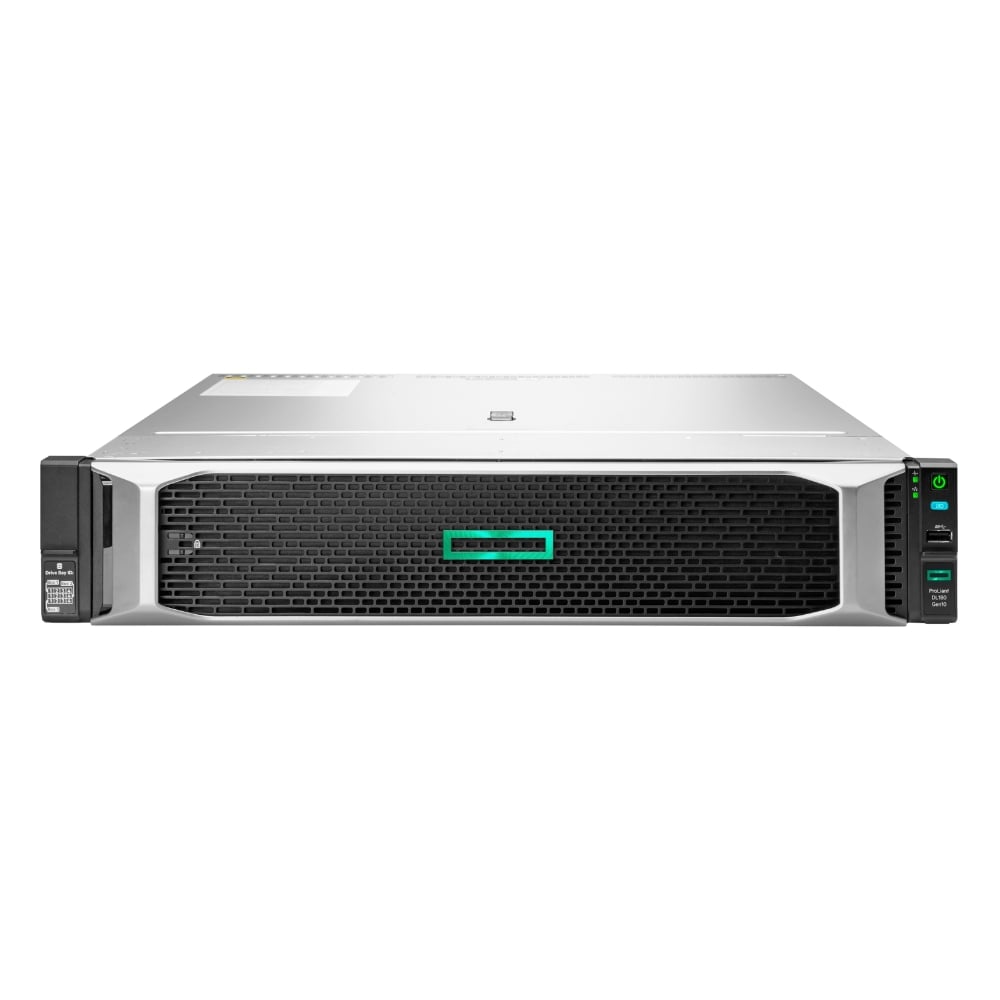
The HPE ProLiant DL560 Gen10 P40457-B21 is a high-density 4-socket server equipped with Intel Xeon 8268 processors, 512GB registered RAM, integrated P816i-a storage controller, support for 16 SFF drives, and dual 1600W redundant power supplies designed to provide scalable performance and robustness for enterprise workloads. |
General Information |
|
|---|---|
| Part Number | P40457-B21 |
Technical Information |
|
|---|---|
| Memory | 512GB |
| Processor | Intel Xeon Platinum 8268 2.9GHz 24-Core 4P |
| Storage | P816i-a controller with 16 SFF drive bays (no drives) |
Physical Characteristics |
|
|---|---|
| Weight | 3.00 |
| Condition | Refurbished |
Miscellaneous |
|
|---|---|
| Assembly Required | No |
Product Description |
|---|
The HPE ProLiant DL560 Gen10 server is designed to deliver robust performance for enterprise data centers and demanding computational environments. Featuring four Intel Xeon 8268 processors running at 2.9GHz with a total of 24 cores per processor, this server provides substantial processing power for complex workloads. Typically deployed in scenarios requiring high availability and scalability, the DL560 Gen10 is found in industries such as finance, healthcare, and scientific research. IT professionals, system administrators, and data engineers benefit from its versatility and reliability in managing critical applications and large datasets. Key Features
This server platform balances high compute density with flexible storage and strong power management to meet enterprise demands. Its modular design supports future upgrades, making it a reliable choice for evolving IT infrastructures. |
Use Cases |
|---|
The HPE ProLiant DL560 Gen10 server supports a variety of enterprise applications requiring high processing power and storage flexibility. How It's Used:
This server is suitable for organizations aiming to consolidate workloads, increase computational capacity, and ensure reliable operation within demanding IT environments. |
 Shipping Options
 International Delivery
Requires a UPS, FedEx, or DHL account. Customers may arrange pickup from our US warehouse.
International Delivery
Requires a UPS, FedEx, or DHL account. Customers may arrange pickup from our US warehouse.
 Payment Methods
We accept Visa, Mastercard, AMEX, Discover, and Wire Transfer.
Payment Methods
We accept Visa, Mastercard, AMEX, Discover, and Wire Transfer.
 Purchase Orders
We process purchase orders for government agencies, enterprises, data centers, and SMBs.
Purchase Orders
We process purchase orders for government agencies, enterprises, data centers, and SMBs.