

Subscribe To Our Newsletter!
Subscribe to the newsletter to stay up to date with the latest news and most useful
Newsletter
↑
Back to Top



Product Overview |
|---|
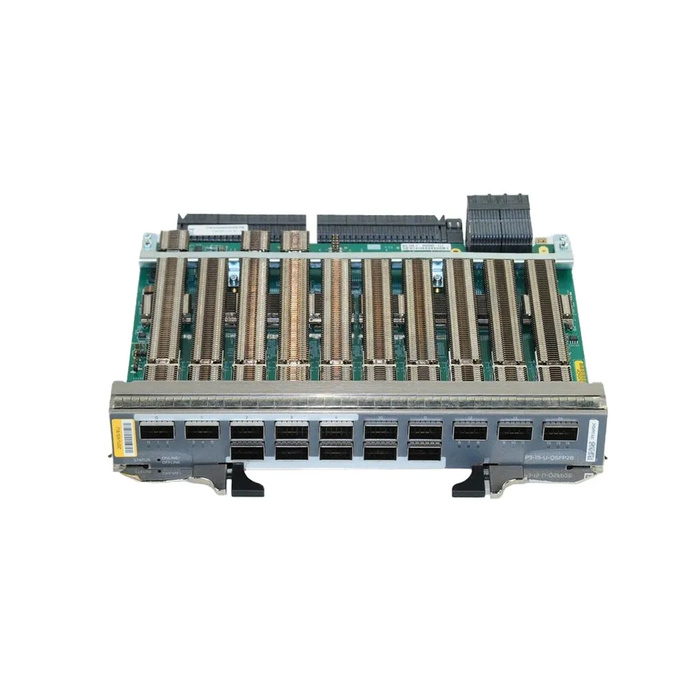
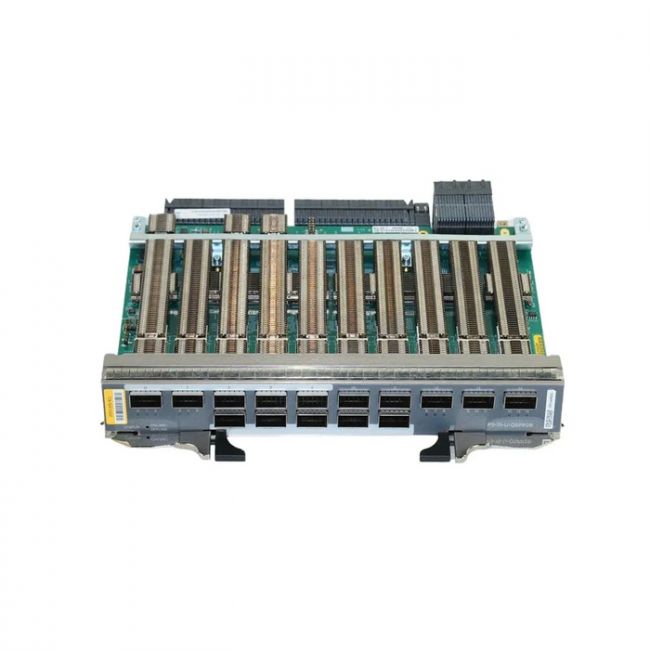
The P3-15-U-QSFP28 module adds 15 QSFP28 ports to PTX5000 routers, expanding their 100GbE connectivity options. It's designed to fit into existing network infrastructures that need increased bandwidth and port density, offering a straightforward upgrade path that balances performance and capacity. |
General Information |
|
|---|---|
| Brand | Juniper Networks |
Technical Information |
|
|---|---|
| Port Type | 100G QSFP28 |
| Port Speed | 100Gbps |
| Ports | 15 |
| Form Factor | Chassis-Based |
| Data Rate | 100 Gbps |
| Compatibility | Juniper PTX5000 |
| Connector Type | QSFP28 |
| product type | Expansion Module |
| Product Category | Expansion Modules |
Physical Characteristics |
|
|---|---|
| Form Factor | Modular |
| Weight | 3.00 |
| Condition | Refurbished |
Miscellaneous |
|
|---|---|
| Assembly Required | No |
| Compliance Standards | WEEE, RoHS, CE, FCC, UL |
Product Description |
|---|
The P3-15-U-QSFP28 module serves as an expansion interface for PTX5000 routers, enhancing network capacity with 15 QSFP28 ports. It is commonly found in core and edge network infrastructures where high-speed data transfer and port density are key requirements. Network engineers and architects frequently use this module to scale up bandwidth and maintain efficient routing performance. Key Features
This expansion module plays a crucial role in maintaining the overall network performance by providing additional high-speed ports without requiring a complete system overhaul. It ensures dependable operation in demanding environments while enabling future-proof scalability. |
Use Cases |
|---|
The P3-15-U-QSFP28 module is typically deployed in large-scale network environments requiring dense 100GbE interfaces. It benefits operators managing high-throughput routing tasks and data centers aiming to optimize their bandwidth provisioning. How It's Used:
In these settings, the module helps maintain operational efficiency and ensures the network can scale reliably as demand increases. Its integration supports continuous performance without major infrastructure changes. |
 Shipping Options
 International Delivery
Requires a UPS, FedEx, or DHL account. Customers may arrange pickup from our US warehouse.
International Delivery
Requires a UPS, FedEx, or DHL account. Customers may arrange pickup from our US warehouse.
 Payment Methods
We accept Visa, Mastercard, AMEX, Discover, and Wire Transfer.
Payment Methods
We accept Visa, Mastercard, AMEX, Discover, and Wire Transfer.
 Purchase Orders
We process purchase orders for government agencies, enterprises, data centers, and SMBs.
Purchase Orders
We process purchase orders for government agencies, enterprises, data centers, and SMBs.