

Subscribe To Our Newsletter!
Subscribe to the newsletter to stay up to date with the latest news and most useful
Newsletter
↑
Back to Top



Product Overview |
|---|
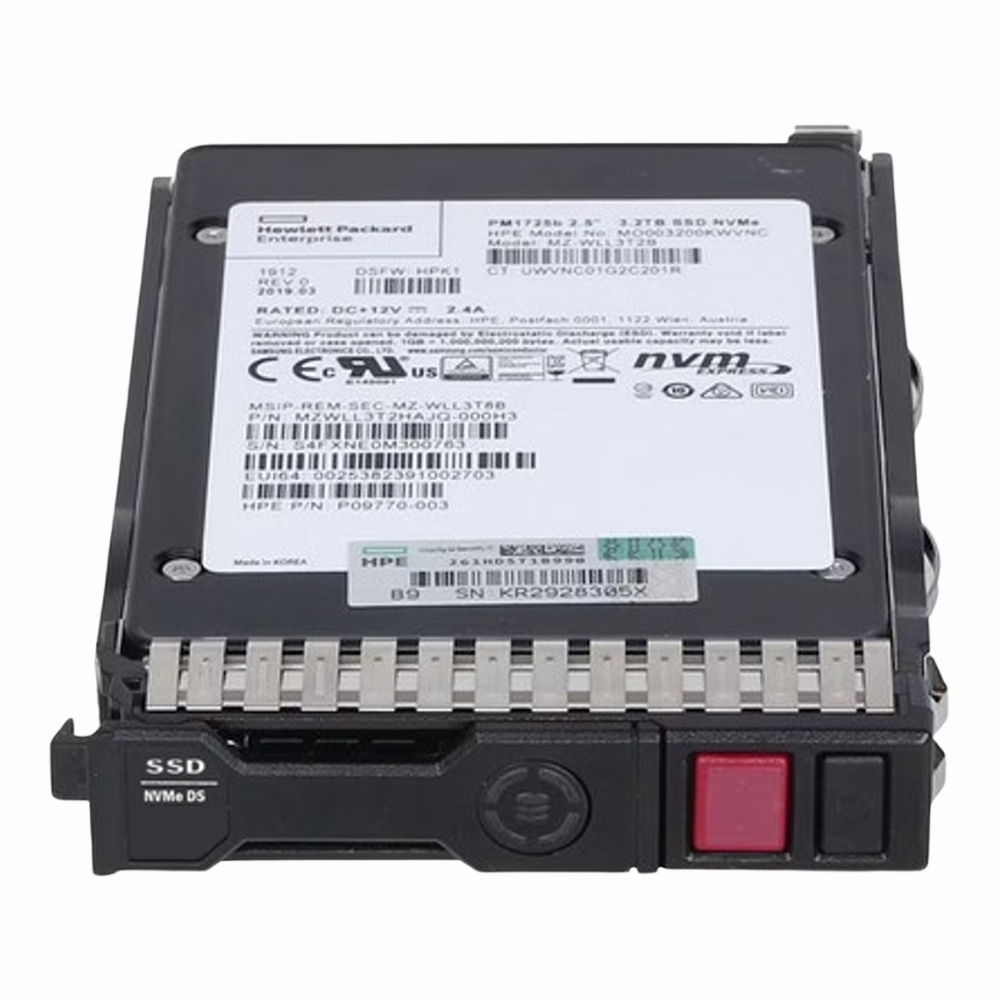
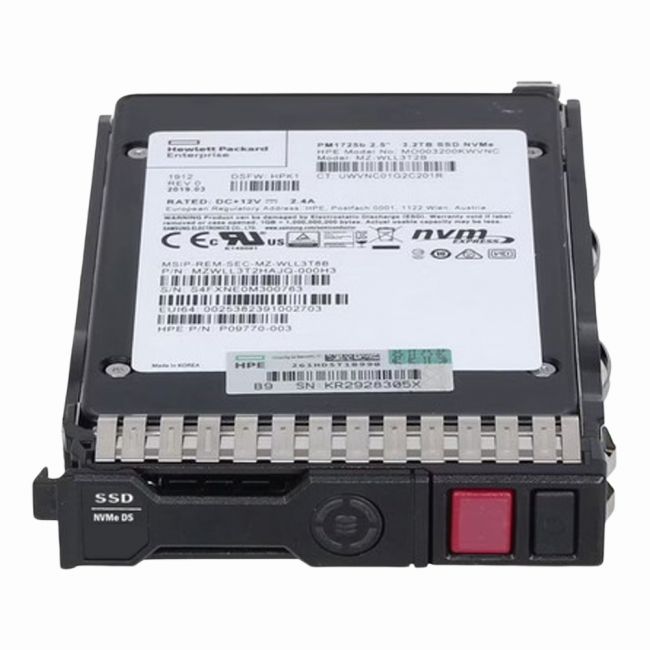
The HP 3.84TB Triple-Level Cell PCIe NVMe 4.0 x4 SSD offers a large, reliable storage solution that fits into conventional 2.5-inch slots. It’s suited for environments that require rapid read speeds and steady performance, such as enterprise data centers and high-capacity server setups. The drive balances capacity and speed using TLC technology optimized for read-heavy applications without overwhelming system resources. |
General Information |
|
|---|---|
| Brand | HP |
| Part Number | P20019-H21 |
Technical Information |
|
|---|---|
| Capacity | 3.84TB |
| NAND Flash | Triple-Level Cell (TLC) |
| Memory Technology | Triple-Level Cell (TLC) |
| Form Factor | 2.5-inch |
| Interface | PCIe Gen 4.0 x4 |
| MTBF | 2,000,000 hours |
| Hot Swappable | Yes |
| Hot Pluggable | Yes |
Physical Characteristics |
|
|---|---|
| Weight | 1.10 |
| Condition | Refurbished |
Miscellaneous |
|
|---|---|
| Eco Friendly | Yes |
| Compliance Standards | WEEE, RoHS, CE, FCC |
Product Description |
|---|
This HP 3.84TB NVMe solid state drive is built to handle demanding read-intensive applications with a balance of capacity and speed. Its PCIe 4.0 x4 interface delivers fast data access, making it suitable for environments where quick retrieval of large datasets is critical. Commonly found in enterprise servers, data centers, and high-performance workstations, this drive benefits IT professionals and businesses requiring reliable storage for analytics, content delivery, and virtualization tasks. It combines the reliability of TLC NAND with the efficiency of NVMe protocols to support heavy read workloads efficiently. Key Features
These drives are typically deployed in settings where fast and dependable access to stored information is needed, such as cloud services, database servers, and streaming platforms. Their design helps maintain performance consistency over extended periods, making them a practical choice for ongoing operational demands. |
Use Cases |
|---|
The HP 3.84TB Triple-Level Cell PCIe NVMe 4.0 x4 SSD is designed for high-demand read-intensive environments where rapid data access and reliable storage density are critical. It serves enterprise IT infrastructures and data centers requiring efficient handling of large datasets with minimal latency. How It's Used:
This drive contributes to operational efficiency by balancing capacity and speed for read-focused applications, allowing scalable storage solutions without compromising system responsiveness. Its design supports sustained performance in environments where consistent read access is essential. |
 Shipping Options
 International Delivery
Requires a UPS, FedEx, or DHL account. Customers may arrange pickup from our US warehouse.
International Delivery
Requires a UPS, FedEx, or DHL account. Customers may arrange pickup from our US warehouse.
 Payment Methods
We accept Visa, Mastercard, AMEX, Discover, and Wire Transfer.
Payment Methods
We accept Visa, Mastercard, AMEX, Discover, and Wire Transfer.
 Purchase Orders
We process purchase orders for government agencies, enterprises, data centers, and SMBs.
Purchase Orders
We process purchase orders for government agencies, enterprises, data centers, and SMBs.