

Subscribe To Our Newsletter!
Subscribe to the newsletter to stay up to date with the latest news and most useful
Newsletter
↑
Back to Top



Product Overview |
|---|
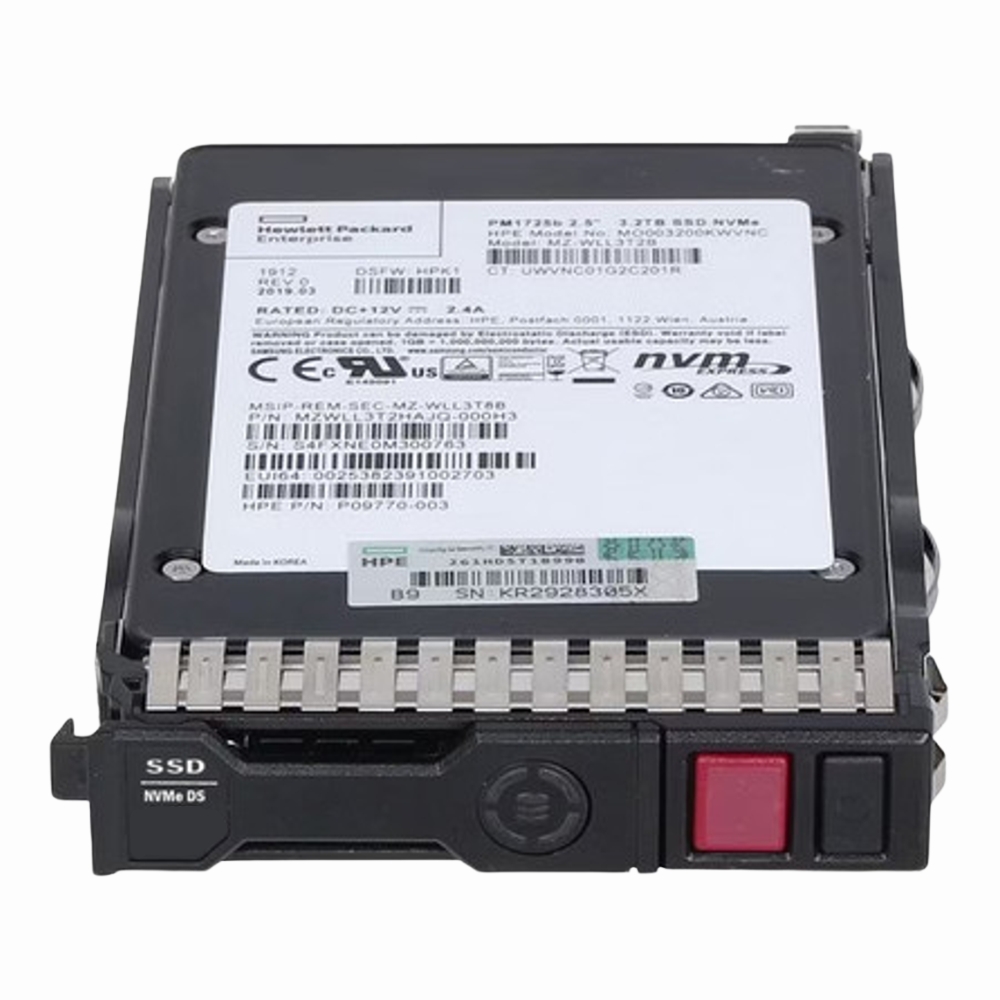
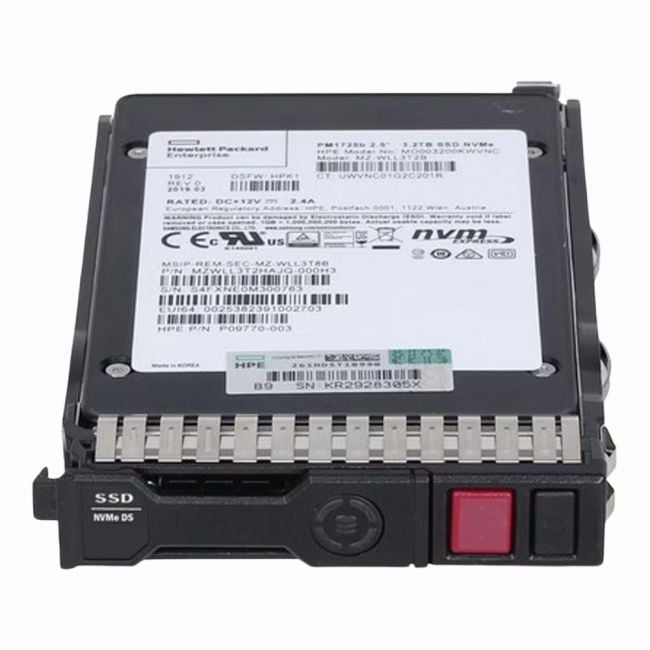
The HP 3.2TB PCI Express NVMe Mixed Use U.2 2.5-Inch Solid State Drive offers a robust storage solution tailored for enterprise settings. It fits smoothly into server systems that need a balance between endurance and high-speed data transfer, making it a practical choice for various mixed workload environments. |
General Information |
|
|---|---|
| Brand | HP |
| Part Number | P16499-B21 |
Technical Information |
|
|---|---|
| Capacity | 3.2TB |
| Memory Technology | Enterprise Triple-Level Cell (eTLC) |
| Form Factor | U.2 |
| Interface | PCIe Gen 3.0 x4 |
| MTBF | 2,000,000 hours |
| Hot Swappable | Yes |
| Hot Pluggable | Yes |
Performance |
|
|---|---|
| Max Sequential Read | 3200 MB/s |
| Max Sequential Write | 2200 MB/s |
| Random Read | 500,000 IOPS |
| Random Write | 120,000 IOPS |
| Endurance (TBW) | 3600 TBW |
Physical Characteristics |
|
|---|---|
| Dimensions | 100.2 x 69.85 x 15 mm |
| Weight | 1.10 |
| Condition | Refurbished |
Miscellaneous |
|
|---|---|
| Eco Friendly | Yes |
| Compliance Standards | WEEE, RoHS, CE, FCC, UL, TUV, cULus |
Product Description |
|---|
This HP 3.2TB PCI Express NVMe Mixed Use SSD is designed to deliver reliable, high-speed storage suitable for various enterprise applications. It's often found in data centers and server setups where both endurance and performance are required. Built for IT professionals managing demanding workloads, this drive offers a balance between write endurance and fast read/write speeds. It's commonly used in environments that require quick access to large data sets without sacrificing drive longevity. Key Features
This drive is typically deployed in enterprise servers and storage arrays where consistent performance is essential. Its mixed-use profile means it fits well in environments that require both durability and speed without constant replacement. Users benefit from reduced downtime and improved system responsiveness, especially in data-heavy applications that demand fast, reliable access. |
Use Cases |
|---|
The HP 3.2TB PCIe NVMe Mixed Use U.2 SSD is designed for enterprise and data center environments where balanced performance and endurance are critical. It particularly benefits IT professionals managing mixed workloads that require consistent high-speed data access without compromising drive longevity. How It's Used:
This SSD supports operational efficiency by delivering consistent latency and throughput in demanding scenarios, enabling scalable storage architectures that meet varied enterprise workload requirements without frequent hardware replacements. |
 Shipping Options
 International Delivery
Requires a UPS, FedEx, or DHL account. Customers may arrange pickup from our US warehouse.
International Delivery
Requires a UPS, FedEx, or DHL account. Customers may arrange pickup from our US warehouse.
 Payment Methods
We accept Visa, Mastercard, AMEX, Discover, and Wire Transfer.
Payment Methods
We accept Visa, Mastercard, AMEX, Discover, and Wire Transfer.
 Purchase Orders
We process purchase orders for government agencies, enterprises, data centers, and SMBs.
Purchase Orders
We process purchase orders for government agencies, enterprises, data centers, and SMBs.