

Subscribe To Our Newsletter!
Subscribe to the newsletter to stay up to date with the latest news and most useful
Newsletter
↑
Back to Top



Product Overview |
|---|
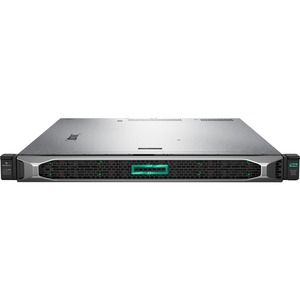
The HPE DL325 Gen10 Plus 24SSF CTO Server combines a high-core-count AMD EPYC processor with dense storage options, fitting well in server racks where space and performance both matter. It serves well for organizations running virtualization, database management, or data analytics tasks that need reliable and scalable hardware. |
General Information |
|
|---|---|
| Brand | HPE |
| Part Number | P15535-B21 |
Technical Information |
|
|---|---|
| Memory | DDR4 RDIMM / LRDIMM (HPE SmartMemory); 8 DIMM slots (8-channel memory for single-socket AMD EPYC); supports up to 3200 MT/s |
| Processor | Single-socket AMD EPYC (7002/7003 series) SP3 platform; supports single CPU configuration (up to 64 cores depending on chosen SKU) |
| Storage | 24 x SFF (2.5") hot-plug drive bays (CTO 24 SFF configuration); supports SAS / SATA and NVMe drive options; configurable with HPE Smart Array controllers or NVMe backplane; supports HDDs and SSDs |
Physical Characteristics |
|
|---|---|
| Weight | 5.00 |
| Condition | Refurbished |
Miscellaneous |
|
|---|---|
| Assembly Required | Yes |
| Eco Friendly | Yes |
| Compliance Standards | WEEE, RoHS, cURus, CE, FCC, CCC, UL, TUV, cULus, CSA, cUL |
Product Description |
|---|
The HPE DL325 Gen10 Plus 24SSF CTO Server is designed to handle demanding compute and storage tasks with its powerful AMD EPYC processor. Often found in data centers and enterprise environments, it delivers a balance of processing power and storage capacity. Built for IT professionals managing virtualization, databases, or high-performance computing, this server supports a dense array of small form factor drives to maximize capacity in limited space. Key Features
This server is commonly deployed in environments where space efficiency and high processing throughput are critical. It plays a key role in running virtual machines, handling large data workloads, and supporting cloud infrastructure. |
Use Cases |
|---|
The HPE DL325 Gen10 Plus 24SSF CTO Server is typically deployed in environments requiring dense storage and high processing power within a compact rack footprint. Its architecture suits IT professionals managing virtualization platforms, complex databases, and analytics workloads where both scalability and efficiency are critical. How It's Used:
This server's combination of AMD EPYC processors and extensive small form factor drive support facilitates scalable performance tailored to demanding workloads. It enables IT infrastructure teams to maintain operational efficiency and meet evolving compute and storage requirements without expanding physical space. |
 Shipping Options
 International Delivery
Requires a UPS, FedEx, or DHL account. Customers may arrange pickup from our US warehouse.
International Delivery
Requires a UPS, FedEx, or DHL account. Customers may arrange pickup from our US warehouse.
 Payment Methods
We accept Visa, Mastercard, AMEX, Discover, and Wire Transfer.
Payment Methods
We accept Visa, Mastercard, AMEX, Discover, and Wire Transfer.
 Purchase Orders
We process purchase orders for government agencies, enterprises, data centers, and SMBs.
Purchase Orders
We process purchase orders for government agencies, enterprises, data centers, and SMBs.