

Subscribe To Our Newsletter!
Subscribe to the newsletter to stay up to date with the latest news and most useful
Newsletter
↑
Back to Top



Product Overview |
|---|
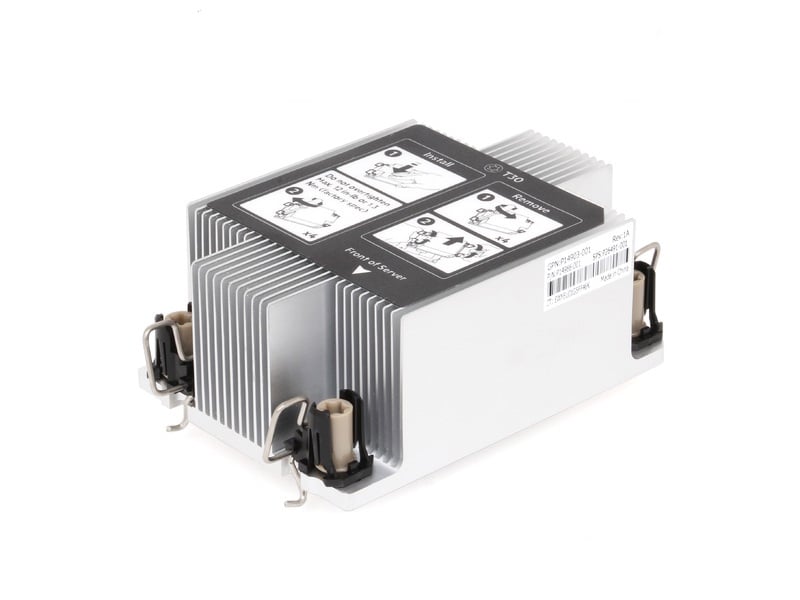
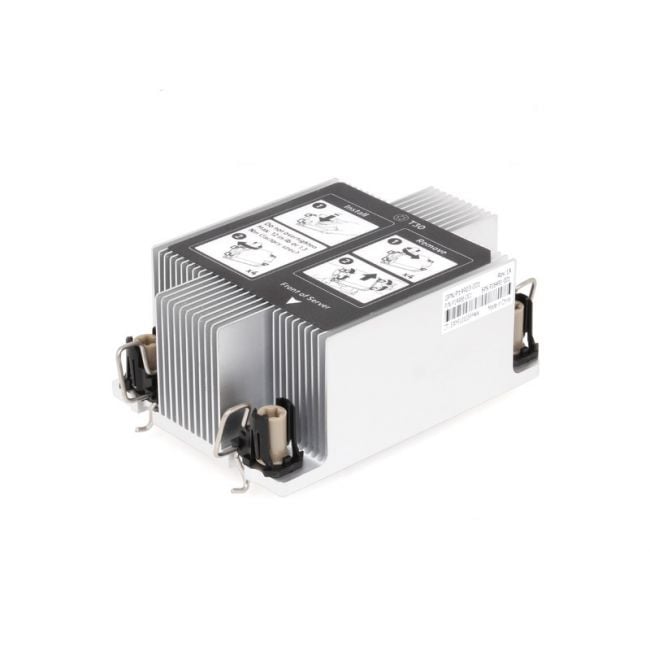
The HPE Standard Heatsink for ProLiant DL380 Gen10 Plus is a key cooling component designed to keep server CPUs within safe temperature ranges. It fits seamlessly into the server chassis and supports the performance needs of demanding enterprise applications without adding complexity to the server setup. |
General Information |
|
|---|---|
| Brand | HPE |
| Part Number | P14966-001 |
Physical Characteristics |
|
|---|---|
| Weight | 5.00 |
| Condition | Refurbished |
Product Description |
|---|
This HPE standard heatsink is built for the ProLiant DL380 Gen10 Plus server, playing a crucial role in cooling the central processing units. It's commonly used in data centers and enterprise environments where maintaining processor temperature is critical for stable performance. System administrators and IT professionals often rely on this heatsink to ensure their servers operate within safe thermal limits, preventing overheating during demanding workloads. Key Features
This heatsink is typically installed within rack-mounted server setups, where consistent cooling is essential. It contributes to the overall longevity of the hardware by preventing thermal throttling and hardware failures due to overheating. |
Use Cases |
|---|
The HPE Standard Heatsink for ProLiant DL380 Gen10 Plus is primarily utilized in enterprise data center environments where maintaining CPU thermal efficiency is critical. It benefits IT administrators managing high-density server racks running virtualization, database, or analytics workloads that generate substantial heat. How It's Used:
This heatsink supports operational reliability by efficiently dissipating heat, which is essential in maintaining consistent server performance and scalability. Its compatibility with multiple processor models within the DL380 Gen10 Plus platform facilitates streamlined maintenance and minimizes downtime in complex IT infrastructures. |
 Shipping Options
 International Delivery
Requires a UPS, FedEx, or DHL account. Customers may arrange pickup from our US warehouse.
International Delivery
Requires a UPS, FedEx, or DHL account. Customers may arrange pickup from our US warehouse.
 Payment Methods
We accept Visa, Mastercard, AMEX, Discover, and Wire Transfer.
Payment Methods
We accept Visa, Mastercard, AMEX, Discover, and Wire Transfer.
 Purchase Orders
We process purchase orders for government agencies, enterprises, data centers, and SMBs.
Purchase Orders
We process purchase orders for government agencies, enterprises, data centers, and SMBs.