

Subscribe To Our Newsletter!
Subscribe to the newsletter to stay up to date with the latest news and most useful
Newsletter
↑
Back to Top



Product Overview |
|---|
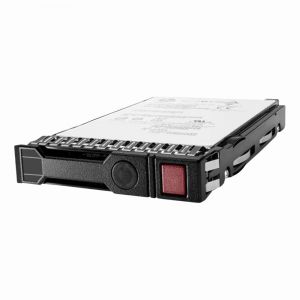
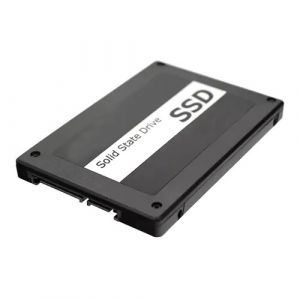
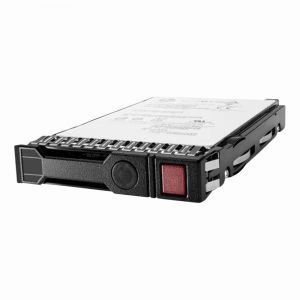
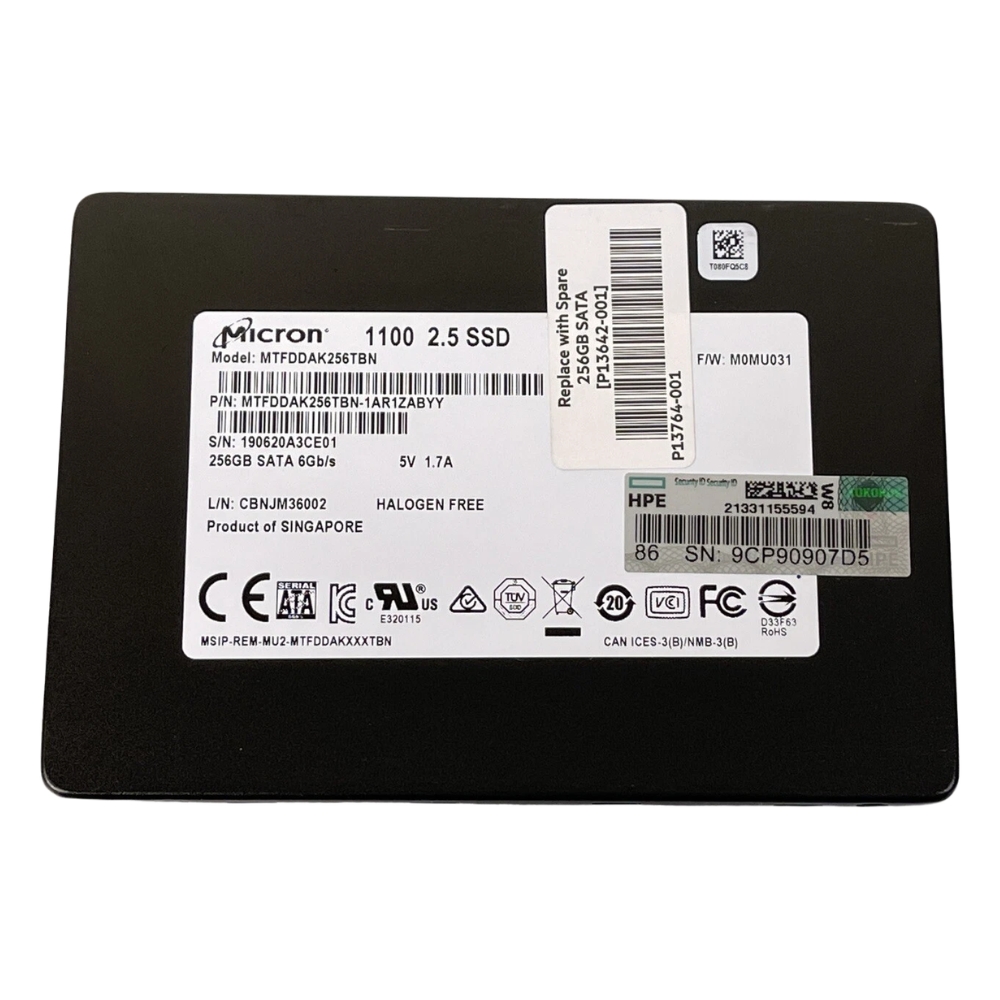
The HPE 256GB TLC SATA 6Gb/s 2.5-in SSD offers 256GB of storage using TLC NAND technology, suited for HPE server and storage applications. It features a SATA 6Gb/s interface and a 2.5-inch form factor, designed to fit standard drive bays in compatible systems. |
General Information |
|
|---|---|
| Brand | HPE |
Technical Information |
|
|---|---|
| Capacity | 256GB |
| NAND Flash | TLC |
| Memory Technology | Triple-Level Cell (TLC) |
| Form Factor | 2.5-inch |
| Interface | SATA 6GB/s |
| Hot Swappable | Yes |
| Hot Pluggable | Yes |
Physical Characteristics |
|
|---|---|
| Weight | 0.60 |
| Condition | Refurbished |
Product Description |
|---|
The HPE 256GB TLC SATA 6Gb/s 2.5-in SSD is a storage device engineered to provide solid-state storage solutions within HPE server and storage systems. It utilizes TLC NAND technology to offer a balance between storage density and drive lifespan, ideal for environments needing consistent access to data. This SSD fits into the standard 2.5-inch drive bays and connects via the SATA 6Gb/s interface, ensuring compatibility with systems supporting this form factor and interface standard. IT professionals managing HPE infrastructure commonly deploy this drive for storage upgrades or replacements. Key Features
This SSD serves as a practical component for maintaining and expanding storage capabilities in HPE environments. Its specifications are aligned with common enterprise storage requirements, supporting consistent operation within compatible systems. |
Use Cases |
|---|
This SSD is typically used in enterprise environments where HPE servers or storage arrays require solid-state drives for data storage. It suits workloads where moderate storage capacity and endurance are sufficient, such as file servers or application servers with SATA interface compatibility. How It's Used:
In practical terms, this SSD plays a role in maintaining operational storage needs within HPE infrastructures, providing a storage option that fits established hardware and interface standards without requiring additional modifications. |
FAQ's |
|---|
|
 Shipping Options
 International Delivery
Requires a UPS, FedEx, or DHL account. Customers may arrange pickup from our US warehouse.
International Delivery
Requires a UPS, FedEx, or DHL account. Customers may arrange pickup from our US warehouse.
 Payment Methods
We accept Visa, Mastercard, AMEX, Discover, and Wire Transfer.
Payment Methods
We accept Visa, Mastercard, AMEX, Discover, and Wire Transfer.
 Purchase Orders
We process purchase orders for government agencies, enterprises, data centers, and SMBs.
Purchase Orders
We process purchase orders for government agencies, enterprises, data centers, and SMBs.