

Subscribe To Our Newsletter!
Subscribe to the newsletter to stay up to date with the latest news and most useful
Newsletter
↑
Back to Top



Product Overview |
|---|
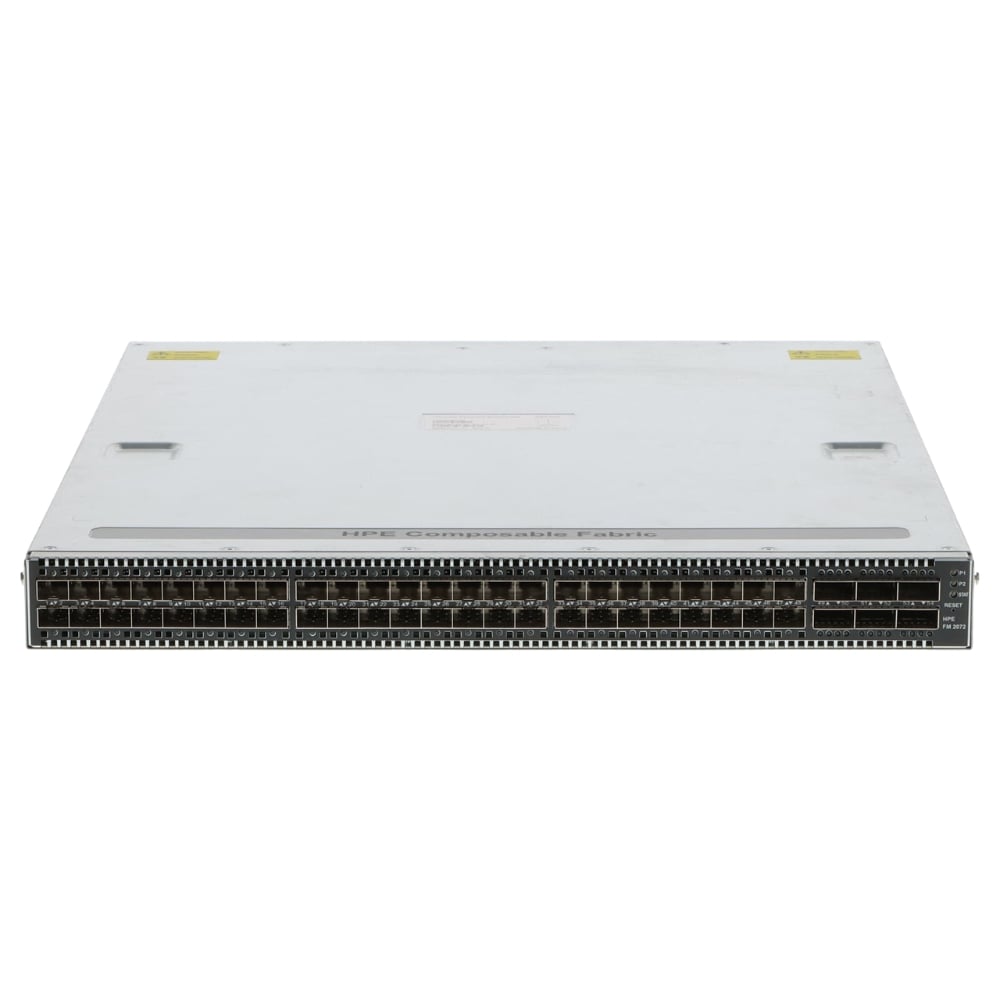
The P11589-001 HPE R0Y48A Composable Fabric FM 2072 offers a combination of 6 QSFP and 48 SFP+ ports designed to deliver scalable, low-latency, and high-throughput fabric connectivity suitable for demanding data center environments. |
General Information |
|
|---|---|
| Brand | HPE |
| Part Number | P11589-001 |
Technical Information |
|
|---|---|
| Number of Ports | 54-Ports |
| Port Type | SFP+, QSFP / QSFP+ |
| Port Speed | 40Gbps,10Gbps |
| Ports | 54 |
| Form Factor | Chassis-Based |
| Data Rate | 40Gbps,10Gbps |
| Connector Type | SFP+,QSFP |
Physical Characteristics |
|
|---|---|
| Form Factor | Fabric Module |
| Weight | 3.00 |
| Condition | Refurbished |
Miscellaneous |
|
|---|---|
| Assembly Required | No |
Product Description |
|---|
The P11589-001 HPE R0Y48A Composable Fabric FM 2072 is a fabric module designed to enhance data center networking by providing high-density connectivity options. It features 6 QSFP ports and 48 SFP+ ports, enabling versatile configurations to support diverse networking needs in modern data centers. This fabric module is commonly deployed within HPE composable infrastructure environments, facilitating efficient and scalable network fabrics that improve application performance and resource utilization. It is particularly beneficial for enterprises and service providers looking to optimize their network fabrics with reliable and flexible hardware components. Key Features
With its robust port density and versatile connectivity options, the P11589-001 fabric module enables data centers to build scalable and efficient network fabrics. It supports high-performance workloads and simplifies network management within composable infrastructure setups. |
Use Cases |
|---|
This fabric module is ideal for organizations seeking to build flexible and scalable network fabrics within their data centers. How It's Used:
These use cases demonstrate the module’s role in enhancing data center networking performance and scalability while supporting evolving infrastructure demands. |
 Shipping Options
 International Delivery
Requires a UPS, FedEx, or DHL account. Customers may arrange pickup from our US warehouse.
International Delivery
Requires a UPS, FedEx, or DHL account. Customers may arrange pickup from our US warehouse.
 Payment Methods
We accept Visa, Mastercard, AMEX, Discover, and Wire Transfer.
Payment Methods
We accept Visa, Mastercard, AMEX, Discover, and Wire Transfer.
 Purchase Orders
We process purchase orders for government agencies, enterprises, data centers, and SMBs.
Purchase Orders
We process purchase orders for government agencies, enterprises, data centers, and SMBs.