

Subscribe To Our Newsletter!
Subscribe to the newsletter to stay up to date with the latest news and most useful
Newsletter
↑
Back to Top



Product Overview |
|---|
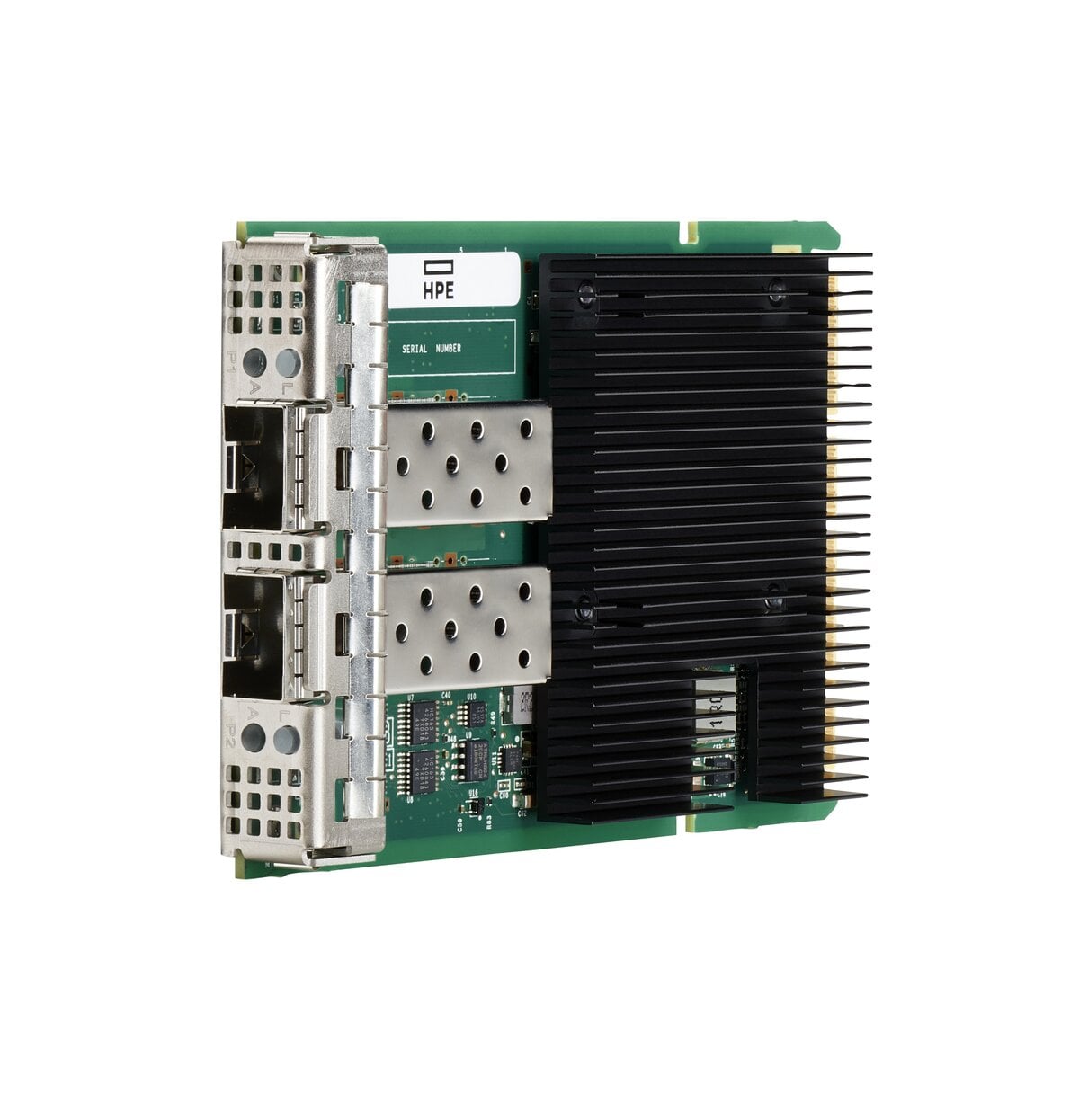
The HPE Intel E810-XXVDA2 Ethernet 10/25Gb 2-Port SFP28 OCP3 Adapter offers dual 10/25Gb ports using SFP28 connectors, designed to fit into OCP 3.0 slots. It provides fast and flexible network connectivity options, commonly fitting in server environments where speed and reliability are key. This adapter helps bridge high-performance networking needs with modern infrastructure standards, making it a practical component for today's data centers. |
General Information |
|
|---|---|
| Brand | HPE |
| Part Number | P10106-B21 |
Technical Information |
|
|---|---|
| Chipset/Controller | Intel E810-XXVDA2 (Intel E810) |
| Data Rate (Speed) | 25GbE |
| Data Center Bridging | Yes |
| Number of Ports | 2-Port (Dual) |
Connectivity & Physical |
|
|---|---|
| Form Factor | OCP 3.0 |
| Port Type | SFP28 |
| Cabling Type | AOC |
| Weight | 5.00 |
| Condition | Refurbished |
Product Description |
|---|
This HPE Intel E810-XXVDA2 Ethernet adapter is designed to deliver high-bandwidth network connectivity for demanding data center applications. It provides two 10/25 Gigabit Ethernet ports through SFP28 interfaces, enabling flexible and efficient connections to a variety of network equipment. Often found in enterprise servers and storage systems, this adapter is built for environments that require low latency and high throughput, such as virtualization, cloud computing, and large-scale storage deployments. IT professionals and system administrators benefit from its robust design and compatibility with OCP 3.0 standards. Key Features
This adapter is commonly deployed in data centers where high-speed data transfer and network efficiency are critical. Its integration helps maintain smooth communication between servers and storage, reducing bottlenecks and improving overall system responsiveness. In real-world settings, it's a reliable choice for organizations aiming to enhance their network infrastructure without overhauling existing hardware configurations. |
Use Cases |
|---|
The HPE Intel E810-XXVDA2 Ethernet 10/25Gb 2-Port SFP28 OCP3 Adapter is well-suited for modern data centers and enterprise IT environments requiring scalable, high-throughput network connectivity. It benefits organizations managing virtualized workloads and high-performance computing clusters where low latency and flexible bandwidth options are critical. How It's Used:
This adapter contributes to streamlined network operations by enabling high-speed data exchanges with reduced bottlenecks, fitting seamlessly into OCP 3.0 infrastructures. Its capacity to handle diverse workloads ensures improved throughput and operational agility in demanding IT environments. |
 Shipping Options
 International Delivery
Requires a UPS, FedEx, or DHL account. Customers may arrange pickup from our US warehouse.
International Delivery
Requires a UPS, FedEx, or DHL account. Customers may arrange pickup from our US warehouse.
 Payment Methods
We accept Visa, Mastercard, AMEX, Discover, and Wire Transfer.
Payment Methods
We accept Visa, Mastercard, AMEX, Discover, and Wire Transfer.
 Purchase Orders
We process purchase orders for government agencies, enterprises, data centers, and SMBs.
Purchase Orders
We process purchase orders for government agencies, enterprises, data centers, and SMBs.