

Subscribe To Our Newsletter!
Subscribe to the newsletter to stay up to date with the latest news and most useful
Newsletter
↑
Back to Top



Product Overview |
|---|
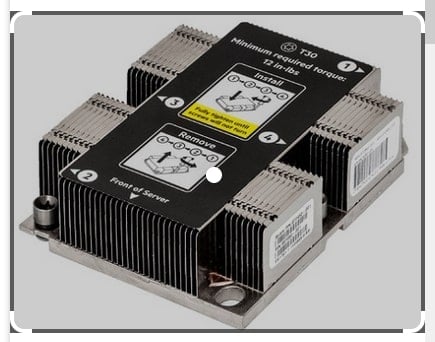
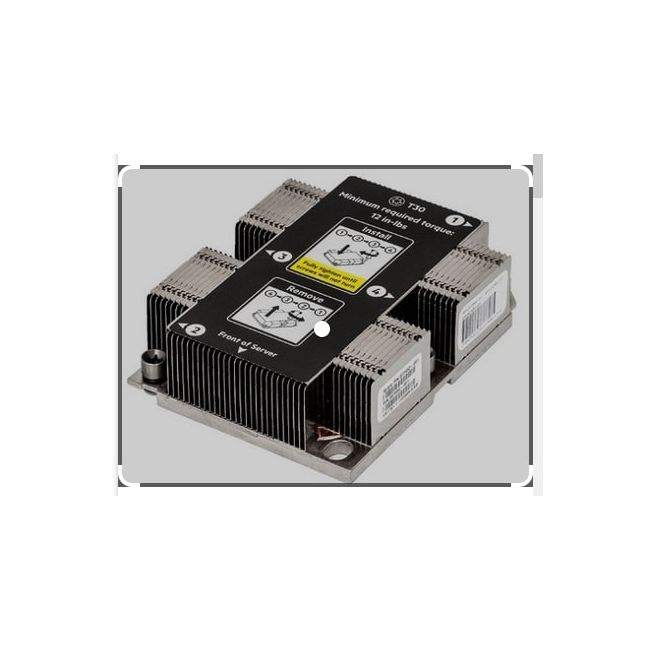
The HPE High Performance Heatsink for ProLiant DL385 Gen10 is designed to provide efficient cooling for AMD EPYC processors within HPE server systems. It fits into the server chassis and helps maintain optimal thermal conditions, supporting consistent performance and system reliability in enterprise settings. |
General Information |
|
|---|---|
| Brand | HPE |
| Part Number | P06774-001 |
Physical Characteristics |
|
|---|---|
| Weight | 5.00 |
| Condition | Refurbished |
Product Description |
|---|
This heatsink is built specifically for HPE ProLiant DL385 Gen10 servers, providing reliable cooling for AMD EPYC processors. Often found in data centers and enterprise environments, it helps manage the thermal demands of high-performance computing. Designed for IT professionals and system administrators, it supports maintaining system efficiency during extended periods of intense processing. Key Features
These heatsinks are typically deployed in enterprise server racks, where maintaining consistent CPU temperatures is critical to performance. By managing heat effectively, they play a key role in ensuring uptime and preventing system failures in demanding IT environments. |
Use Cases |
|---|
The HPE High Performance Heatsink for ProLiant DL385 Gen10 is primarily used in enterprise data centers and virtualized environments requiring robust thermal management. It benefits IT professionals managing high-density AMD EPYC server deployments where maintaining CPU performance and reliability under sustained workloads is critical. How It's Used:
This heatsink helps maximize system uptime and efficiency by effectively managing processor temperatures, enabling enterprise deployments to scale workloads confidently without thermal throttling concerns. Its compatibility with AMD EPYC processors ensures seamless integration within HPE ProLiant DL385 Gen10 platforms tailored for demanding computational tasks. |
 Shipping Options
 International Delivery
Requires a UPS, FedEx, or DHL account. Customers may arrange pickup from our US warehouse.
International Delivery
Requires a UPS, FedEx, or DHL account. Customers may arrange pickup from our US warehouse.
 Payment Methods
We accept Visa, Mastercard, AMEX, Discover, and Wire Transfer.
Payment Methods
We accept Visa, Mastercard, AMEX, Discover, and Wire Transfer.
 Purchase Orders
We process purchase orders for government agencies, enterprises, data centers, and SMBs.
Purchase Orders
We process purchase orders for government agencies, enterprises, data centers, and SMBs.