

Subscribe To Our Newsletter!
Subscribe to the newsletter to stay up to date with the latest news and most useful
Newsletter
↑
Back to Top



Product Overview |
|---|
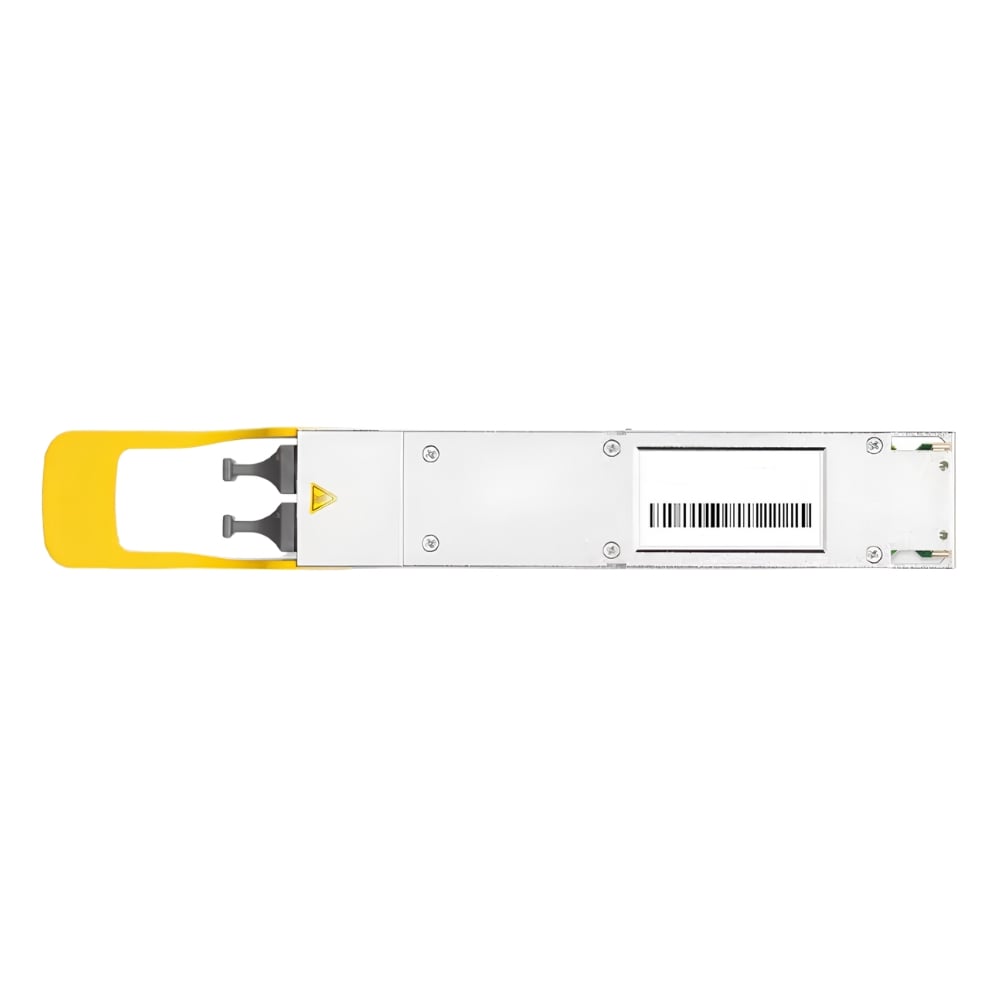
The OSFP-800G-DR8 Cisco 800GBASE-DR8 OSFP Optical Transceiver Module offers high-speed 800G connectivity utilizing the OSFP form factor optimized for long-reach single-mode fiber applications. It employs LC Duplex connectors and is engineered for high-density network environments requiring scalable and efficient optical links. |
General Information |
|
|---|---|
| Brand | Cisco |
| Part Number | OSFP-800G-DR8 |
Technical Information |
|
|---|---|
| Media | SMF |
| Protocols | 800GBASE-DR8 |
| Connector | MTP/MPO |
| DOM Support | Yes |
Physical Characteristics |
|
|---|---|
| Weight | 3.00 |
| Condition | Refurbished |
Product Description |
|---|
The Cisco 800GBASE-DR8 OSFP Optical Transceiver Module is designed to deliver high-speed optical connectivity for data centers and enterprise networks requiring ultra-high bandwidth. It supports an 800G data rate and leverages the OSFP form factor to provide compact, efficient, and scalable optical interconnect solutions. This transceiver is optimized for single-mode fiber transmission and features LC Duplex connectors, ensuring robust and reliable optical connections. It is ideal for environments demanding high-density, low-latency, and high-throughput performance. Key Features
The module is engineered to meet stringent performance and interoperability standards, making it suitable for critical network infrastructure. Its design facilitates easy integration into existing OSFP-based hardware platforms. By providing reliable, high-speed optical transmission, this transceiver module helps organizations optimize their network performance and prepare for future bandwidth demands. |
Use Cases |
|---|
This optical transceiver module is commonly used in data center core and aggregation layers where ultra-high bandwidth and low latency are critical. Network operators and enterprises with demanding applications such as cloud computing, high-performance computing, and large-scale virtualization benefit most from this module. How It's Used:
By integrating this module, organizations can achieve higher operational efficiency and scalability in their optical networks, enabling seamless growth and superior data throughput. |
 Shipping Options
 International Delivery
Requires a UPS, FedEx, or DHL account. Customers may arrange pickup from our US warehouse.
International Delivery
Requires a UPS, FedEx, or DHL account. Customers may arrange pickup from our US warehouse.
 Payment Methods
We accept Visa, Mastercard, AMEX, Discover, and Wire Transfer.
Payment Methods
We accept Visa, Mastercard, AMEX, Discover, and Wire Transfer.
 Purchase Orders
We process purchase orders for government agencies, enterprises, data centers, and SMBs.
Purchase Orders
We process purchase orders for government agencies, enterprises, data centers, and SMBs.