

Subscribe To Our Newsletter!
Subscribe to the newsletter to stay up to date with the latest news and most useful
Newsletter
↑
Back to Top



Product Overview |
|---|
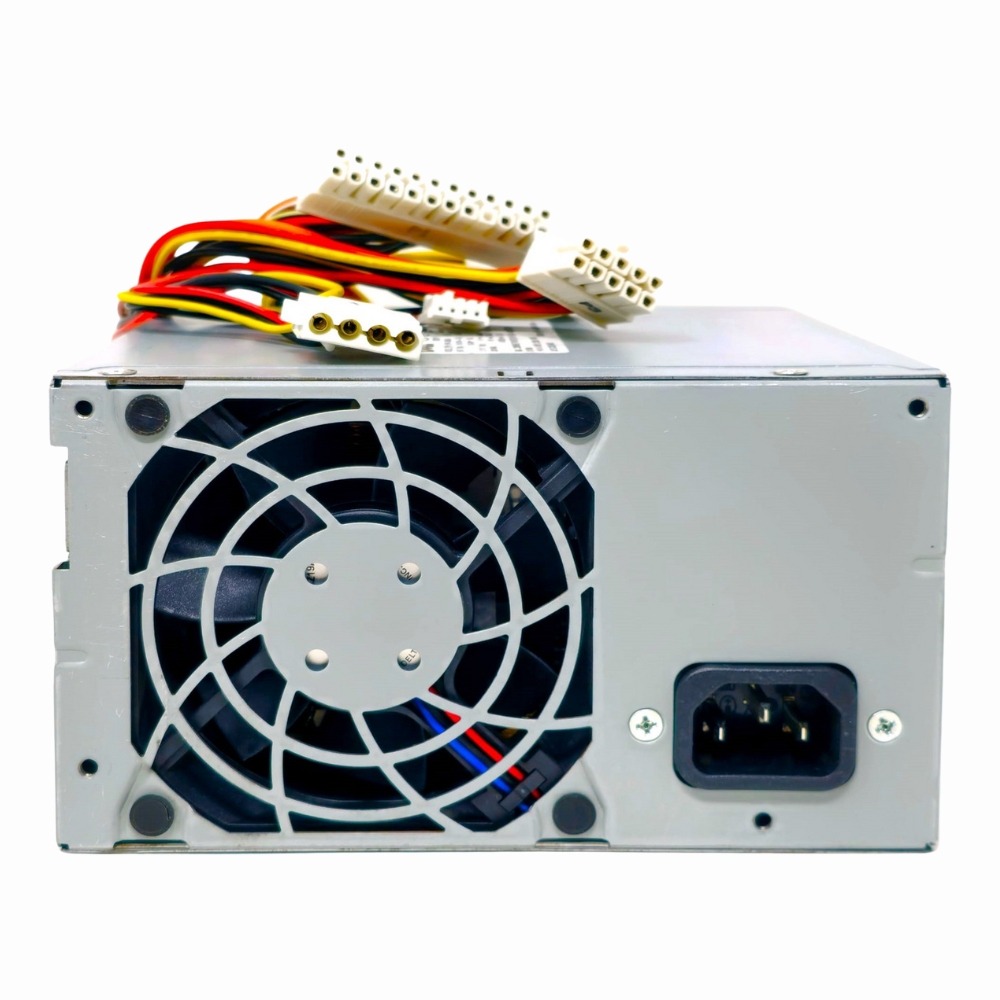
The NPS-420AB-E power supply is a reliable component for Dell PowerEdge 800 and 830 servers, supplying consistent power needed to keep these systems operational. It fits neatly into the server chassis and aligns with the power demands of these mid-range servers, making it a practical choice for maintaining stable server infrastructure. |
General Information |
|
|---|---|
| Brand | Dell |
| Part Number | NPS-420AB-E |
| Product Type | Server Power Supply |
| Condition | Refurbished |
Technical Information |
|
|---|---|
| Input Voltage | 100-240V AC |
| Input Frequency | 50-60 Hz |
| Output | 12V,5V,3.3V,-12V,5VSB |
| Max. Output Power | 420W |
| Hot Swappable | Yes |
| Redundant Support | Yes |
| Cooling Type | Active Fan |
| Modularity | Non-Modular |
| rail_design | Single 12V Rail |
| Number of Fans | 1 |
Compatibility |
|
|---|---|
| Form Factor | Proprietary |
| Compatible For | Dell PowerEdge 800,Dell PowerEdge 830 |
Physical Characteristics |
|
|---|---|
| Weight | 3.00 |
Certifications and Environmental |
|
|---|---|
| Compliance Standards | WEEE, RoHS, CE, UL, cULus |
Product Description |
|---|
The NPS-420AB-E is a dedicated power supply unit crafted for Dell PowerEdge 800 and 830 servers, providing the necessary power to keep these systems running smoothly. It's commonly used in small to medium business server environments where maintaining steady power is essential for operations. Often found in data centers or server rooms, this power supply supports IT professionals and system administrators who manage Dell server hardware. It’s built to integrate seamlessly with the PowerEdge models it supports, ensuring stable energy delivery without interruptions. Key Features
This power supply typically appears in business server setups where reliability is a priority and hardware compatibility matters. It plays a crucial role in delivering steady power for critical workloads, helping maintain system stability and reducing risks of power-related failures. |
 Shipping Options
 International Delivery
Requires a UPS, FedEx, or DHL account. Customers may arrange pickup from our US warehouse.
International Delivery
Requires a UPS, FedEx, or DHL account. Customers may arrange pickup from our US warehouse.
 Payment Methods
We accept Visa, Mastercard, AMEX, Discover, and Wire Transfer.
Payment Methods
We accept Visa, Mastercard, AMEX, Discover, and Wire Transfer.
 Purchase Orders
We process purchase orders for government agencies, enterprises, data centers, and SMBs.
Purchase Orders
We process purchase orders for government agencies, enterprises, data centers, and SMBs.