

Subscribe To Our Newsletter!
Subscribe to the newsletter to stay up to date with the latest news and most useful
Newsletter
↑
Back to Top



Product Overview |
|---|
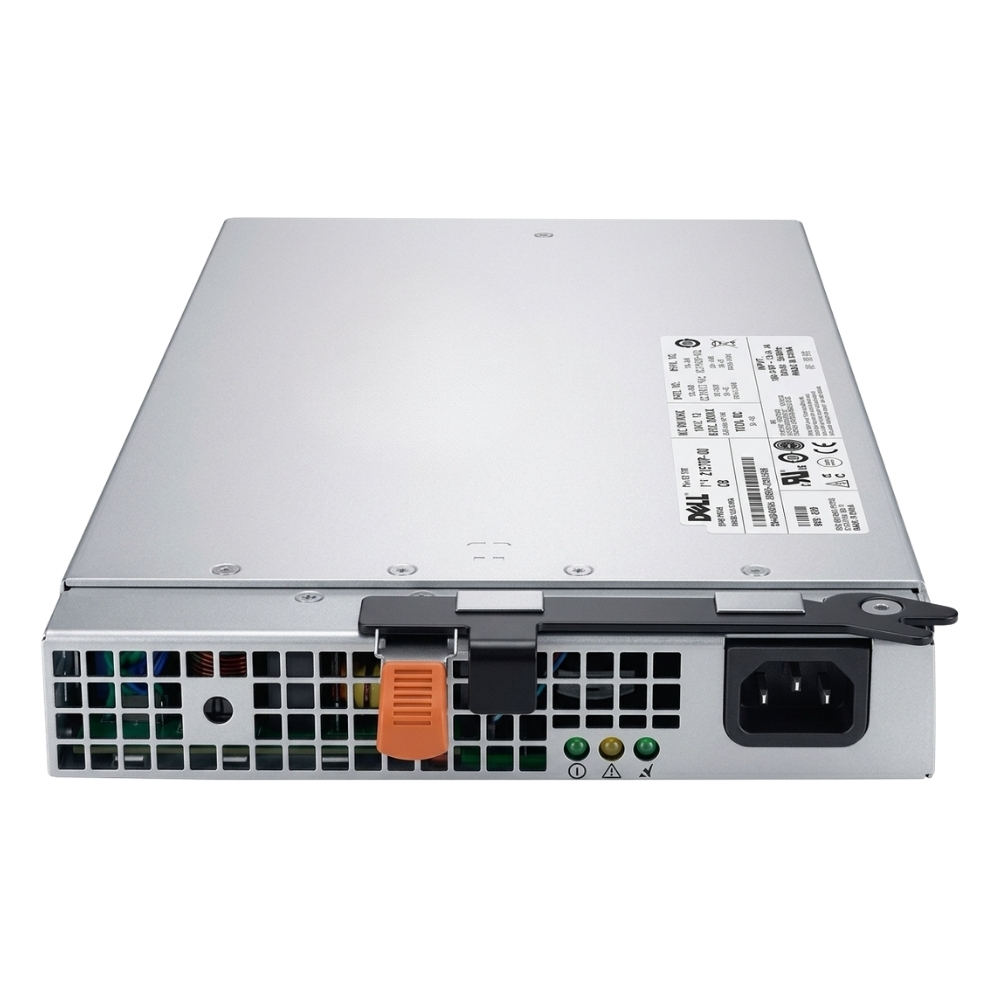
The Dell NJ508 1570 W power supply provides high-wattage, hot-swappable power for PowerEdge 6950 servers, delivering stable performance across varied voltages and excelling in high-availability data center and enterprise infrastructure deployments. |
General Information |
|
|---|---|
| Brand | Dell |
| Part Number | NJ508 |
| Product Type | Server Power Supply |
| Condition | Refurbished |
Technical Information |
|
|---|---|
| Input Voltage | 100-240V AC |
| Input Frequency | 47-63 Hz |
| Max. Output Power | 1570W |
| Hot Swappable | Yes |
| Redundant Support | Yes |
| Cooling Type | Active Fan |
| Modularity | Non-Modular |
| rail_design | Single 12V Rail |
| Number of Fans | 1 |
Compatibility |
|
|---|---|
| Form Factor | Proprietary |
| Compatible For | Dell PowerEdge 6950 |
Physical Characteristics |
|
|---|---|
| Weight | 5.00 |
Product Description |
|---|
The Dell NJ508 high-capacity power module delivers robust, reliable power for the PowerEdge 6950 platform, engineered to support demanding enterprise-grade server environments. Key Features
This power supply is ideal for data centers requiring high uptime and resilience. It supports load-balanced or redundant configurations and is particularly well-suited for compute-intensive and mission-critical applications. |
Use Cases |
|---|
The Dell NJ508 1570W power supply is designed for high-capacity server environments where continuous uptime and power reliability are critical. It is best suited for enterprises operating Dell PowerEdge 6950 servers in data centers requiring scalable power solutions that support demanding workloads and virtualization tasks. How It's Used:
This power supply enhances operational efficiency by offering reliable, scalable power tailored for high-performance server environments. Its hot-swappable design minimizes service interruptions, supporting continuous system availability in complex IT infrastructures. |
 Shipping Options
 International Delivery
Requires a UPS, FedEx, or DHL account. Customers may arrange pickup from our US warehouse.
International Delivery
Requires a UPS, FedEx, or DHL account. Customers may arrange pickup from our US warehouse.
 Payment Methods
We accept Visa, Mastercard, AMEX, Discover, and Wire Transfer.
Payment Methods
We accept Visa, Mastercard, AMEX, Discover, and Wire Transfer.
 Purchase Orders
We process purchase orders for government agencies, enterprises, data centers, and SMBs.
Purchase Orders
We process purchase orders for government agencies, enterprises, data centers, and SMBs.