

Subscribe To Our Newsletter!
Subscribe to the newsletter to stay up to date with the latest news and most useful
Newsletter
↑
Back to Top



Product Overview |
|---|
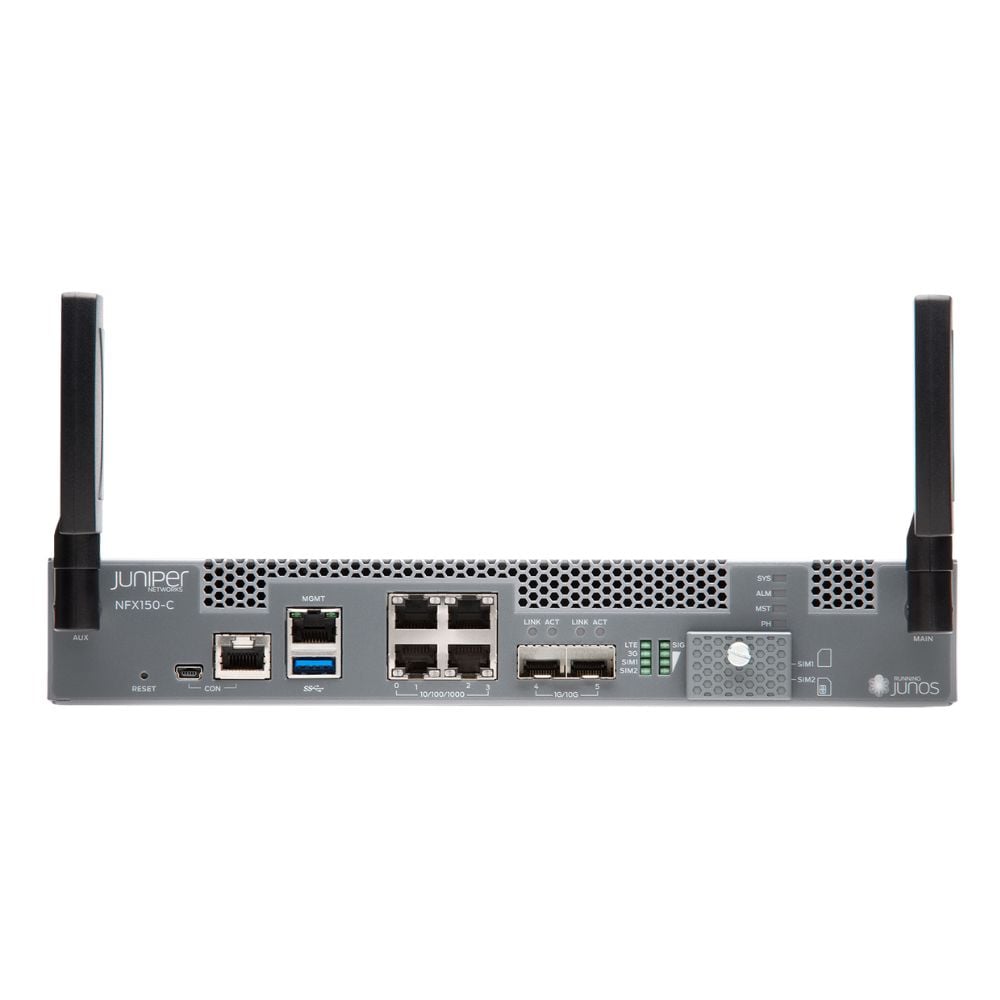
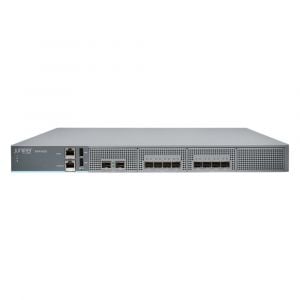
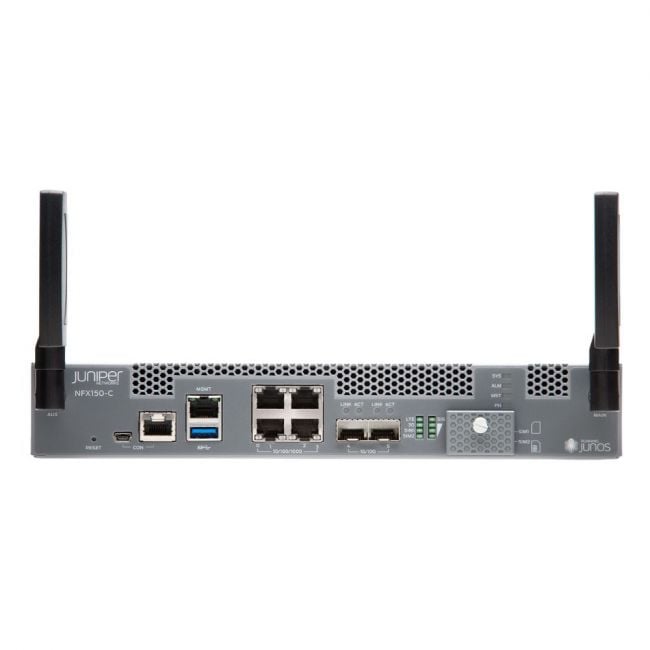
The Juniper NFX150-C-S1-AA is a network services platform that consolidates virtualized network functions. It features 8GB of memory and a 4-core Intel processor, designed to support network service deployment in edge and NFV environments. |
General Information |
|
|---|---|
| Brand | Juniper |
| Condition | Refurbished |
Technical Information |
|
|---|---|
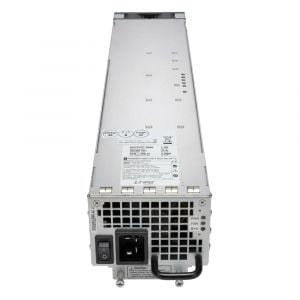
| Input Voltage | AC 100-240V |
| Input Frequency | 50Hz,60Hz |
| Hot Swappable | No |
| Redundant Support | No |
| Modularity | Non-Modular |
Compatibility |
|
|---|---|
| Form Factor | Proprietary |
| Compatible For | Juniper NFX150-C-S1-AA |
Physical Characteristics |
|
|---|---|
| Weight | 3.00 |
Certifications and Environmental |
|
|---|---|
| Assembly Required | No |
| Compliance Standards | WEEE, RoHS, CE, FCC, UL |
Product Description |
|---|
The Juniper NFX150-C-S1-AA is a network services platform that enables the deployment and management of virtualized network functions. It is used primarily in service provider and enterprise edge environments where network functions virtualization (NFV) is required. IT professionals and network operators benefit from this platform to consolidate network services on a single device. This platform features an 8GB memory capacity and a 4-core Intel processor, providing the processing power needed to run multiple network applications simultaneously while maintaining efficient operation. Key Features
Overall, the NFX150-C-S1-AA serves as a flexible foundation for virtual network functions, allowing organizations to streamline their network infrastructure. It is particularly useful in scenarios requiring the virtualization of services at the network edge. |
Use Cases |
|---|
The NFX150-C-S1-AA is typically deployed in service provider and enterprise edge environments to support virtualized network functions. It is suitable for organizations implementing NFV to reduce hardware footprint and improve network function management. How It's Used:
This platform plays a critical role in reducing physical network hardware by enabling virtualization, thus simplifying network operations and improving scalability in distributed environments. |
FAQ's |
|---|
|
 Shipping Options
 International Delivery
Requires a UPS, FedEx, or DHL account. Customers may arrange pickup from our US warehouse.
 Payment Methods
We accept Visa, Mastercard, AMEX, Discover, and Wire Transfer.
 Purchase Orders
We process purchase orders for government agencies, enterprises, data centers, and SMBs.