

Subscribe To Our Newsletter!
Subscribe to the newsletter to stay up to date with the latest news and most useful
Newsletter
↑
Back to Top



| Product Overview |
|---|
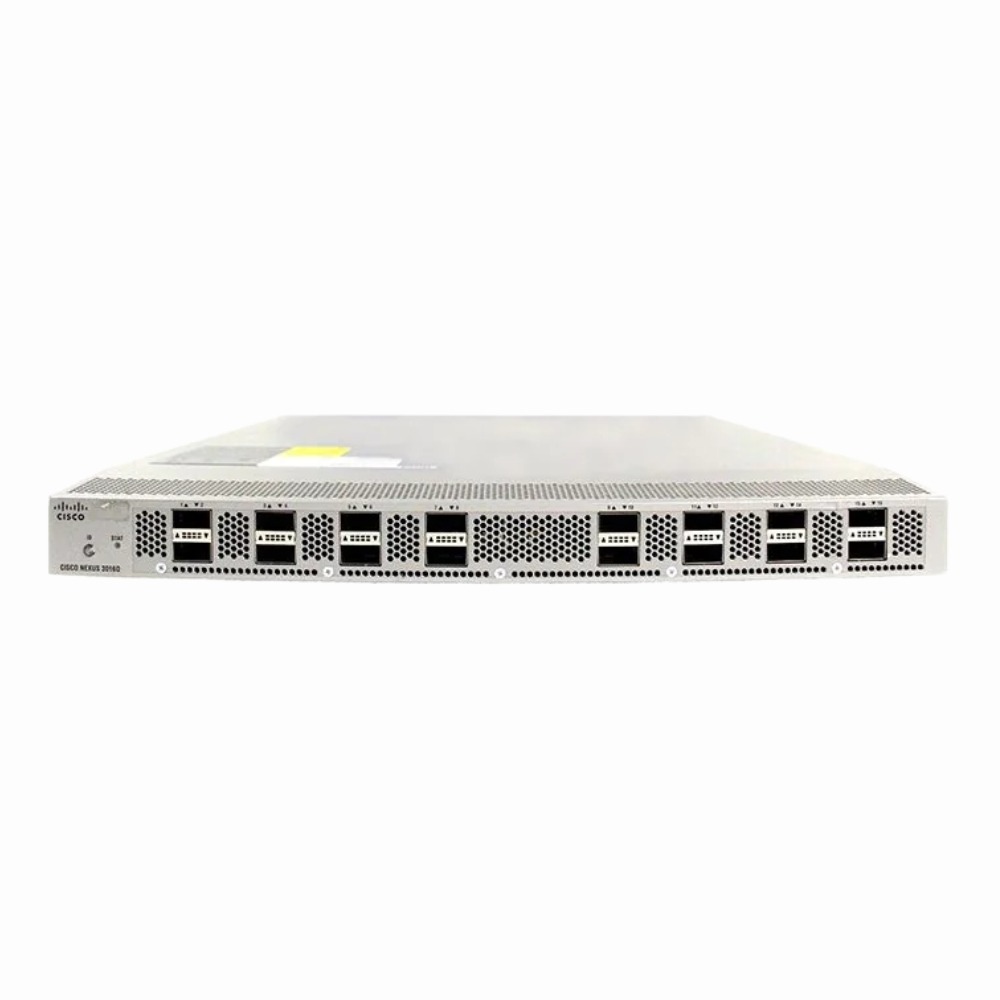
The Cisco Nexus 3000 Series C3016Q delivers high-speed 40Gbps connectivity with 16 QSFP+ ports, making it a solid choice for data centers requiring scalable and manageable network solutions. It fits into 1U rack spaces and supports Layer 3 routing, offering the flexibility needed in modern network setups. |
| General Information | |
|---|---|
| Brand | Cisco |
| Part Number | N3K-C3016Q-40GE |
| Condition | Refurbished |
| Technical Information | |
|---|---|
| Switch Ports | 16 |
| Number of Ports | 16-Ports |
| Port Type | 40G QSFP+ |
| Port Speed | 40GBase-X |
| POE Support | No |
| Switching Capacity | 1280 Gbps |
| VLAN Support | Yes |
| Stackable | No |
| Layer Support | Layer 3 |
| Connector Type | QSFP / QSFP+ |
| Performance | |
|---|---|
| Jumbo Frame Support | Up To 9216 Bytes |
| Management and Configuration | |
|---|---|
| Routing Protocols | Static, RIP |
| Remote Protocols | Yes |
| Management Interfaces | CLI, Console (RJ-45), USB Console, SNMP, SSH, HTTP/HTTPS |
| Remote Management Protocol | SNMP, SSH, Telnet, HTTP, HTTPS |
| Physical Characteristics | |
|---|---|
| Weight | 5.00 |
| Miscellaneous | |
|---|---|
| Compliance Standards | WEEE, RoHS, CE, FCC, UL |
| Compliant Standards | IEEE 802.1Q, IEEE 802.1p, IEEE 802.3, IEEE 802.3ba, IEEE 802.3x |
| Product Description |
|---|
The Cisco Nexus 3000 Series C3016Q is built for high-performance data centers and enterprise networks requiring fast, reliable switching. Often found in environments where low latency and high bandwidth are essential, this switch handles the demands of modern applications with ease. It's commonly used in server farms, campus cores, and aggregation layers, where robust Layer 3 functionality simplifies network management and routing. Network engineers and IT teams benefit from its combination of speed and flexibility. Key Features
This switch is typically deployed in data centers and enterprise networks where fast data movement and scalability are critical. Its role is to streamline traffic between servers and network segments, improving overall infrastructure efficiency without added complexity. |
| Use Cases |
|---|
The Cisco Nexus 3000 Series C3016Q switch is designed for high-density, low-latency environments where 40Gbps connectivity and advanced Layer 3 routing are essential. It is well-suited for data centers, service providers, and enterprise networks that require scalable and efficient rack-mounted switching solutions. How It's Used:
By integrating the Cisco Nexus C3016Q switch, organizations can achieve improved operational efficiency through consolidated high-speed ports and manageable routing features. Its 1U form factor fits existing rack deployments, allowing scalable growth without compromising network performance. |
 Shipping Options
 International Delivery
Requires a UPS, FedEx, or DHL account. Customers may arrange pickup from our US warehouse.
International Delivery
Requires a UPS, FedEx, or DHL account. Customers may arrange pickup from our US warehouse.
 Payment Methods
We accept Visa, Mastercard, AMEX, Discover, and Wire Transfer.
Payment Methods
We accept Visa, Mastercard, AMEX, Discover, and Wire Transfer.
 Purchase Orders
We process purchase orders for government agencies, enterprises, data centers, and SMBs.
Purchase Orders
We process purchase orders for government agencies, enterprises, data centers, and SMBs.