

Subscribe To Our Newsletter!
Subscribe to the newsletter to stay up to date with the latest news and most useful
Newsletter
↑
Back to Top



Product Overview |
|---|
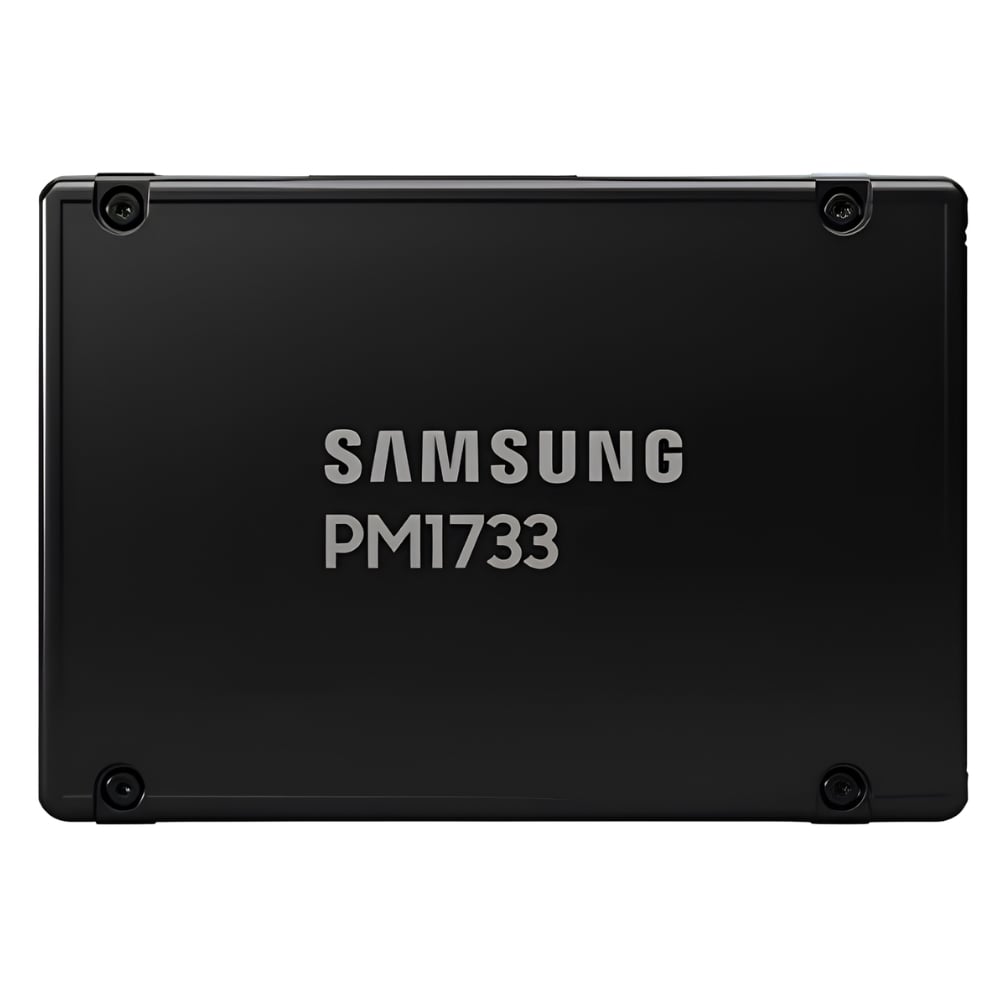
The MZWLJ3T8HBLS-00AC9 Samsung PM1733 SSD combines a 3.84TB capacity with PCIe Gen4 x4 NVMe interface, featuring a 2.5-inch form factor optimized for enterprise-grade performance, endurance, and reliability within OEM configurations. |
General Information |
|
|---|---|
| Brand | Samsung |
| Part Number | MZWLJ3T8HBLS-00AC9 |
Technical Information |
|
|---|---|
| Capacity | 3.84TB |
| Memory Technology | Triple-Level Cell (TLC) |
| Form Factor | 2.5-inch |
| Interface | PCIe Gen 4.0 x4 |
| MTBF | 2,000,000 |
Performance |
|
|---|---|
| Max Sequential Read | 8000 |
| Max Sequential Write | 4000 |
| Endurance (TBW) | 6800 |
Physical Characteristics |
|
|---|---|
| Dimensions | 7mm x 69.85mm x 100.2mm |
| Weight | 0.60 |
| Condition | Refurbished |
Miscellaneous |
|
|---|---|
| Compliance Standards | RoHS |
Product Description |
|---|
The Samsung PM1733 3.84TB NVMe SSD delivers exceptional performance for enterprise storage applications. Built on Samsung's proven V-NAND technology, this drive combines high capacity with ultra-fast PCIe Gen4 connectivity to meet the demands of modern data centers. Key Features
This EMC OEM variant is specifically validated for enterprise storage systems, ensuring compatibility and reliability in mission-critical deployments. The drive supports consistent low-latency performance essential for applications requiring real-time data access. |
Use Cases |
|---|
The Samsung PM1733 3.84TB NVMe SSD is typically deployed in enterprise data centers, large-scale server environments, and high-performance computing clusters where storage I/O is a bottleneck. Organizations running virtualization platforms, database management systems, and real-time analytics benefit most from this drive's capabilities. How It's Used:
The drive's enterprise-grade architecture enables organizations to achieve higher storage density while maintaining the performance characteristics needed for demanding applications, making it suitable for tier-1 storage environments and performance-critical computing scenarios. |
 Shipping Options
 International Delivery
Requires a UPS, FedEx, or DHL account. Customers may arrange pickup from our US warehouse.
International Delivery
Requires a UPS, FedEx, or DHL account. Customers may arrange pickup from our US warehouse.
 Payment Methods
We accept Visa, Mastercard, AMEX, Discover, and Wire Transfer.
Payment Methods
We accept Visa, Mastercard, AMEX, Discover, and Wire Transfer.
 Purchase Orders
We process purchase orders for government agencies, enterprises, data centers, and SMBs.
Purchase Orders
We process purchase orders for government agencies, enterprises, data centers, and SMBs.