

Subscribe To Our Newsletter!
Subscribe to the newsletter to stay up to date with the latest news and most useful
Newsletter
↑
Back to Top



Product Overview |
|---|
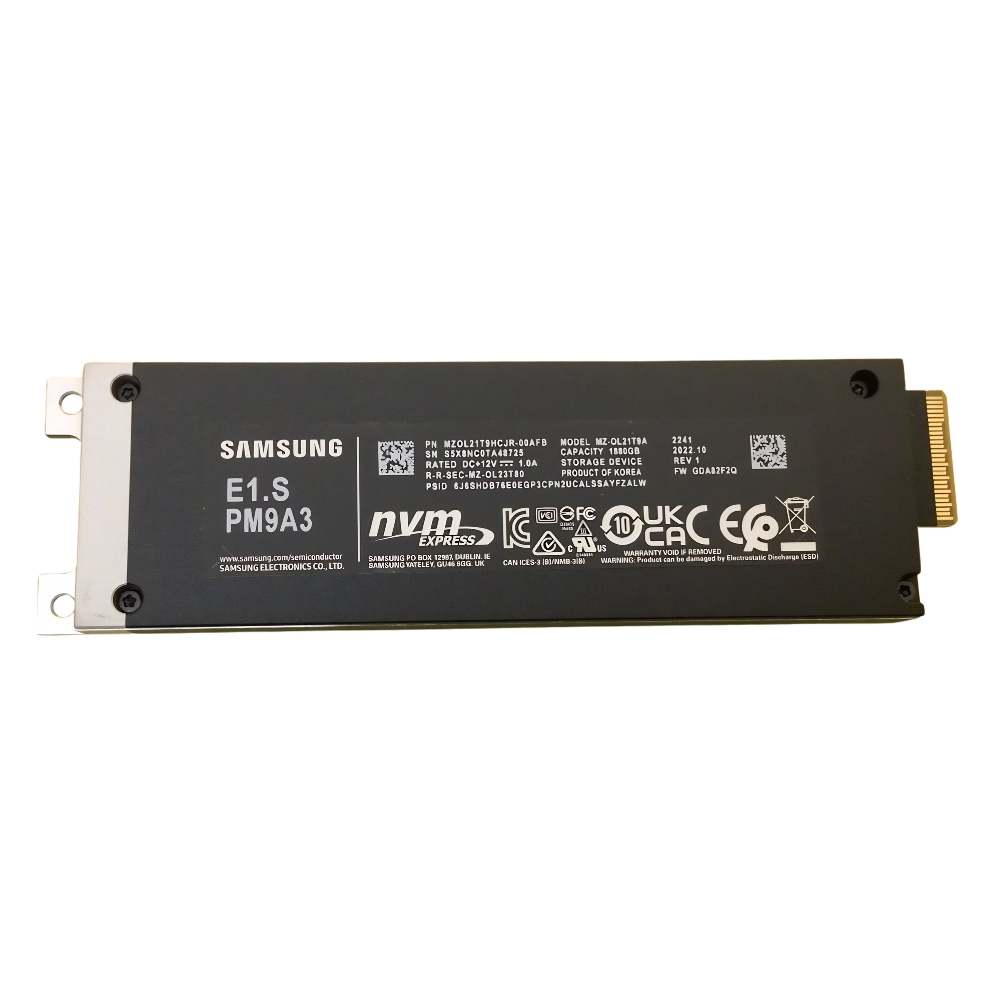
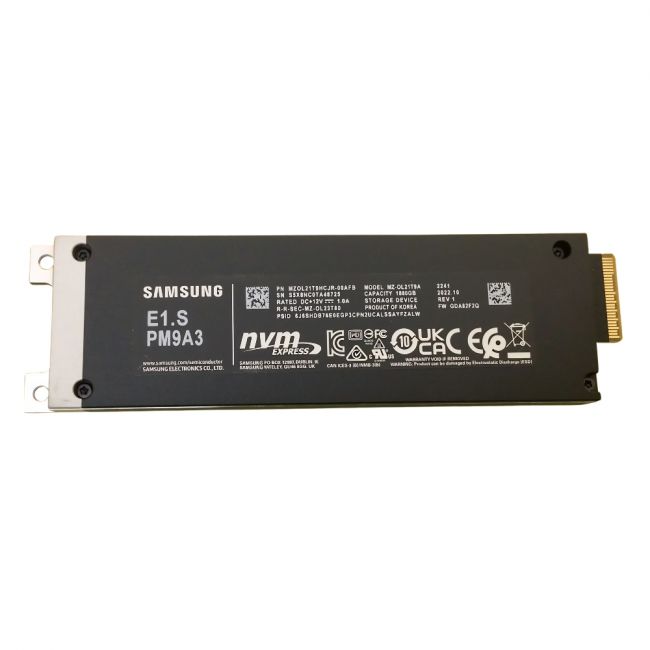
The Samsung PM9A3 MZOL27T6HBLA is a 7.68TB enterprise NVMe SSD in an E1.S 9.5mm form factor. It connects via PCIe 4.0 x4, providing enhanced throughput suitable for data center storage deployments. This model is part of Samsung's PM9A3 series designed for server and enterprise infrastructure. |
General Information |
|
|---|---|
| Brand | Samsung |
Technical Information |
|
|---|---|
| Capacity | 7.68TB |
| NAND Flash | Triple-Level Cell (TLC) |
| Memory Technology | Triple-Level Cell (TLC) |
| Form Factor | E1.S |
| Interface | PCIe Gen 4.0 x4 |
| MTBF | 2,000,000 hours |
Physical Characteristics |
|
|---|---|
| Weight | 0.60 |
| Condition | Refurbished |
Miscellaneous |
|
|---|---|
| Eco Friendly | Yes |
| Compliance Standards | RoHS |
Product Description |
|---|
The Samsung PM9A3 MZOL27T6HBLA is an NVMe solid-state drive providing 7.68TB of storage capacity in a compact E1.S form factor. Designed for enterprise applications, it supports PCIe 4.0 x4, delivering enhanced connectivity for server and data center environments. This SSD is typically deployed in high-density storage systems where space efficiency and scalable performance are critical. IT professionals managing data-intensive workloads benefit from its robust design and interface standard. Key Features
This SSD provides a storage solution tailored to environments requiring dense and efficient hardware footprints. It holds particular operational value in data centers focusing on server consolidation without sacrificing storage capacity. |
Use Cases |
|---|
The Samsung PM9A3 MZOL27T6HBLA SSD is typically used in enterprise data centers and server farms requiring high-capacity, compact storage solutions. It fits environments with PCIe 4.0 enabled infrastructure and workloads that involve large-scale data processing or archival. How It's Used:
This SSD serves as a core component in systems aiming to optimize storage density and connectivity. Its form factor and interface standards allow for integration in modern enterprise storage architectures. |
FAQ's |
|---|
|
 Shipping Options
 International Delivery
Requires a UPS, FedEx, or DHL account. Customers may arrange pickup from our US warehouse.
 Payment Methods
We accept Visa, Mastercard, AMEX, Discover, and Wire Transfer.
 Purchase Orders
We process purchase orders for government agencies, enterprises, data centers, and SMBs.