

Subscribe To Our Newsletter!
Subscribe to the newsletter to stay up to date with the latest news and most useful
Newsletter
↑
Back to Top



Product Overview |
|---|
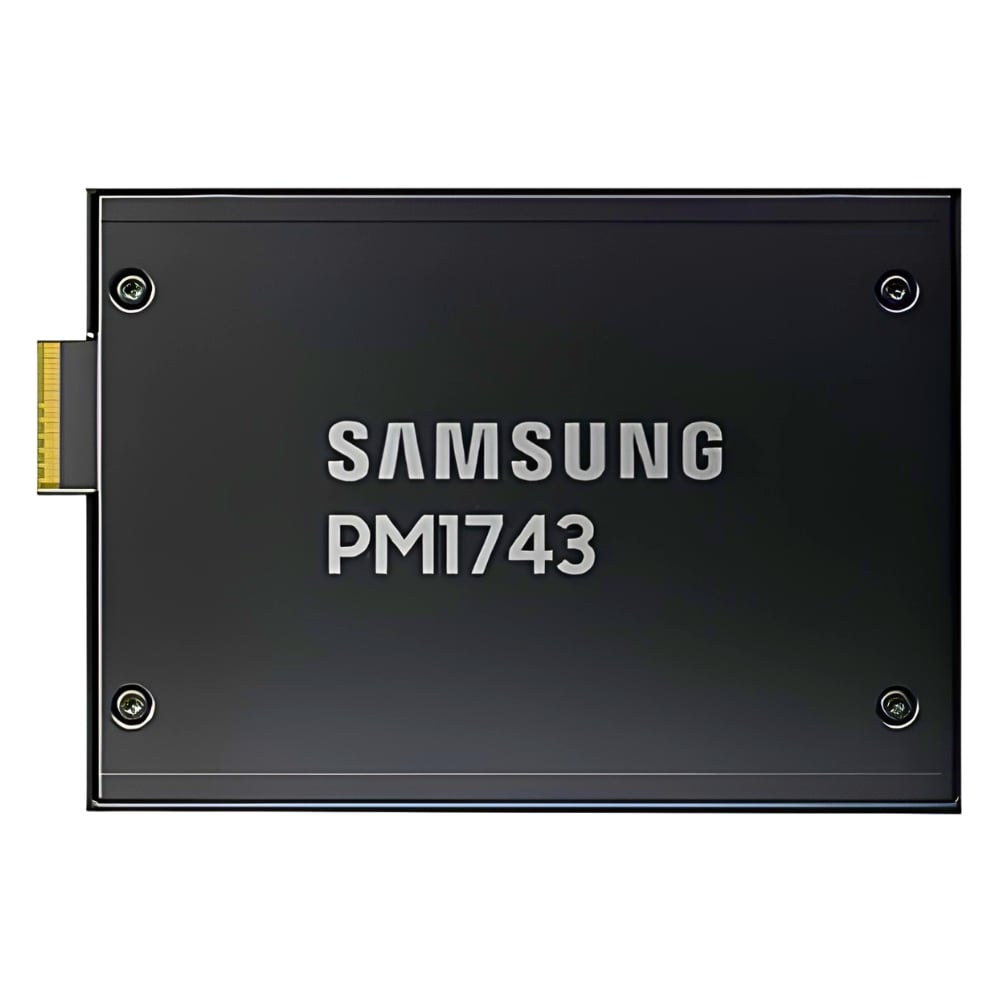
The MZ3LO7T6HBLT-00AD3 Samsung 7.68TB NVMe PCIe Gen5 x4 E3.S Read Intensive SSD combines a high storage capacity with the latest PCIe Gen5 interface, supporting enhanced throughput and low latency. Its E3.S form factor is tailored for modern data center deployments, focusing on read-intensive tasks to optimize performance and endurance. |
General Information |
|
|---|---|
| Brand | Samsung |
| Part Number | MZ3LO7T6HBLT-00AD3 |
Technical Information |
|
|---|---|
| Capacity | 7.68TB |
| Memory Technology | Triple-Level Cell (TLC) |
| Form Factor | E3.S |
| Interface | PCIe Gen 5.0 x4 |
Physical Characteristics |
|
|---|---|
| Weight | 0.60 |
| Condition | Refurbished |
Product Description |
|---|
The MZ3LO7T6HBLT-00AD3 Samsung 7.68TB NVMe PCIe Gen5 x4 E3.S Read Intensive SSD is a high-capacity solid-state drive designed to deliver fast and reliable storage performance. It is commonly used in enterprise data centers and server environments where large storage capacity and high-speed data access are critical. This SSD is optimized for read-intensive applications, making it well-suited for workloads such as content delivery, caching, and large database queries. The E3.S form factor allows for efficient integration into modern storage infrastructures, while the PCIe Gen5 x4 interface ensures maximum throughput and low latency. Key Features
This SSD provides a balance of performance and capacity, suitable for demanding environments requiring fast data retrieval. Its advanced interface and form factor support help streamline storage architectures and improve overall system efficiency. |
Use Cases |
|---|
The MZ3LO7T6HBLT-00AD3 Samsung SSD is engineered for enterprise environments that require high-capacity and fast access to data. It supports a variety of applications where read performance is crucial. How It's Used:
This SSD helps organizations improve data access speed and system responsiveness, particularly in scenarios where read operations dominate the workload. |
 Shipping Options
 International Delivery
Requires a UPS, FedEx, or DHL account. Customers may arrange pickup from our US warehouse.
International Delivery
Requires a UPS, FedEx, or DHL account. Customers may arrange pickup from our US warehouse.
 Payment Methods
We accept Visa, Mastercard, AMEX, Discover, and Wire Transfer.
Payment Methods
We accept Visa, Mastercard, AMEX, Discover, and Wire Transfer.
 Purchase Orders
We process purchase orders for government agencies, enterprises, data centers, and SMBs.
Purchase Orders
We process purchase orders for government agencies, enterprises, data centers, and SMBs.