

Subscribe To Our Newsletter!
Subscribe to the newsletter to stay up to date with the latest news and most useful
Newsletter
↑
Back to Top



| Product Overview |
|---|
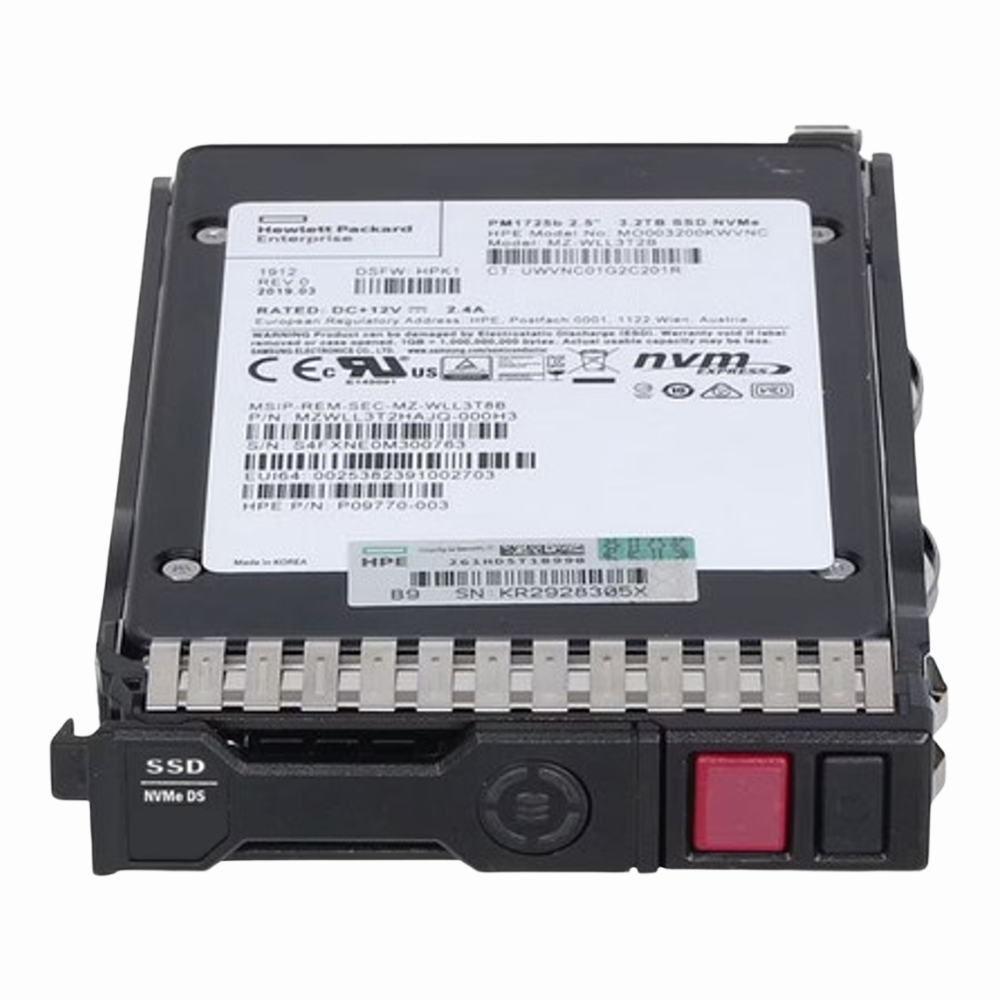
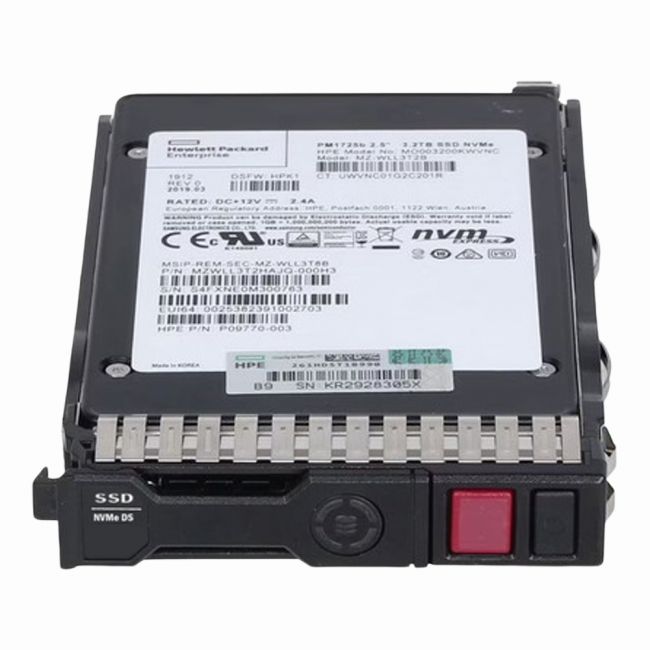
The MO1600KEFHQ HP 1.6TB Multi-Level Cell PCI Express NVMe x4 Write Intensive Solid State Drive offers a balance between storage capacity and write endurance. Designed mainly for server environments like the ProLiant DL560 Gen10, it fits into a 2.5-inch small form factor bay and delivers reliable, high-speed data access through its PCIe NVMe interface. |
| General Information | |
|---|---|
| Brand | HP |
| Part Number | MO1600KEFHQ |
| Technical Information | |
|---|---|
| Capacity | 1.6TB |
| NAND Flash | MLC (Multi-Level Cell) |
| Memory Technology | Multi-Level Cell (MLC) |
| Form Factor | 2.5-inch |
| Interface | PCIe Gen 3.0 x4 |
| MTBF | 2,000,000 hours |
| Hot Swappable | Yes |
| Hot Pluggable | Yes |
| Physical Characteristics | |
|---|---|
| Dimensions | 15 x 70 x 100 mm |
| Weight | 1.10 |
| Condition | Refurbished |
| Miscellaneous | |
|---|---|
| Eco Friendly | Yes |
| Compliance Standards | WEEE, RoHS, CE, FCC |
| Product Description |
|---|
This HP 1.6TB solid-state drive is built for environments that demand high write endurance and fast performance. It uses Multi-Level Cell (MLC) flash memory to balance capacity and reliability. Often found in enterprise-grade servers, this drive is commonly used in ProLiant DL560 Gen10 systems where sustained write operations are critical. Ideal for IT professionals and data center managers, the drive handles workloads that involve frequent data writes without sacrificing speed. Its PCIe NVMe x4 interface ensures low latency and high throughput, making it a strong choice for applications like database management, virtualization, and real-time analytics. Key Features
This SSD is typically deployed in enterprise servers running mission-critical applications, where both reliability and speed matter. It supports workloads with frequent data updates and ensures consistent performance under write-intensive tasks. By integrating this drive, organizations can reduce storage bottlenecks and improve overall system responsiveness without needing larger hardware footprints. |
 Shipping Options
 International Delivery
Requires a UPS, FedEx, or DHL account. Customers may arrange pickup from our US warehouse.
International Delivery
Requires a UPS, FedEx, or DHL account. Customers may arrange pickup from our US warehouse.
 Payment Methods
We accept Visa, Mastercard, AMEX, Discover, and Wire Transfer.
Payment Methods
We accept Visa, Mastercard, AMEX, Discover, and Wire Transfer.
 Purchase Orders
We process purchase orders for government agencies, enterprises, data centers, and SMBs.
Purchase Orders
We process purchase orders for government agencies, enterprises, data centers, and SMBs.