

Subscribe To Our Newsletter!
Subscribe to the newsletter to stay up to date with the latest news and most useful
Newsletter
↑
Back to Top



Product Overview |
|---|
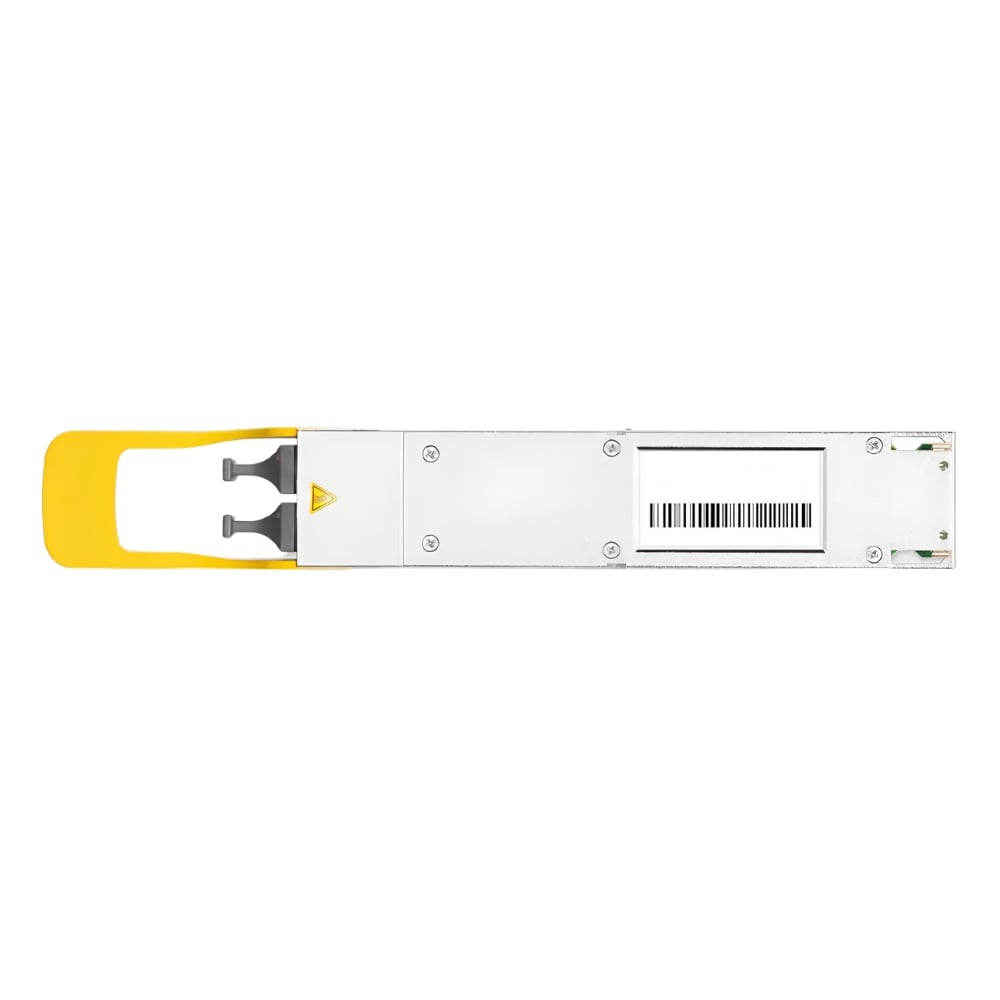
The NVIDIA 800Gb/s Twin-Port OSFP Optical Transceiver offers dual 400GbE connectivity with 1310nm wavelength support for single-mode fiber, integrating dual MPO connectors and a finned top design for superior thermal management and high-density fiber connectivity. |
General Information |
|
|---|---|
| Brand | Nvidia |
| Part Number | MMS4X00-NM-T |
Technical Information |
|
|---|---|
| Media | SMF |
| Protocols | 400GbE,800GbE |
| Connector | MTP/MPO |
Physical Characteristics |
|
|---|---|
| Weight | 3.00 |
| Condition | Refurbished |
Product Description |
|---|
The NVIDIA 800Gb/s Twin-Port OSFP Optical Transceiver delivers ultra-high-speed data transmission with dual 400GbE channels, optimized for modern data center and high-performance computing environments. Designed for single-mode fiber, it leverages a 1310nm wavelength laser to support distances up to 500 meters, ensuring robust long-reach connectivity. This transceiver integrates dual MPO connectors facilitating streamlined fiber connectivity and efficient cable management. The finned top housing design enhances heat dissipation, maintaining optimal operational temperatures and ensuring device longevity. Key Features
Engineered for demanding network environments, this optical transceiver ensures reliable high-speed data transfer with low latency. Its robust design and thermal management features support continuous operation in data centers and telecom facilities. With seamless integration into NVIDIA's ecosystem, this transceiver helps maximize network throughput and scalability, addressing the evolving demands of cloud computing and AI workloads. |
Use Cases |
|---|
This optical transceiver is typically deployed in high-performance data centers, cloud service providers, and enterprise networks requiring ultra-high bandwidth and reliable long-distance connections. It benefits network architects and operators who prioritize scalability and efficient thermal design in their infrastructure. How It's Used:
Its design facilitates operational efficiency and future-proof scalability by providing robust, high-speed optical connectivity with enhanced thermal management to support continuous, high-demand workloads. |
 Shipping Options
 International Delivery
Requires a UPS, FedEx, or DHL account. Customers may arrange pickup from our US warehouse.
International Delivery
Requires a UPS, FedEx, or DHL account. Customers may arrange pickup from our US warehouse.
 Payment Methods
We accept Visa, Mastercard, AMEX, Discover, and Wire Transfer.
Payment Methods
We accept Visa, Mastercard, AMEX, Discover, and Wire Transfer.
 Purchase Orders
We process purchase orders for government agencies, enterprises, data centers, and SMBs.
Purchase Orders
We process purchase orders for government agencies, enterprises, data centers, and SMBs.