Subscribe To Our Newsletter!
Subscribe to the newsletter to stay up to date with the latest news and most useful
Newsletter
↑
Back to Top


✔ Compact storage 2TB capacity adapted for business needs.
✔ Improved speed 7.2k RPM guarantees efficient data management.
✔ High-speed interface 12G SAS connectivity for faster workflows.
✔ Reliable construction 512e technology improves storage efficiency.
✔ Perfect fit 2.5-inch size for space saving integration.

| Product Overview |
|---|
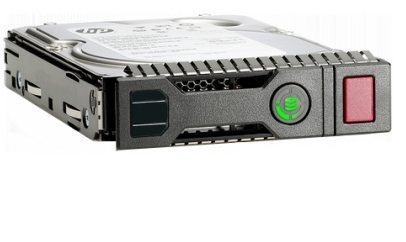
| Enter the world of perfect storage with HP 2TB SAS HDD. Compact but powerful, offers 7.2K RPM, 12G connectivity and 512E technology, which guarantees first level performance in high demand environments. |
| General Information | |
|---|---|
| Brand | HP |
| Part Number | MM2000JEFRC |
| Technical Information | |
|---|---|
| Capacity | 2TB |
| Physical Characteristics | |
|---|---|
| Condition | Refurbished |
| Weight | 5.00 |
| Miscellaneous | |
|---|---|
| Eco Friendly | Yes |
| Product Description |
|---|
The HD 2TB 12G SAS HDD offers a compact design mix and business grade performance. With a capacity of 2TB and a RPM speed of 7.2k, it is designed to handle critical applications with ease. Its 12G SAS interface guarantees rapid data transfer, maintaining efficient and uninterrupted workflows. Key Features and Specifications:
|
| Use Cases |
|---|
The MM2000JEFRC HP 2TB 7.2K RPM SAS hard drive is ideally suited for enterprise-level storage arrays and server environments where balanced capacity and performance are critical. IT professionals managing virtualization infrastructures or data-intensive applications will find its combination of SAS 12Gbps speed and 2.5-inch compact design particularly beneficial in high-density rack deployments or edge computing nodes. How It's Used:
This hard drive enhances operational efficiency by combining reliable throughput with compact form factor, aiding scalability in modern IT infrastructures. Its design supports demanding workloads with consistent performance, making it a practical choice for environments balancing capacity constraints and data throughput requirements. |
 Shipping Options
 International Delivery
Requires a UPS, FedEx, or DHL account. Customers may arrange pickup from our US warehouse.
International Delivery
Requires a UPS, FedEx, or DHL account. Customers may arrange pickup from our US warehouse.
 Payment Methods
We accept Visa, Mastercard, AMEX, Discover, and Wire Transfer.
Payment Methods
We accept Visa, Mastercard, AMEX, Discover, and Wire Transfer.
 Purchase Orders
We process purchase orders for government agencies, enterprises, data centers, and SMBs.
Purchase Orders
We process purchase orders for government agencies, enterprises, data centers, and SMBs.