

Subscribe To Our Newsletter!
Subscribe to the newsletter to stay up to date with the latest news and most useful
Newsletter
↑
Back to Top



Product Overview |
|---|
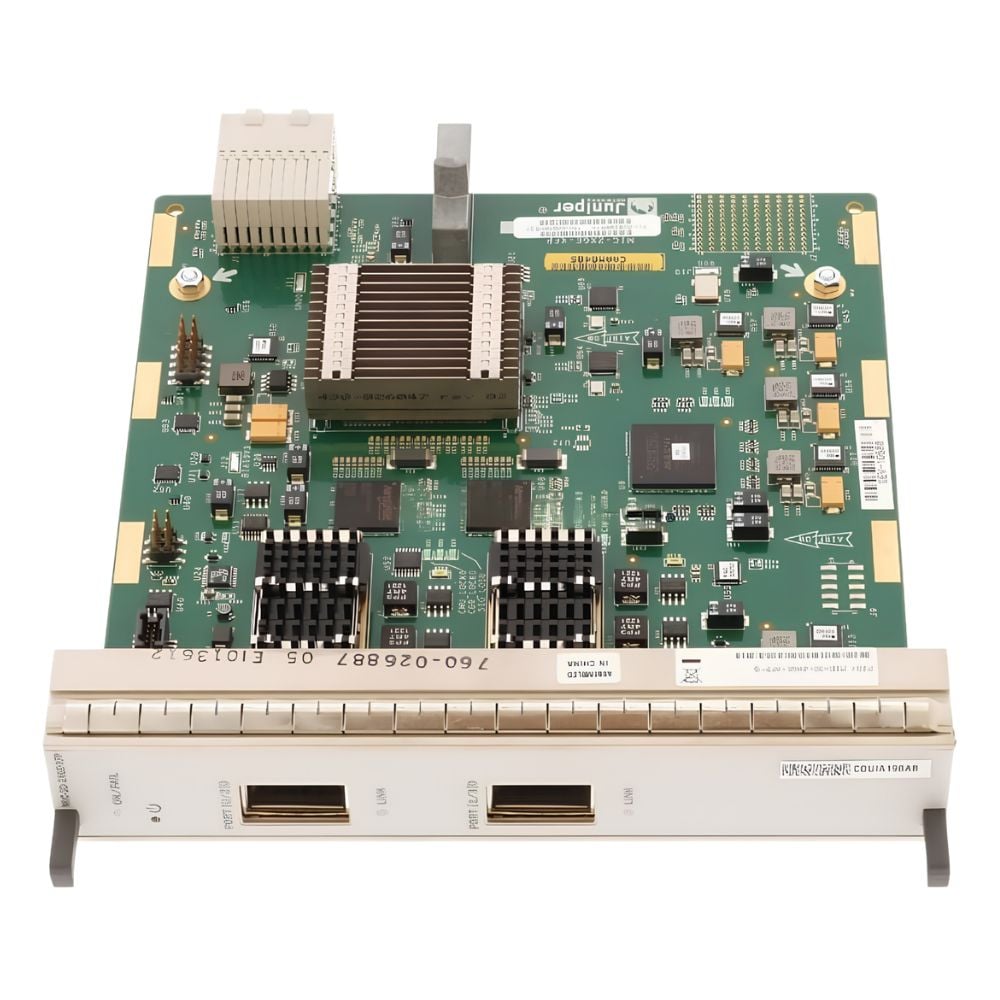
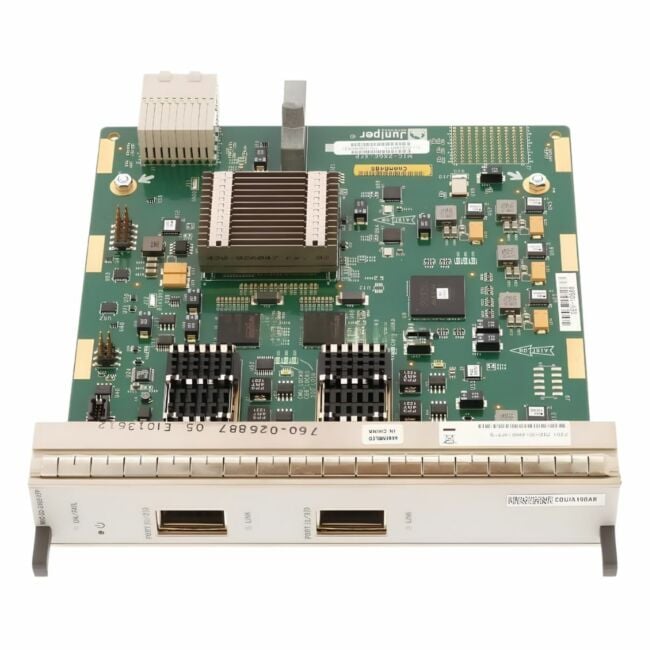
The MIC-3D-2XGE-XFP-D is a dual-port 10 Gigabit Ethernet module designed for Juniper MX80 routers. It provides two XFP interfaces capable of 10GB/s data rates, enabling expanded network connectivity options and optimized data throughput for routing applications. |
General Information |
|
|---|---|
| Brand | Juniper |
Technical Information |
|
|---|---|
| Ports | 2 |
| Compatibility | Juniper MX80 Router |
| Data Transfer Rate | 10 Gbps |
| Connector Type | XFP (supports XFP optical transceivers) |
Physical Characteristics |
|
|---|---|
| Weight | 3.00 |
| Condition | Refurbished |
Miscellaneous |
|
|---|---|
| Assembly Required | No |
Product Description |
|---|
The MIC-3D-2XGE-XFP-D is a dual-port 10 Gigabit Ethernet module designed for use with Juniper MX80 routers. This module provides enhanced network interface capabilities through its two XFP ports, enabling high-speed connectivity for demanding routing environments. Typically deployed in service provider or enterprise networks, it enables network administrators to expand the bandwidth and interface options of their MX80 router platforms. The module is suitable for users needing reliable 10GbE connections integrated directly into their routing infrastructure. Key Features
This module plays a vital role in enabling the MX80 router to handle higher bandwidth traffic and more advanced network demands. By incorporating dual 10GbE XFP ports, it helps maintain efficient data flow and supports network growth within various deployment scenarios. |
Use Cases |
|---|
The MIC-3D-2XGE-XFP-D module is commonly used in network environments requiring increased WAN or LAN bandwidth through Juniper MX80 routers. It is suited for service providers and enterprises managing high-throughput routing and network expansion. How It's Used:
The module supports operational flexibility by integrating 10GbE ports directly into routing infrastructure. It allows network architects to adapt router capabilities to evolving performance requirements without replacing core hardware. |
FAQ's |
|---|
|
 Shipping Options
 International Delivery
Requires a UPS, FedEx, or DHL account. Customers may arrange pickup from our US warehouse.
 Payment Methods
We accept Visa, Mastercard, AMEX, Discover, and Wire Transfer.
 Purchase Orders
We process purchase orders for government agencies, enterprises, data centers, and SMBs.