

Subscribe To Our Newsletter!
Subscribe to the newsletter to stay up to date with the latest news and most useful
Newsletter
↑
Back to Top



Product Overview |
|---|
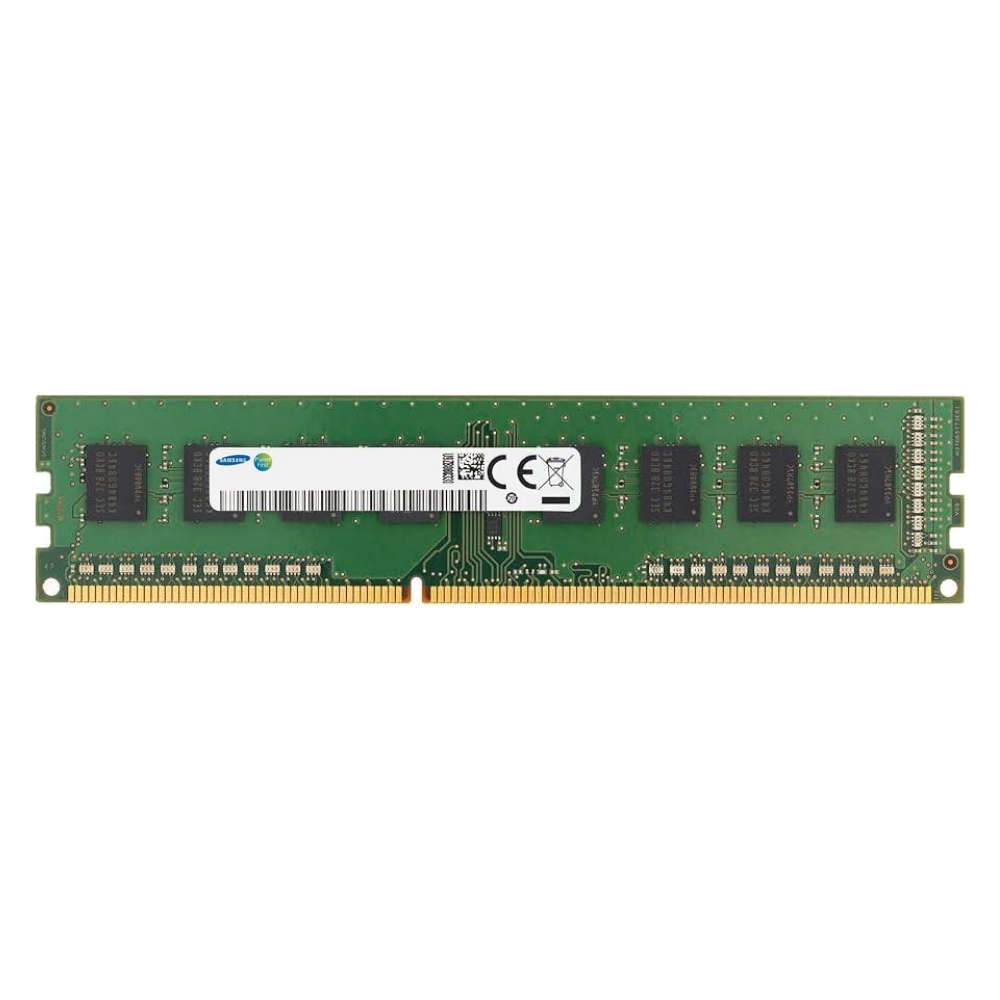
The Samsung M378B5773DH0-CK0 is a 2GB DDR3-1600 Non-ECC UDIMM memory module designed for standard desktop use. It features a CAS latency of 11 and operates at 1600 MT/s, offering memory expansion for typical computing tasks. The non-ECC design means it is intended for systems without error correction capability. |
General Information |
|
|---|---|
| Brand | Samsung |
Technical Information |
|
|---|---|
| Memory Capacity | 2GB |
| Memory Technology | DDR3 |
| Module Type | UDIMM |
| RAM Standard | PC3-12800 |
| Pin Count | 240-Pin |
| Error Correction | Non-ECC |
| Voltage | 1.5V |
Performance |
|
|---|---|
| Bus Speed | 1600 MHz |
| Bandwidth | 12800 MB/s |
| Native Speed | 1600 MT/s |
| CAS | CL11 |
Physical Characteristics |
|
|---|---|
| Weight | 3.00 |
| Condition | Refurbished |
Product Description |
|---|
The Samsung M378B5773DH0-CK0 is a 2GB DDR3-1600 Non-ECC UDIMM memory module designed for desktop computer systems. It provides system memory expansion to support general computing tasks where moderate memory capacity is required. The module operates at a DDR3 speed of 1600 MT/s with a CAS latency of 11, balancing speed and latency for typical desktop workloads. This memory module is commonly used by IT professionals and system builders who require reliable standard DDR3 memory without error-correcting code, suitable for everyday desktop applications. Key Features
This module serves as a straightforward memory upgrade option for desktops using DDR3 slots, helping improve multitasking and application performance within the limits of its 2GB capacity. It fits standard desktop configurations not requiring ECC memory and is suitable for routine computing environments. |
Use Cases |
|---|
This Samsung DDR3 memory module is typically utilized in desktop computers requiring DDR3-1600 memory upgrades. It fits well in office, home, and basic workstation environments where moderate memory capacity suffices and ECC memory is not needed. How It's Used:
By increasing system memory with this module, users can support more applications running simultaneously and improve responsiveness on DDR3-compatible desktops. It provides a basic but necessary role in maintaining or extending the operational life of legacy desktop platforms. |
FAQ's |
|---|
|
 Shipping Options
 International Delivery
Requires a UPS, FedEx, or DHL account. Customers may arrange pickup from our US warehouse.
International Delivery
Requires a UPS, FedEx, or DHL account. Customers may arrange pickup from our US warehouse.
 Payment Methods
We accept Visa, Mastercard, AMEX, Discover, and Wire Transfer.
Payment Methods
We accept Visa, Mastercard, AMEX, Discover, and Wire Transfer.
 Purchase Orders
We process purchase orders for government agencies, enterprises, data centers, and SMBs.
Purchase Orders
We process purchase orders for government agencies, enterprises, data centers, and SMBs.