

Subscribe To Our Newsletter!
Subscribe to the newsletter to stay up to date with the latest news and most useful
Newsletter
↑
Back to Top



Product Overview |
|---|
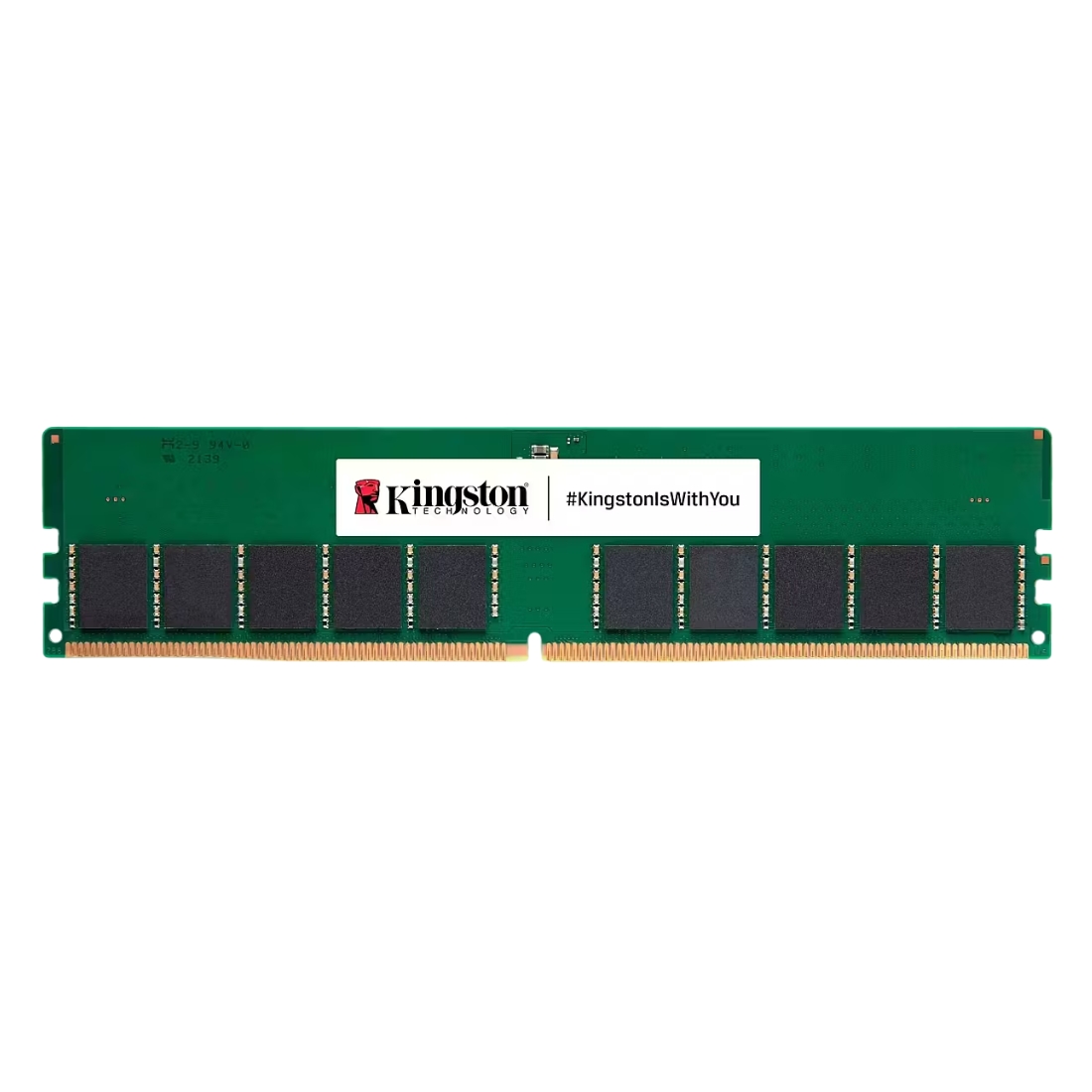
The Kingston KVR24E17D8/16 is a 16GB DDR4 memory module that fits into standard 288-pin slots, providing error-correcting unbuffered memory for desktops. It’s aimed at users who need stable and efficient memory performance without complex buffering, often used in professional setups to ensure smooth operation while handling demanding tasks. |
General Information |
|
|---|---|
| Brand | Kingston |
| Part Number | KVR24E17D8/16 |
Technical Information |
|
|---|---|
| Memory Capacity | 16GB |
| Memory Technology | DDR4 |
| Module Type | UDIMM |
| RAM Standard | PC4-19200 |
| Pin Count | 288-Pin |
| Error Correction | ECC |
| Rank | 2Rx8 |
| Voltage | 1.2V |
Performance |
|
|---|---|
| Bus Speed | 2400 MT/s |
| Bandwidth | 19200 MB/s |
| Native Speed | 2400MHz |
| CAS | CL17 |
Physical Characteristics |
|
|---|---|
| Package | FBGA |
| Dimensions | 30 x 133.35 x 3 mm (H x W x D) — Typical UDIMM JEDEC length 133.35 mm, approximate module height 30 mm, thickness ~3 mm |
| Weight | 0.50 |
| Condition | Refurbished |
Miscellaneous |
|
|---|---|
| Compliance Standards | RoHS, CE, FCC |
Product Description |
|---|
This Kingston 16GB DDR4 memory module provides stable and error-checked system operations, ideal for workstations and servers requiring data integrity. It’s often found in business and professional environments where uptime and accuracy are essential. Built for desktop computers that support ECC unbuffered RAM, this module helps prevent system crashes and data corruption by detecting and correcting minor memory errors automatically. Users who manage databases, perform scientific computing, or run virtual machines will benefit from its reliability and performance. Key Features
This memory is commonly deployed in office desktops, entry-level servers, and professional workstations. It helps systems maintain consistent performance during heavy workloads and reduces the risk of downtime caused by memory faults. |
Use Cases |
|---|
The Kingston KVR24E17D8/16 16GB DDR4 ECC Unbuffered UDIMM is tailored for professional desktop environments where data integrity and system stability are critical. It is well-suited for IT departments and engineers operating workstations that handle complex computations or software development, emphasizing error correction without the latency of registered memory. How It's Used:
This memory module enhances operational efficiency by reducing system crashes due to memory errors, enabling scalable workstation setups that can handle evolving workloads. Its compatibility with standard desktop platforms ensures straightforward upgrades, facilitating sustained performance in professional IT environments. |
 Shipping Options
 International Delivery
Requires a UPS, FedEx, or DHL account. Customers may arrange pickup from our US warehouse.
International Delivery
Requires a UPS, FedEx, or DHL account. Customers may arrange pickup from our US warehouse.
 Payment Methods
We accept Visa, Mastercard, AMEX, Discover, and Wire Transfer.
Payment Methods
We accept Visa, Mastercard, AMEX, Discover, and Wire Transfer.
 Purchase Orders
We process purchase orders for government agencies, enterprises, data centers, and SMBs.
Purchase Orders
We process purchase orders for government agencies, enterprises, data centers, and SMBs.