

Subscribe To Our Newsletter!
Subscribe to the newsletter to stay up to date with the latest news and most useful
Newsletter
↑
Back to Top



Product Overview |
|---|
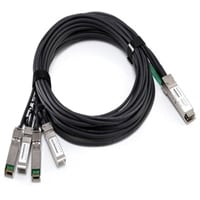
The K9HPR Dell 40GbE to 4x10GbE SFP+ Passive Copper Breakout 1M Cable efficiently divides a single 40GbE link into four 10GbE channels using a passive copper design. It fits seamlessly into data center environments requiring flexible port configurations, especially when connecting high-speed uplinks to multiple devices. This cable helps optimize switch resources by providing a straightforward and power-efficient way to manage different Ethernet speeds. |
General Information |
|
|---|---|
| Brand | Dell |
| Part Number | K9HPR |
Technical Information |
|
|---|---|
| Data Rate | 40Gbps,10Gbps |
| Cable Length | 1 m |
| Compatibility | Dell (QSFP+ ports supporting 4x10G breakout), Other vendors with QSFP+ to 4xSFP+ breakout support |
| Stacking Bandwidth | 40Gbps |
| product type | Passive Copper Breakout Cable (Direct Attach Copper, DAC) |
| Product Category | Breakout Cable,Direct Attach Copper (DAC),Network Cables,Cables & Adapters |
Connectivity |
|
|---|---|
| Connector Type | 1x QSFP+ to 4x SFP+ |
Physical Characteristics |
|
|---|---|
| Form Factor | QSFP+ to 4x SFP+ cable (passive) |
| Weight | 5.00 |
| Condition | Refurbished |
Product Description |
|---|
This breakout cable splits a 40GbE connection into four separate 10GbE links, making it ideal for data centers and network environments needing flexible port allocation. Often found in setups where a high-speed link must be divided to connect multiple 10GbE devices, it helps optimize switch port usage without extra hardware. Built for network engineers and IT professionals who manage data traffic in enterprise or cloud infrastructures, the cable simplifies transitions between different Ethernet speeds. Its passive copper design enables easy deployment with minimal power demands. Key Features
This cable is typically deployed in server racks and network switches where high-density port configurations are necessary. It enables efficient use of 40GbE uplinks by branching out to multiple lower-speed connections, supporting versatile network architectures without additional transceivers. |
Use Cases |
|---|
The K9HPR Dell 40GbE to 4x10GbE SFP+ Passive Copper Breakout 1M Cable is commonly utilized in high-density data center environments where network administrators need to optimize existing 40GbE uplinks by splitting them into multiple 10GbE connections. This cable is especially beneficial for enterprises managing virtualization clusters or storage networks requiring flexible connectivity without additional power consumption. How It's Used:
This passive breakout cable enhances operational efficiency by enabling streamlined network topologies and reducing the need for additional hardware components. Its design supports scalability in dynamic IT environments, allowing organizations to adapt bandwidth distribution to evolving workload demands while maintaining high performance. |
 Shipping Options
 International Delivery
Requires a UPS, FedEx, or DHL account. Customers may arrange pickup from our US warehouse.
International Delivery
Requires a UPS, FedEx, or DHL account. Customers may arrange pickup from our US warehouse.
 Payment Methods
We accept Visa, Mastercard, AMEX, Discover, and Wire Transfer.
Payment Methods
We accept Visa, Mastercard, AMEX, Discover, and Wire Transfer.
 Purchase Orders
We process purchase orders for government agencies, enterprises, data centers, and SMBs.
Purchase Orders
We process purchase orders for government agencies, enterprises, data centers, and SMBs.