

Subscribe To Our Newsletter!
Subscribe to the newsletter to stay up to date with the latest news and most useful
Newsletter
↑
Back to Top



Product Overview |
|---|
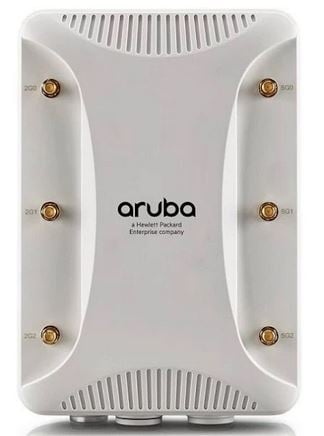
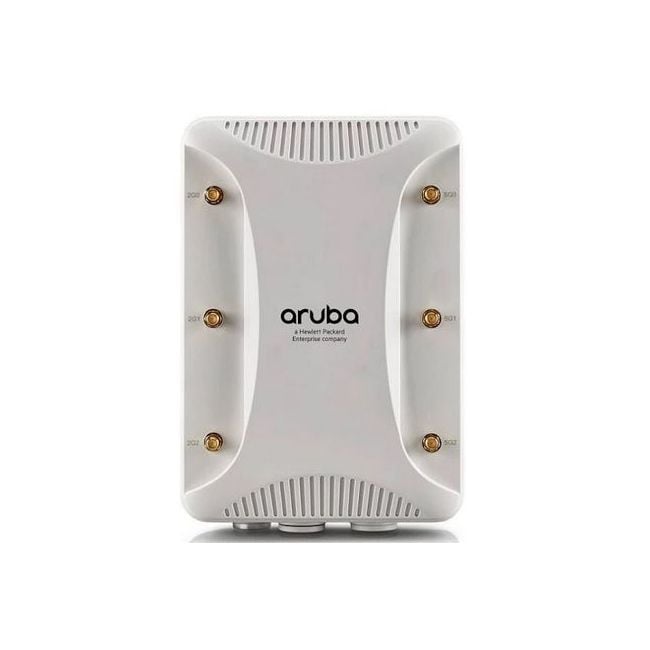
The HP Aruba AP-114 access point provides dual-band wireless coverage using 802.11n technology and a 3x3 MU-MIMO antenna setup, making it suitable for indoor enterprise networks. It fits well in environments like offices and schools where reliable Wi-Fi is essential for multiple devices connecting simultaneously. |
General Information |
|
|---|---|
| Brand | HPE |
| Part Number | JW158-61001 |
Technical Information |
|
|---|---|
| Frequency Bands | 2.4 GHz,5 GHz |
| Data Rate | Up to 450 Mbps per radio (3x3 802.11n); up to ~900 Mbps aggregate (theoretical) |
| Interface | Wi‑Fi (802.11n) |
| WiFi Standard | 802.11n |
| Security | WPA-PSK,WPA2-PSK,WPA2-Enterprise (802.1X) |
| MIMO | Yes |
| Ethernet Port | 1 x 10/100/1000 RJ-45 (Gigabit Ethernet) with PoE support (802.3af) |
| Management | Web-based GUI,SNMP,Aruba AirWave,Aruba Central,CLI (SSH) |
Physical Characteristics |
|
|---|---|
| Weight | 5.00 |
| Condition | Refurbished |
Miscellaneous |
|
|---|---|
| Compliance Standards | WEEE, RoHS, CE, FCC, UL |
Product Description |
|---|
The HP Aruba AP-114 is a wireless access point built for delivering reliable Wi-Fi connectivity in office and campus environments. It often sits on ceilings or walls to extend network coverage where multiple users need fast, stable wireless access. Installed primarily by IT professionals in medium-sized businesses or educational institutions, it supports growing device density while maintaining performance. This access point is commonly found in places requiring robust wireless service like meeting rooms, classrooms, and shared workspaces. Key Features
Typically deployed in office floors, schools, or other buildings with dense device environments, the AP-114 offers steady wireless access where many users connect at once. Its role is to balance network load and provide sufficient bandwidth without frequent dropouts. By placing these access points strategically, organizations can maintain consistent network quality and improve user productivity without extensive cabling or infrastructure changes. |
Use Cases |
|---|
The HP Aruba AP-114 access point is commonly deployed in medium to large indoor environments requiring robust Wi-Fi connectivity for multiple users. It is especially suited for office buildings, educational campuses, and healthcare facilities where maintaining consistent network performance across varied client devices is critical. How It's Used:
This access point assists IT teams in scaling wireless infrastructure efficiently while maintaining high throughput and device density requirements. Its dual-radio design and MU-MIMO capabilities help optimize spectrum use and reduce network congestion in complex indoor environments. |
 Shipping Options
 International Delivery
Requires a UPS, FedEx, or DHL account. Customers may arrange pickup from our US warehouse.
International Delivery
Requires a UPS, FedEx, or DHL account. Customers may arrange pickup from our US warehouse.
 Payment Methods
We accept Visa, Mastercard, AMEX, Discover, and Wire Transfer.
Payment Methods
We accept Visa, Mastercard, AMEX, Discover, and Wire Transfer.
 Purchase Orders
We process purchase orders for government agencies, enterprises, data centers, and SMBs.
Purchase Orders
We process purchase orders for government agencies, enterprises, data centers, and SMBs.