

Subscribe To Our Newsletter!
Subscribe to the newsletter to stay up to date with the latest news and most useful
Newsletter
↑
Back to Top



Product Overview |
|---|
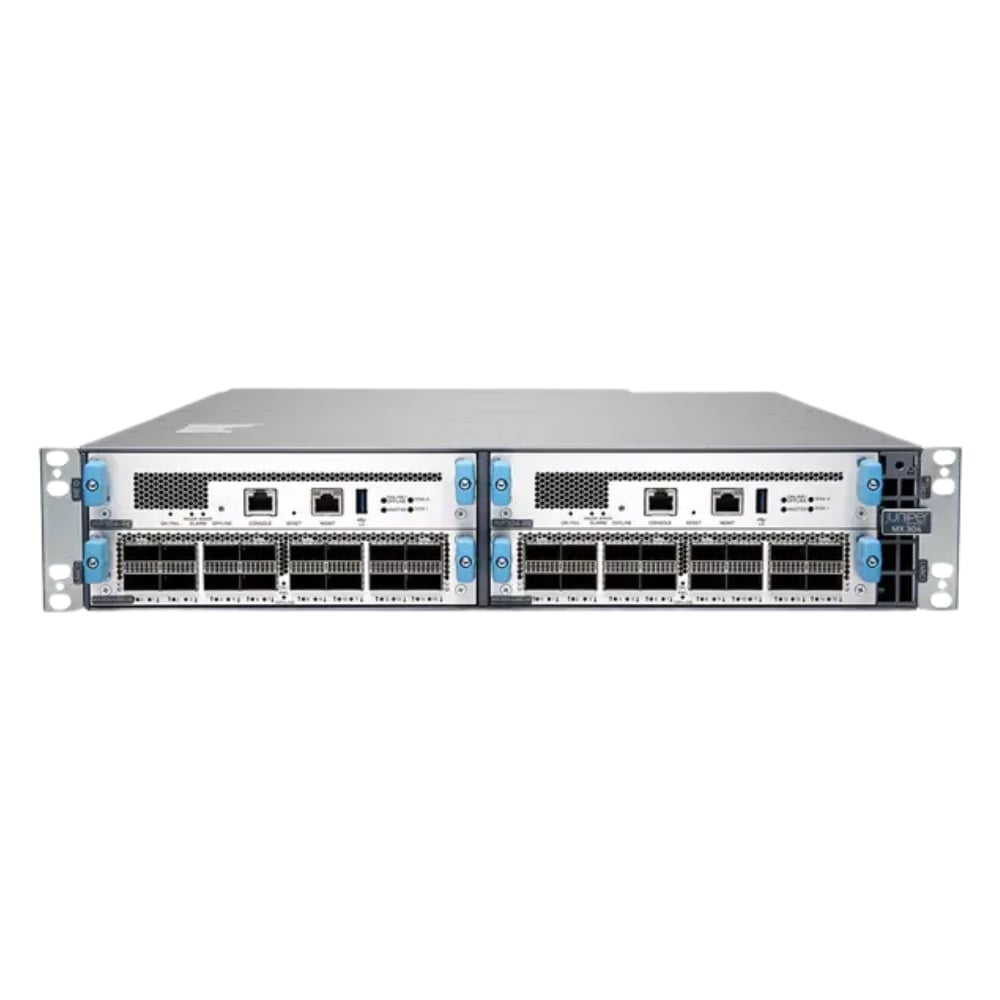
The JNP304-RE-S routing engine serves as a critical control module within Juniper routers, managing data flow and routing functions. It fits into the network architecture to provide processing strength necessary for routing protocols and system operations, contributing to the router's overall performance and reliability. |
General Information |
|
|---|---|
| Brand | Juniper |
Physical Characteristics |
|
|---|---|
| Weight | 3.00 |
| Condition | Refurbished |
Miscellaneous |
|
|---|---|
| Assembly Required | No |
Product Description |
|---|
The JNP304-RE-S is a routing engine component intended for Juniper network routers. It is built to handle routing protocol processing, network traffic management, and system control, serving as a core element in routing operations. Often found in enterprise-grade and service provider network infrastructure, this routing engine plays a vital role in sustaining reliable routing performance. Network engineers and IT professionals rely on such components to ensure stable and efficient data routing across complex network environments. Key Features
With dependable operation and processing efficiency, this routing engine supports the foundational aspects of network routing infrastructure. It helps maintain uninterrupted network performance and assists in managing complex routing tasks without degradation. |
Use Cases |
|---|
This routing engine is typically deployed in enterprise and service provider network environments where maintaining high availability and performance is essential. It benefits IT teams tasked with managing complex routing infrastructures requiring robust and reliable hardware components. How It's Used:
By integrating this routing engine, organizations can sustain operational efficiency and network scalability. It aids in maintaining consistent routing throughput and supports critical network functions essential for ongoing IT infrastructure management. |
 Shipping Options
 International Delivery
Requires a UPS, FedEx, or DHL account. Customers may arrange pickup from our US warehouse.
International Delivery
Requires a UPS, FedEx, or DHL account. Customers may arrange pickup from our US warehouse.
 Payment Methods
We accept Visa, Mastercard, AMEX, Discover, and Wire Transfer.
Payment Methods
We accept Visa, Mastercard, AMEX, Discover, and Wire Transfer.
 Purchase Orders
We process purchase orders for government agencies, enterprises, data centers, and SMBs.
Purchase Orders
We process purchase orders for government agencies, enterprises, data centers, and SMBs.