

Subscribe To Our Newsletter!
Subscribe to the newsletter to stay up to date with the latest news and most useful
Newsletter
↑
Back to Top



Product Overview |
|---|
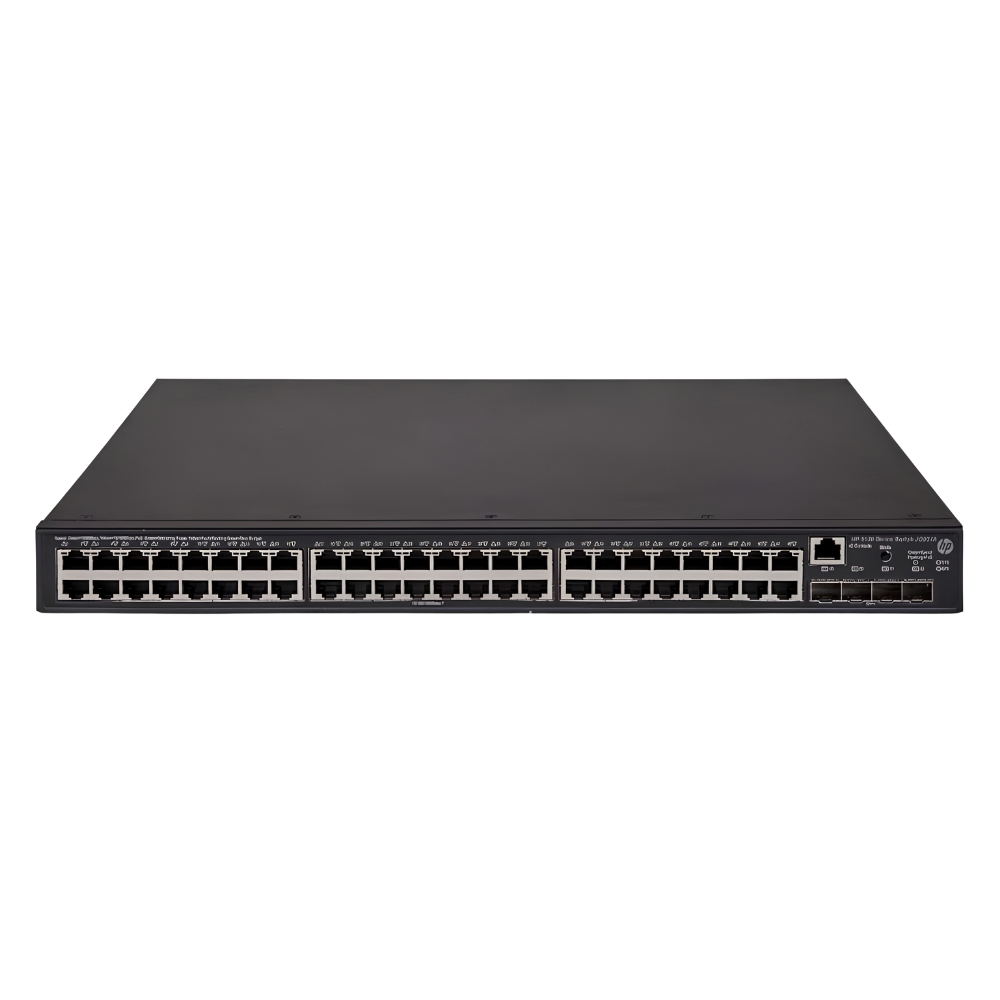
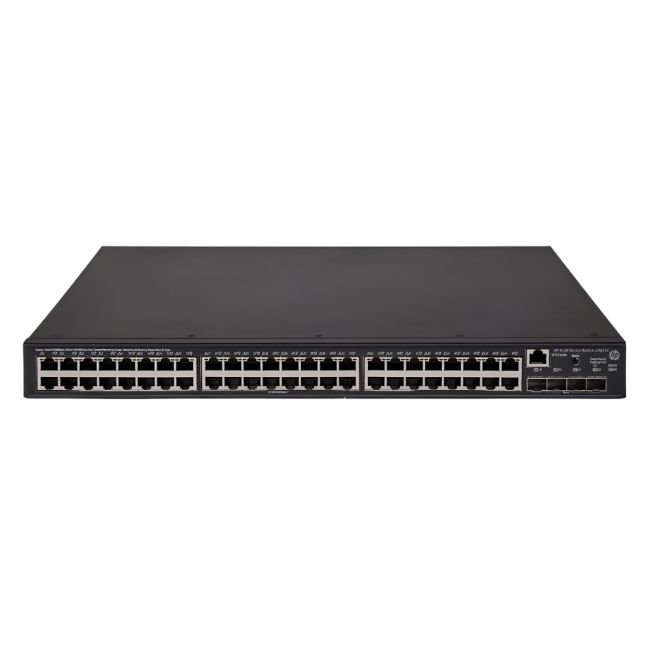
The JG937AR - HPE 5130-48G-PoE+ Layer 3 switch integrates high-density PoE+ ports with advanced routing capabilities, fitting well within enterprise and campus networks. It provides a blend of power delivery and data transport necessary for modern network demands while maintaining manageable complexity. |
General Information |
|
|---|---|
| Brand | HPE |
| Condition | Refurbished |
Technical Information |
|
|---|---|
| Switch Type | Layer 3, Managed Switch, PoE Switch, Gigabit Switch |
| Form Factor | Rack-Mountable |
| Mount Type | 1U Rack |
| Switch Ports | 48 |
| Number of Ports | 48-Ports |
| Port Type | 10/100/1000Base-T, 10G SFP+, USB Console, Serial Console (RJ-45) |
| Port Speed | 10/100/1000 Mbps (access ports), 10 Gbps (SFP+ uplinks) |
| UpLink Ports | 4 x 10G SFP+ |
| POE Support | PoE+ |
| Switching Capacity | 176 Gbps |
| Switch Forwarding Rate | 343.75 Mpps |
| DRAM | 512 MB |
| Flash Memory | 256 MB |
| VLAN Support | Yes |
| Max VLANs Supported | 4094 |
| Stackable | Optional |
| Layer Support | Layer 3 |
| Connector Type | RJ-45,SFP+ |
Performance |
|
|---|---|
| Latency | Low (<5 microseconds) |
| Jumbo Frame Support | Up To 9216 Bytes |
| MAC Address Table Size | 32768 |
Management and Configuration |
|
|---|---|
| Routing Protocols | Static, RIP, RIPng, OSPF, OSPFv3, VRRP, PIM-SM, IGMP |
| Remote Protocols | Yes |
| Management Interfaces | Web GUI, CLI (Console/SSH/Telnet), SNMP v1/v2/v3, RMON, sFlow, Syslog |
| Security Features | 802.1X,ACLs,Port Security,DHCP Snooping,IP Source Guard,Dynamic ARP Inspection,Storm Control,DoS Protection,SSL/SSH |
| Management Type | Managed |
| Security | Yes |
| Remote Management Protocol | SSH,Telnet,HTTP,HTTPS,SNMP,RMON |
| Routing Protocol | Static,RIP,OSPF,OSPFv3,VRRP |
Power & Cooling |
|
|---|---|
| Fans | 2 hot-swappable fans |
| Power | AC 100-240V, 50/60Hz; PoE budget ~740W (typical) |
| Power Supply | Internal AC (100-240VAC) |
Physical Characteristics |
|
|---|---|
| Dimensions | 1.73in x 17.32in x 17.72in (H x W x D) |
| Weight | 3.00 |
| Operating Temperature | 0°C to 45°C |
Miscellaneous |
|
|---|---|
| Eco Friendly | Yes |
| Assembly Required | No |
| Compliance Standards | WEEE, RoHS, CE, FCC, UL, TUV, cULus |
| Compliant Standards | IEEE 802.3,IEEE 802.3u,IEEE 802.3ab,IEEE 802.3z,IEEE 802.3ae,IEEE 802.3x,IEEE 802.1D,IEEE 802.1p,IEEE 802.1Q,IEEE 802.1w,IEEE 802.1s,IEEE 802.1X,IEEE 802.3af,IEEE 802.3at |
Product Description |
|---|
The JG937AR - HPE 5130-48G-PoE+ is a Layer 3 switch designed to deliver high-speed connectivity and power over Ethernet across numerous endpoints. It is commonly found in enterprise network infrastructures, providing reliable switching and routing capabilities. Built for IT professionals and network administrators, this switch supports demanding environments that require scalable and efficient network management. Its combination of Gigabit Ethernet and 10 Gigabit SFP+ ports makes it flexible for various network topologies. Key Features
This switch serves as a reliable backbone component in network setups where both power and data need to be managed over a robust infrastructure. It ensures steady performance and provides essential features that facilitate network segmentation and traffic management. Overall, it balances functionality and scalability, making it a practical choice for organizations aiming for efficient network operation without compromising on power delivery or data throughput. |
Use Cases |
|---|
This switch is typically deployed in enterprise and campus network environments where both high port density and power delivery are essential. Network operators and IT teams benefit from its routing and PoE capabilities to support various connected devices reliably. How It's Used:
By combining power delivery and Layer 3 switching, this model promotes streamlined network design and helps maintain operational efficiency. It supports scalability and performance demands typical in growing network infrastructures. |
 Shipping Options
 International Delivery
Requires a UPS, FedEx, or DHL account. Customers may arrange pickup from our US warehouse.
International Delivery
Requires a UPS, FedEx, or DHL account. Customers may arrange pickup from our US warehouse.
 Payment Methods
We accept Visa, Mastercard, AMEX, Discover, and Wire Transfer.
Payment Methods
We accept Visa, Mastercard, AMEX, Discover, and Wire Transfer.
 Purchase Orders
We process purchase orders for government agencies, enterprises, data centers, and SMBs.
Purchase Orders
We process purchase orders for government agencies, enterprises, data centers, and SMBs.