

Subscribe To Our Newsletter!
Subscribe to the newsletter to stay up to date with the latest news and most useful
Newsletter
↑
Back to Top



Product Overview |
|---|
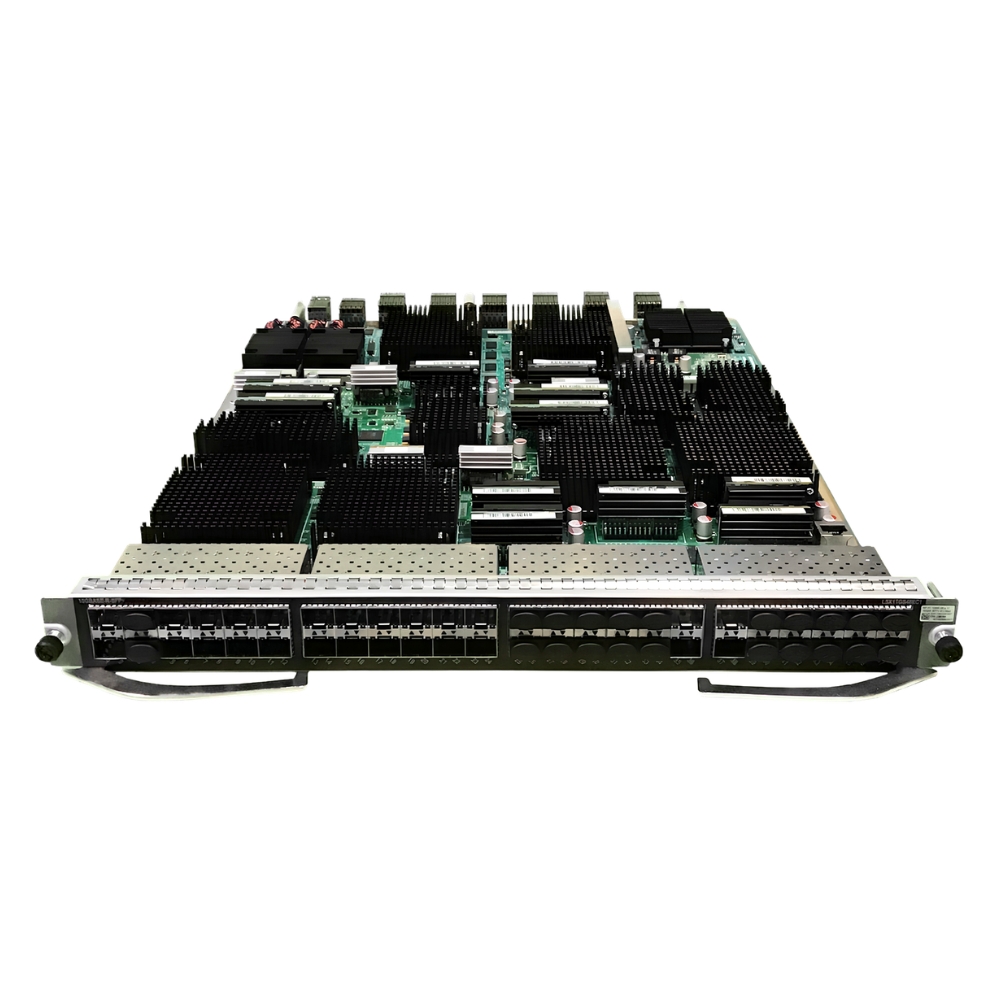
The JG626-62201 - HPE FlexFabric 12900 48 x Ports 10GBase-X Expansion Module adds high-speed fiber optic connectivity to the HPE FlexFabric 12900 chassis. It fits within data center networking setups that require dense 10 Gigabit Ethernet ports, enhancing the chassis’s ability to handle increased traffic and complex network topologies. |
General Information |
|
|---|---|
| Brand | HPE |
Technical Information |
|
|---|---|
| Ports | 48 |
| Compatibility | HPE FlexFabric 12900 (HPE 12900 chassis/switch) |
| Data Transfer Rate | 10 Gbps |
| Connector Type | SFP+ (10GBase-X optics) |
Physical Characteristics |
|
|---|---|
| Weight | 3.00 |
| Condition | Refurbished |
Miscellaneous |
|
|---|---|
| Assembly Required | No |
Product Description |
|---|
The JG626-62201 expansion module extends the port capacity of the HPE FlexFabric 12900 chassis by adding 48 10GBase-X ports. This module is commonly found in modular switches used to enhance network throughput and flexibility. It is built for network engineers and IT professionals managing large-scale infrastructure who require reliable and consistent 10 Gigabit Ethernet connectivity. Key Features
This module plays a crucial role in expanding network capacity without compromising performance. Its reliable design ensures stable operation in demanding environments, making it a solid choice for infrastructure growth. Overall, it provides an effective solution for upgrading network fabrics where additional 10G ports are needed. |
Use Cases |
|---|
This expansion module is typically deployed in enterprise data centers and service provider networks where 10G fiber connections are standard. Network administrators benefit from the ability to increase port density in a compact form factor, supporting environments with high throughput and low latency needs. How It's Used:
By integrating this module, organizations can effectively scale their network fabrics while maintaining consistent performance and stability. It supports operational needs where increased interface density and fiber connectivity are essential for meeting evolving capacity demands. |
 Shipping Options
 International Delivery
Requires a UPS, FedEx, or DHL account. Customers may arrange pickup from our US warehouse.
International Delivery
Requires a UPS, FedEx, or DHL account. Customers may arrange pickup from our US warehouse.
 Payment Methods
We accept Visa, Mastercard, AMEX, Discover, and Wire Transfer.
Payment Methods
We accept Visa, Mastercard, AMEX, Discover, and Wire Transfer.
 Purchase Orders
We process purchase orders for government agencies, enterprises, data centers, and SMBs.
Purchase Orders
We process purchase orders for government agencies, enterprises, data centers, and SMBs.