

Subscribe To Our Newsletter!
Subscribe to the newsletter to stay up to date with the latest news and most useful
Newsletter
↑
Back to Top



Product Overview |
|---|
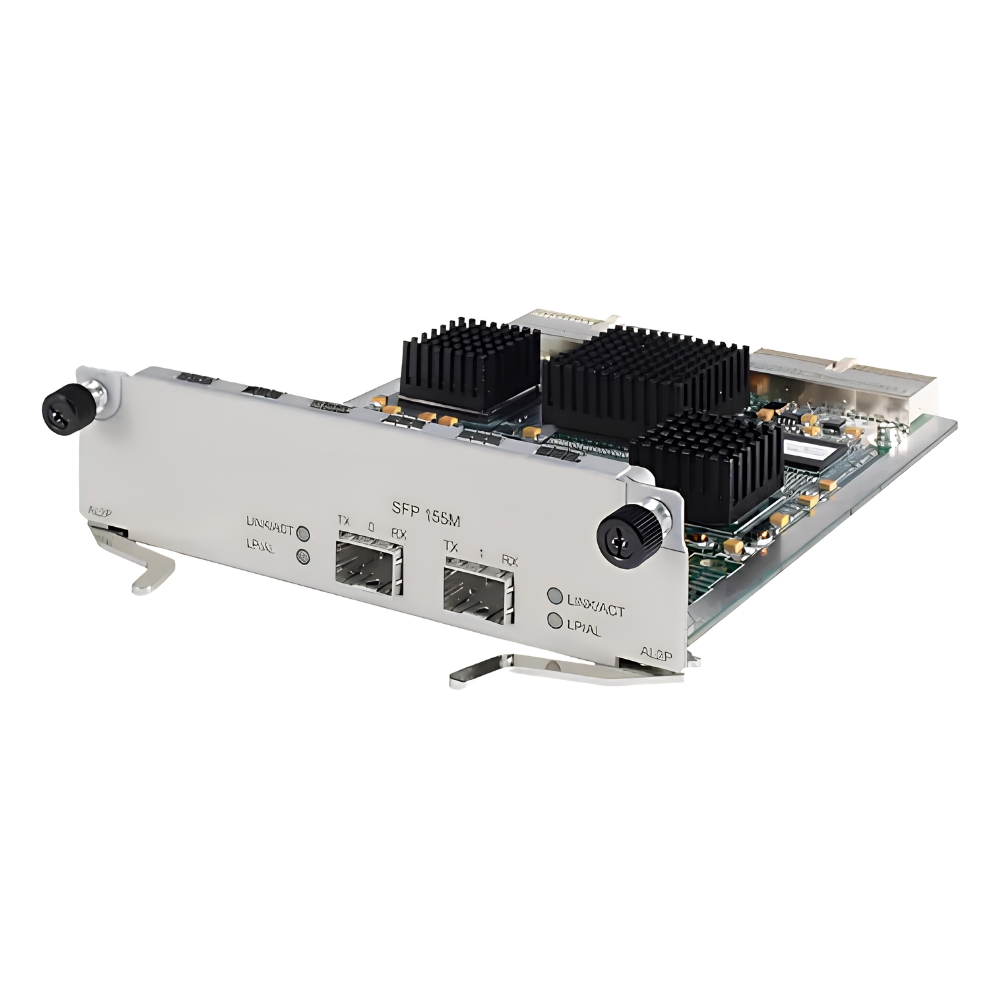
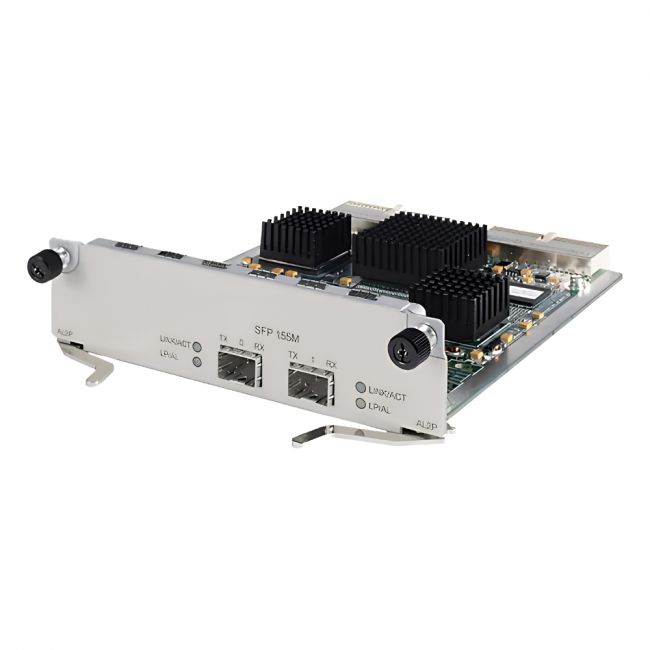
The JC495A - HP 6600 2-Ports OC-3c/STM-1c ATM SFP Router Module enhances routers by providing two optical ports that handle ATM traffic at OC-3c/STM-1c speeds. It fits into HP 6600 series hardware, serving as a critical component for networks that rely on ATM over fiber connections, enabling efficient data flow and network scalability. |
General Information |
|
|---|---|
| Brand | HP |
Technical Information |
|
|---|---|
| Ports | 2 |
| Compatibility | HP 6600 Series Router |
| Data Transfer Rate | 155.52 Mbps, OC-3c/STM-1c |
| Connector Type | SFP |
Physical Characteristics |
|
|---|---|
| Weight | 3.00 |
| Condition | Refurbished |
Miscellaneous |
|
|---|---|
| Assembly Required | No |
| Compliance Standards | RoHS, CE, FCC |
Product Description |
|---|
The JC495A module extends the HP 6600 router's functionality by adding two OC-3c/STM-1c ATM SFP ports, designed to facilitate high-capacity asynchronous transfer mode networking. This module is commonly found in environments requiring reliable, point-to-point data transport over optical fiber. Network engineers and IT professionals working with ATM infrastructure often utilize this module to maintain robust system performance. Key Features
Integrating this module allows organizations to extend the life and capabilities of their HP 6600 routers without major overhauls. Its reliability and consistent performance contribute to dependable network operations over optical ATM links. |
Use Cases |
|---|
This module is typically deployed in telecom environments and enterprise networks where ATM-based connectivity remains essential. It suits organizations managing ATM backbones or edge devices needing reliable optical interfaces for data transmission. How It's Used:
By offering stable ATM optical connectivity, this module helps maintain network efficiency and supports ongoing operations in environments where ATM architecture is still deployed. It balances performance and compatibility without introducing unnecessary complexity. |
 Shipping Options
 International Delivery
Requires a UPS, FedEx, or DHL account. Customers may arrange pickup from our US warehouse.
International Delivery
Requires a UPS, FedEx, or DHL account. Customers may arrange pickup from our US warehouse.
 Payment Methods
We accept Visa, Mastercard, AMEX, Discover, and Wire Transfer.
Payment Methods
We accept Visa, Mastercard, AMEX, Discover, and Wire Transfer.
 Purchase Orders
We process purchase orders for government agencies, enterprises, data centers, and SMBs.
Purchase Orders
We process purchase orders for government agencies, enterprises, data centers, and SMBs.