

Subscribe To Our Newsletter!
Subscribe to the newsletter to stay up to date with the latest news and most useful
Newsletter
↑
Back to Top



Product Overview |
|---|
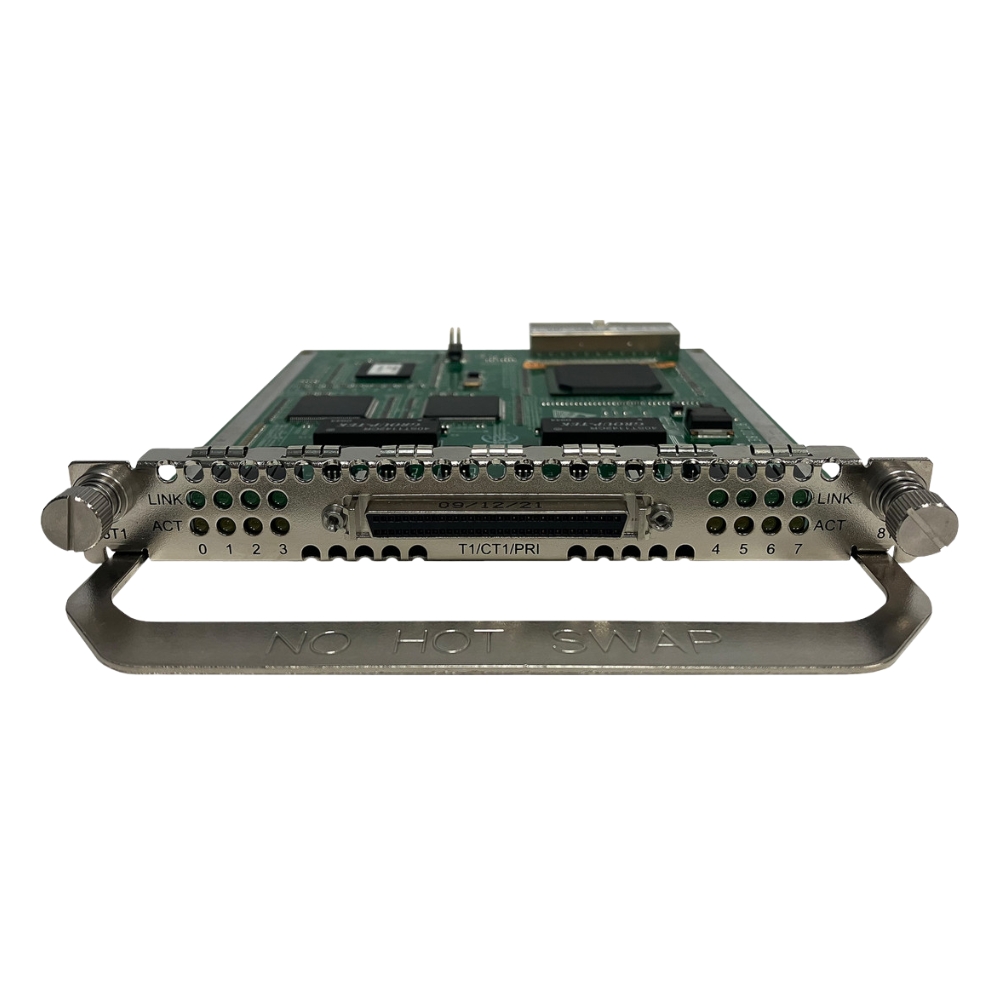
The JC160A - HPE FlexNetwork 6600 8 x Ports T1 MIM Router Expansion Module adds specialized T1 port capacity to the FlexNetwork 6600 platform. It fits directly into the chassis to expand routing options where T1 links are required, providing a straightforward way to incorporate legacy telecommunications interfaces alongside newer technologies without disrupting existing operations. |
General Information |
|
|---|---|
| Brand | HPE |
Technical Information |
|
|---|---|
| Ports | 8 |
| Compatibility | HPE FlexNetwork 6600 |
| Data Transfer Rate | 1.544 Mbps per port |
| Connector Type | RJ-48C (T1) |
Physical Characteristics |
|
|---|---|
| Weight | 3.00 |
| Condition | Refurbished |
Miscellaneous |
|
|---|---|
| Assembly Required | No |
Product Description |
|---|
The JC160A module extends the capabilities of the HPE FlexNetwork 6600 series by offering 8 additional T1 ports. It's commonly found in enterprise network environments where legacy T1 connectivity remains necessary alongside modern infrastructure. Built for network administrators needing to integrate T1 circuits without compromising existing setup, this expansion module enhances routing versatility and scale. Key Features
As a practical addition to established networks, the JC160A ensures continued support for essential T1 connections while enabling network growth. Its stable performance and compatibility help maintain smooth data flow and voice quality, contributing to overall system reliability and longevity. |
Use Cases |
|---|
This expansion module is typically used in network setups that require continued support for T1 lines, often in organizations that maintain legacy telephony or data circuits. It suits environments where integrating traditional and modern network systems is necessary, such as enterprises transitioning infrastructure or service providers managing diverse client connections. How It's Used:
This module supports operational efficiency by allowing networks to maintain critical T1 services while scaling with newer technologies, ensuring that routing capacity and compatibility remain aligned with evolving infrastructure demands. |
 Shipping Options
 International Delivery
Requires a UPS, FedEx, or DHL account. Customers may arrange pickup from our US warehouse.
International Delivery
Requires a UPS, FedEx, or DHL account. Customers may arrange pickup from our US warehouse.
 Payment Methods
We accept Visa, Mastercard, AMEX, Discover, and Wire Transfer.
Payment Methods
We accept Visa, Mastercard, AMEX, Discover, and Wire Transfer.
 Purchase Orders
We process purchase orders for government agencies, enterprises, data centers, and SMBs.
Purchase Orders
We process purchase orders for government agencies, enterprises, data centers, and SMBs.