

Subscribe To Our Newsletter!
Subscribe to the newsletter to stay up to date with the latest news and most useful
Newsletter
↑
Back to Top



Product Overview |
|---|
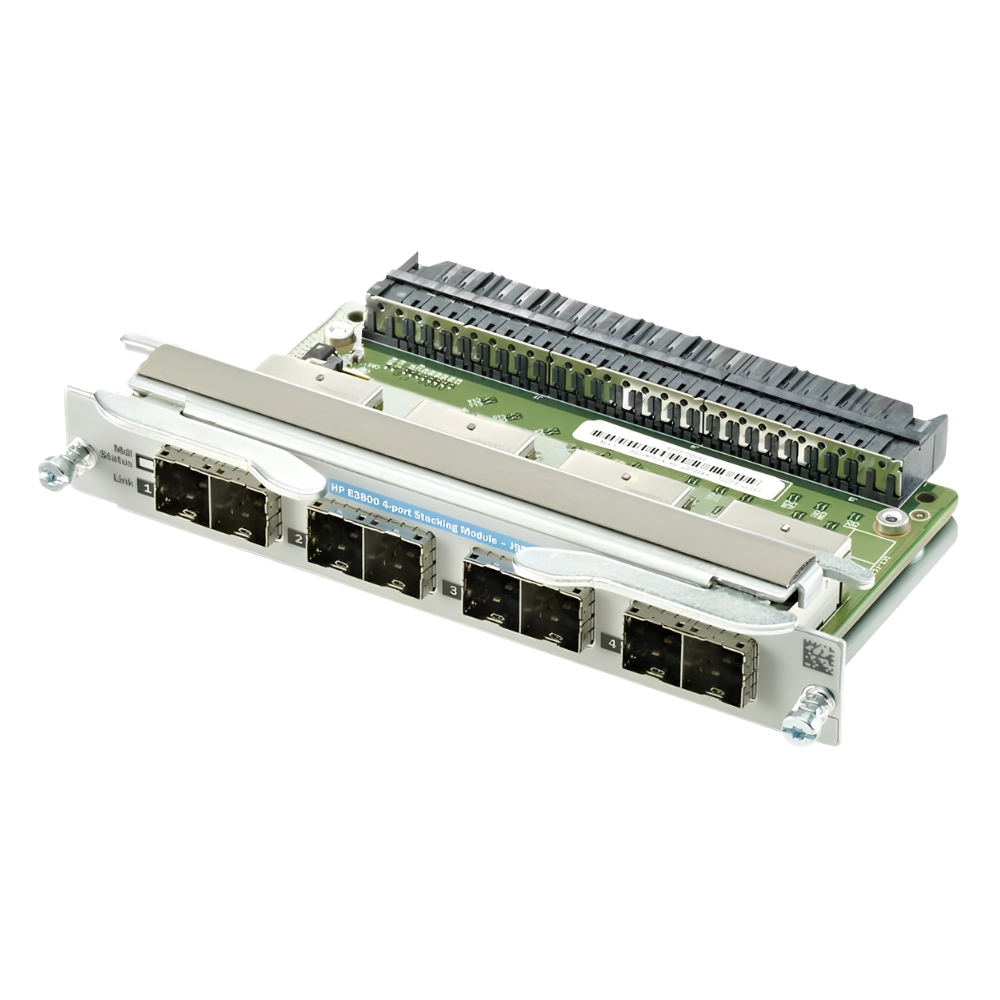
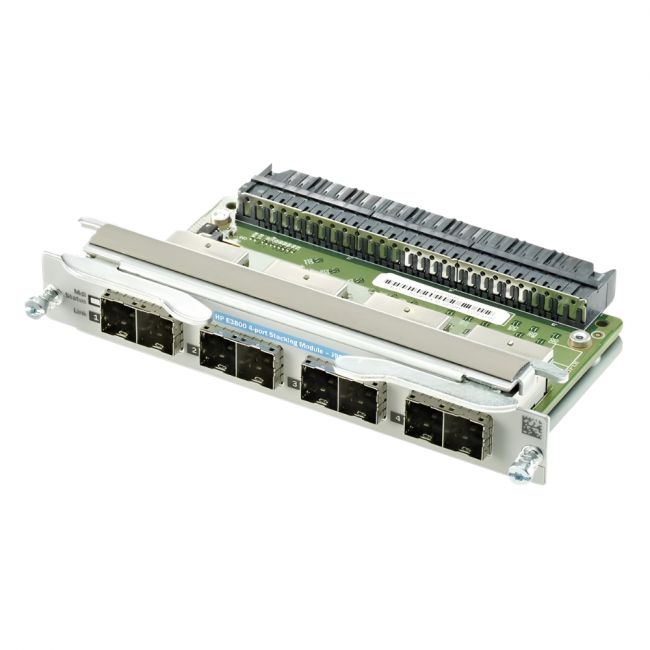
The J9577-61001 - HPE Aruba 3800 4-Ports Stacking Module allows multiple Aruba 3800 switches to be linked together, forming a single managed unit. It fits into network setups requiring scalable and simplified switch management through high-speed stacking connections. |
General Information |
|
|---|---|
| Brand | HPE |
Technical Information |
|
|---|---|
| Ports | 4 |
| Compatibility | HPE Aruba 3800 Switch Series |
| Data Transfer Rate | 40 Gbps |
| Connector Type | QSFP+ |
Physical Characteristics |
|
|---|---|
| Weight | 3.00 |
| Condition | Refurbished |
Miscellaneous |
|
|---|---|
| Assembly Required | No |
| Compliance Standards | RoHS, CE, FCC |
Product Description |
|---|
The J9577-61001 is a stacking module designed for HPE Aruba 3800 series switches, facilitating the connection of multiple units into a single logical switch. It is commonly found in enterprise network environments where scalability and simplified management are essential. Network administrators and IT teams benefit from its ability to create a unified system, reducing complexity and improving redundancy. Key Features
Offering reliable performance, the module plays a key role in expanding network capabilities without compromising stability. Its design ensures that network operations remain uninterrupted while scaling up switch capacity, making it a practical component for maintaining continuous, manageable network infrastructure. |
Use Cases |
|---|
This stacking module is typically deployed in enterprise data centers and campus networks where modular switch expansion is needed. It benefits IT professionals managing medium to large network clusters demanding high availability and simplified operations. How It's Used:
By enabling a scalable and resilient network stack, the module helps maintain operational efficiency and consistent performance across growing IT environments. It contributes to streamlined maintenance and enhances the network’s ability to adapt as demands evolve. |
 Shipping Options
 International Delivery
Requires a UPS, FedEx, or DHL account. Customers may arrange pickup from our US warehouse.
International Delivery
Requires a UPS, FedEx, or DHL account. Customers may arrange pickup from our US warehouse.
 Payment Methods
We accept Visa, Mastercard, AMEX, Discover, and Wire Transfer.
Payment Methods
We accept Visa, Mastercard, AMEX, Discover, and Wire Transfer.
 Purchase Orders
We process purchase orders for government agencies, enterprises, data centers, and SMBs.
Purchase Orders
We process purchase orders for government agencies, enterprises, data centers, and SMBs.