

Subscribe To Our Newsletter!
Subscribe to the newsletter to stay up to date with the latest news and most useful
Newsletter
↑
Back to Top



Product Overview |
|---|
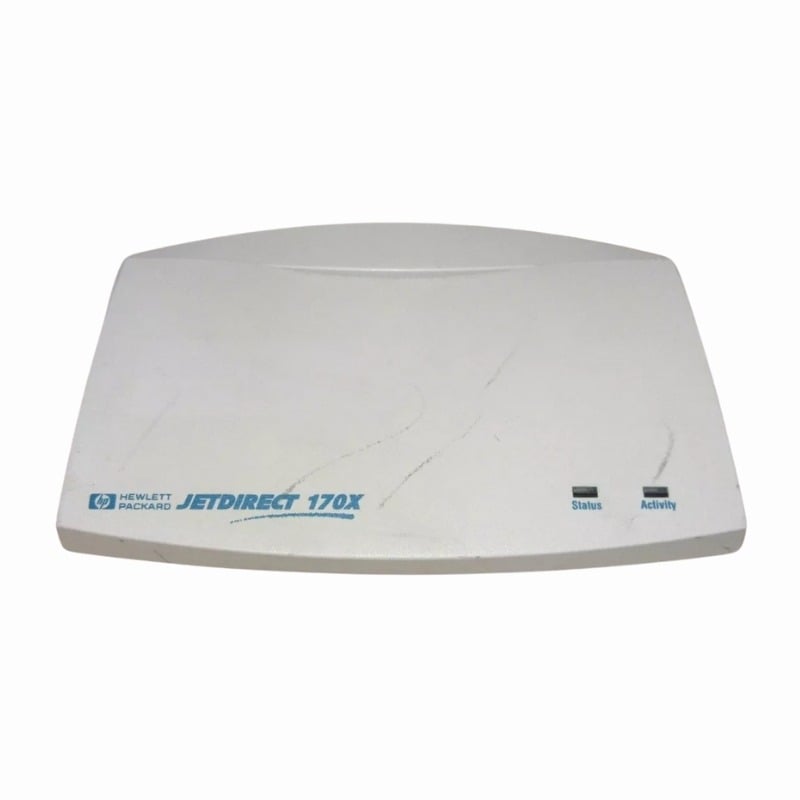
The HP JetDirect 170X J3258G print server connects parallel printers to Ethernet networks, making it easier for multiple users to share a single printer in typical office environments. It fits into setups where printers lack native network support and helps improve printing accessibility across connected devices. |
General Information |
|
|---|---|
| Brand | HP |
| Part Number | J3258G |
Technical Specification |
|
|---|---|
| Product Type | simple |
| Product Category | Print Server |
| Host Interface | Parallel (IEEE 1284 Centronics), Ethernet (10Base-T RJ-45) |
| Data Rate | 10 Mbps |
| Ports | 2 |
| Connectivity | Wired (10Base-T, Parallel) |
| External Interface | RJ-45 (10Base-T), IEEE 1284 Centronics 36-pin parallel |
| Cable Type | Cat5 (UTP), IEEE 1284 parallel cable |
| Compatibility | Compatible with IEEE 1284 parallel printers; supports TCP/IP printing (LPD/LPD, RAW/9100); works with Windows, Mac OS, Unix using standard JetDirect/LPD drivers |
Physical Characteristics |
|
|---|---|
| Weight | 5.00 |
| Condition | Refurbished |
Miscellaneous |
|
|---|---|
| Assembly Required | Yes |
| Eco Friendly | Yes |
| Compliance Standards | WEEE, RoHS, CE, FCC, UL, cULus |
Product Description |
|---|
The HP JetDirect 170X J3258G is a print server that connects parallel port printers to an Ethernet network, allowing multiple users to access and print from a shared device. This model is often found in office settings where networked printing is essential but the printer lacks built-in network capabilities. Built for businesses and workgroups, the J3258G simplifies printer sharing without needing dedicated print servers or complex setups. It supports common network protocols to ensure smooth communication between computers and printers. Key Features
Typically deployed in small to medium office networks, the JetDirect 170X helps extend the life of existing printers by enabling network access without upgrading hardware. It reduces the need for multiple printers and streamlines printing workflows. Users benefit from centralized printer management and greater flexibility in where printers can be placed within the office. |
 Shipping Options
 International Delivery
Requires a UPS, FedEx, or DHL account. Customers may arrange pickup from our US warehouse.
International Delivery
Requires a UPS, FedEx, or DHL account. Customers may arrange pickup from our US warehouse.
 Payment Methods
We accept Visa, Mastercard, AMEX, Discover, and Wire Transfer.
Payment Methods
We accept Visa, Mastercard, AMEX, Discover, and Wire Transfer.
 Purchase Orders
We process purchase orders for government agencies, enterprises, data centers, and SMBs.
Purchase Orders
We process purchase orders for government agencies, enterprises, data centers, and SMBs.