

Subscribe To Our Newsletter!
Subscribe to the newsletter to stay up to date with the latest news and most useful
Newsletter
↑
Back to Top



Product Overview |
|---|
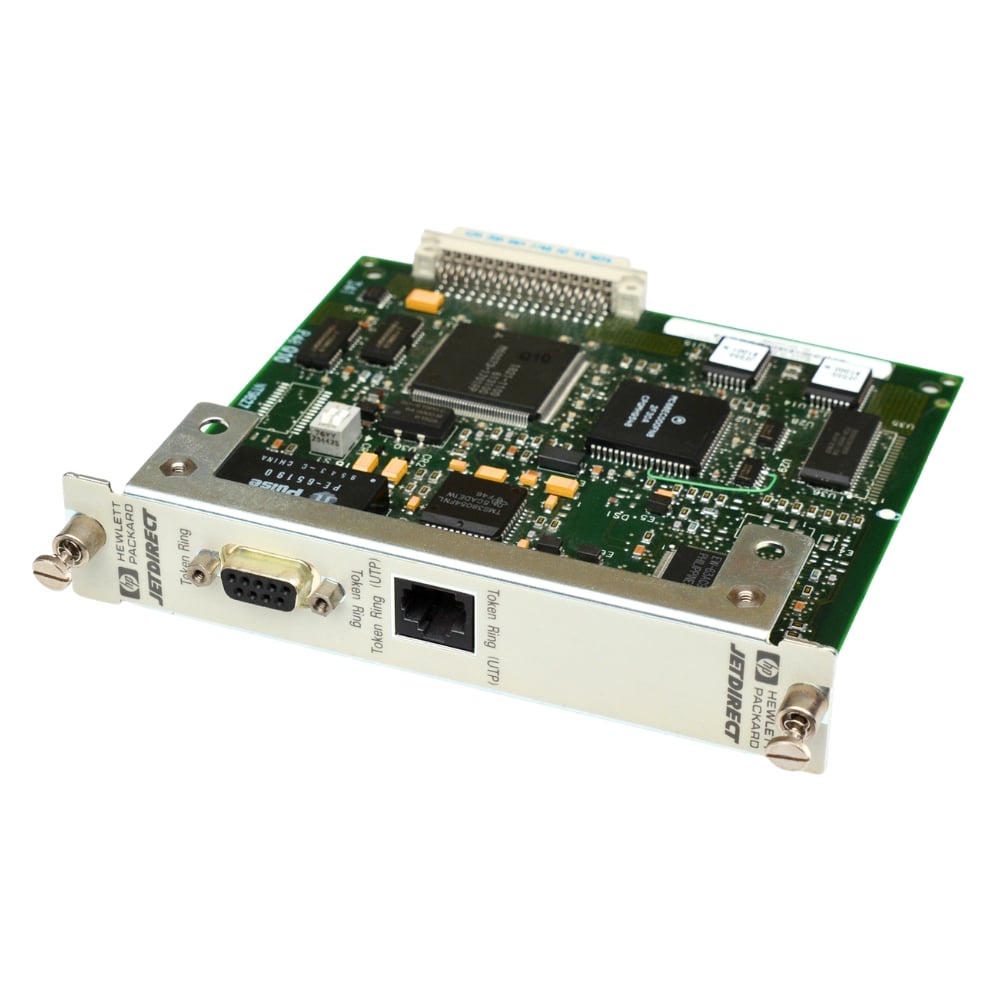
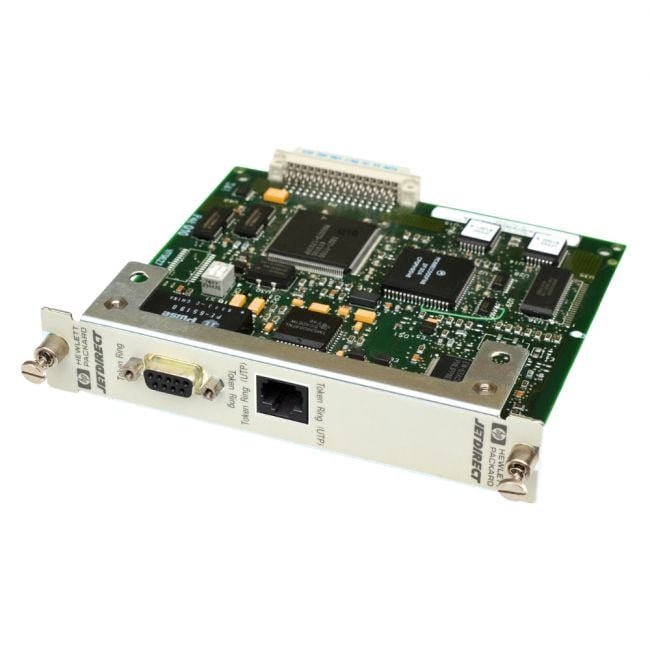
The J2555-69013 HP JetDirect 10/100Base-T 400N Modular I/O Token Ring Network Adapter provides a practical solution for connecting Token Ring networks with Ethernet systems. It fits into modular HP 400N chassis setups and supports reliable communication between legacy and current network technologies. |
General Information |
|
|---|---|
| Brand | HP |
Technical Information |
|
|---|---|
| Product Type | Network Interface Card |
| Data Rate (Speed) | 10/100 Mbps |
| Data Center Bridging | No |
| Number of Ports | 1-Port |
| Network Management | SNMP |
Connectivity & Physical |
|
|---|---|
| Form Factor | Mezzanine Card |
| Port Type | RJ-45 (Copper) |
| Cabling Type | Cat5e |
| Weight | 3.00 |
| Condition | Refurbished |
Miscellaneous |
|
|---|---|
| Assembly Required | No |
| Compliance Standards | WEEE, RoHS, CE, FCC |
Product Description |
|---|
The J2555-69013 HP JetDirect 10/100Base-T 400N Modular I/O Token Ring Network Adapter is designed to bridge Token Ring and Ethernet networking environments. Often found in enterprise legacy infrastructure, it integrates with HP 400N systems to provide network connectivity where Token Ring protocols are still in use or needed alongside Ethernet. Built for IT administrators maintaining mixed network environments, it caters to setups requiring compatibility between older Token Ring devices and newer Ethernet-based systems. The modular I/O design facilitates flexible deployment and straightforward upgrades. Key Features
This adapter plays a crucial role in maintaining connectivity where Token Ring systems are still operational. Its reliable performance and compatibility allow organizations to manage network transition smoothly without sacrificing existing infrastructure investments. |
Use Cases |
|---|
This network adapter is typically deployed in IT environments where Token Ring networks remain in use alongside Ethernet systems. It serves enterprises and organizations managing legacy infrastructure while gradually integrating modern networking standards. How It's Used:
This adapter supports operational continuity by enabling interoperability between network standards. Its role is vital in ensuring ongoing performance and scalability in environments balancing legacy and modern network demands. |
 Shipping Options
 International Delivery
Requires a UPS, FedEx, or DHL account. Customers may arrange pickup from our US warehouse.
International Delivery
Requires a UPS, FedEx, or DHL account. Customers may arrange pickup from our US warehouse.
 Payment Methods
We accept Visa, Mastercard, AMEX, Discover, and Wire Transfer.
Payment Methods
We accept Visa, Mastercard, AMEX, Discover, and Wire Transfer.
 Purchase Orders
We process purchase orders for government agencies, enterprises, data centers, and SMBs.
Purchase Orders
We process purchase orders for government agencies, enterprises, data centers, and SMBs.