


Subscribe To Our Newsletter!
Subscribe to the newsletter to stay up to date with the latest news and most useful
Newsletter
↑
Back to Top



Product Overview |
|---|
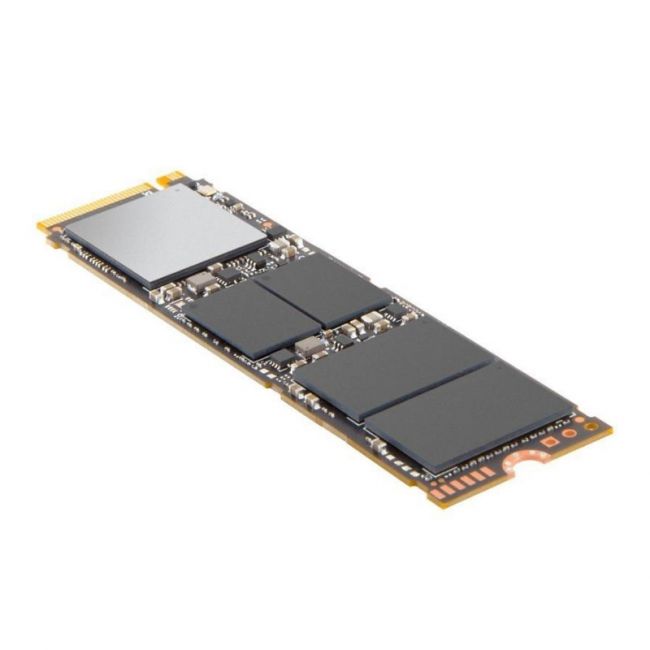
The Intel DC P4101 512GB 6Gb/s PCIe NVMe M.2 2280 SSD (SSDPEKKA512G801) is a high-performance storage solution built for demanding environments. Offering fast data transfers with PCIe 3.0 x4 and NVMe 1.2, this SSD provides excellent sequential and random read/write speeds. Its 1,000 TBW endurance rating ensures it will stand up to heavy workloads, making it an excellent choice for enterprise data centers and mission-critical applications. |
General Information |
|
|---|---|
| Brand | Intel |
| Part Number | SSDPEKKA512G801 |
| Series | DC P4101 |
| Drive Type | NVMe |
Technical Information |
|
|---|---|
| Memory Technology | Triple-Level Cell (TLC) |
| Form Factor | M.2 2280 |
| Interface | PCIe Gen 3.0 x4 |
| MTBF | 2 Million Hours |
Performance |
|
|---|---|
| Max Sequential Read | Up to 560 MB/s |
| Max Sequential Write | Up to 2900 MB/s |
| Random Read | Up to 100,000 IOPS |
| Random Write | Up to 90,000 IOPS |
| Endurance (TBW) | 1,000 TBW |
Physical Characteristics |
|
|---|---|
| Dimensions | 0.09 x 0.87 x 3.15 inches |
| Weight | 0.50 |
| Condition | Refurbished |
Product Description |
|---|
The Intel DC P4101 512GB 6Gb/s PCIe NVMe M.2 2280 Solid State Drive (SSDPEKKA512G801) is designed to deliver exceptional performance for data centers and enterprise environments. Utilizing Intel's 64-Layer 3D TLC NAND Flash technology, this SSD offers a reliable and high-performing solution for demanding applications. With PCIe 3.0 x4 support and NVMe 1.2 interface, the drive ensures quick data transfers, with sequential read speeds up to 560 MB/s and sequential write speeds up to 2900 MB/s. Key Features
This SSD is ideal for use in data centers and enterprise-level applications where speed, endurance, and high performance are crucial. With its high endurance rating and fast read/write speeds, it is well-suited for applications requiring frequent and intensive data access. |
Use Cases |
|---|
The Intel DC P4101 512GB PCIe Gen 3.0 x4 NVMe M.2 2280 SSD is designed for enterprise-grade storage needs where high throughput and durability are critical. It is best suited for data centers, server environments, and virtualization platforms requiring consistent performance under intensive workloads. How It's Used:
This SSD contributes to operational efficiency by maintaining high input/output operations per second (IOPS) under sustained workloads, facilitating scalability in dense server racks. Its endurance rating ensures reliability, helping IT teams manage storage infrastructure with reduced downtime risks. |
 Shipping Options
 International Delivery
Requires a UPS, FedEx, or DHL account. Customers may arrange pickup from our US warehouse.
International Delivery
Requires a UPS, FedEx, or DHL account. Customers may arrange pickup from our US warehouse.
 Payment Methods
We accept Visa, Mastercard, AMEX, Discover, and Wire Transfer.
Payment Methods
We accept Visa, Mastercard, AMEX, Discover, and Wire Transfer.
 Purchase Orders
We process purchase orders for government agencies, enterprises, data centers, and SMBs.
Purchase Orders
We process purchase orders for government agencies, enterprises, data centers, and SMBs.


