

Subscribe To Our Newsletter!
Subscribe to the newsletter to stay up to date with the latest news and most useful
Newsletter
↑
Back to Top



Product Overview |
|---|
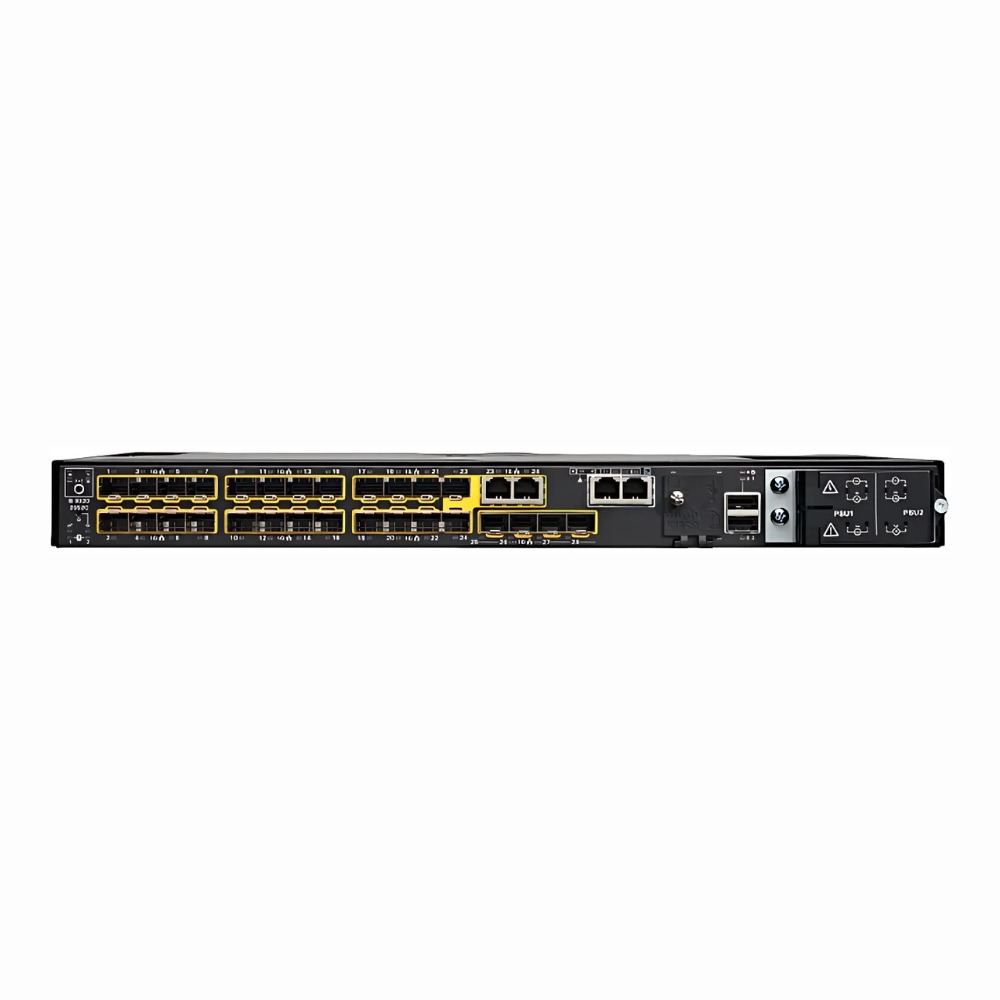
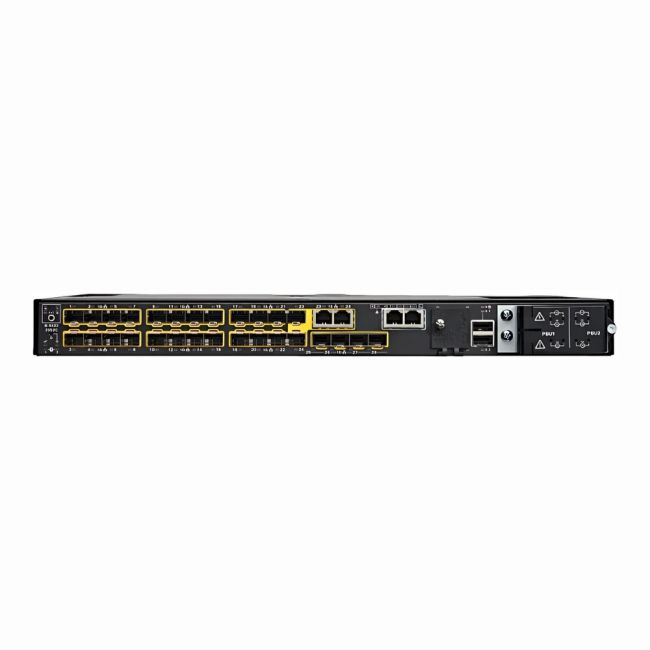
The Cisco IE9320-26S2C-E is a versatile gigabit Ethernet switch designed for industrial networks. It combines multiple copper and fiber ports with Layer 3 management capabilities, making it fit well in environments that demand reliable, scalable, and secure networking solutions without taking up excessive rack space. |
General Information |
|
|---|---|
| Brand | Cisco |
| Part Number | IE-9320-26S2C-E |
| Condition | Refurbished |
Technical Information |
|
|---|---|
| Switch Ports | 28 |
| Number of Ports | 28-Ports |
| Port Type | 1000Base-T, 1000Base-X, RJ-45, SFP |
| Port Speed | 1 Gbps |
| UpLink Ports | 4 SFP,2 1000Base-FX |
| POE Support | No |
| Switching Capacity | 56 Gbps |
| Switch Forwarding Rate | 109.375 Mpps |
| VLAN Support | Yes |
| Max VLANs Supported | 1-4094 |
| Stackable | No |
| Layer Support | Layer 3 |
| Connector Type | RJ-45,SFP,SC |
Performance |
|
|---|---|
| Jumbo Frame Support | Up To 9216 Bytes |
Management and Configuration |
|
|---|---|
| Routing Protocols | Static, RIP, OSPF, VRRP, HSRP, IGMP |
| Remote Protocols | Yes |
| Management Interfaces | CLI,Web GUI,SSH,Telnet,SNMP |
| Security Features | 802.1X,Access Control Lists (ACLs),MAC Filtering,RADIUS,TACACS+,SSH,Port Security |
| Remote Management Protocol | SSH,Telnet,HTTP/HTTPS,SNMPv2c/SNMPv3 |
| Routing Protocol | Static,RIP,OSPF |
Physical Characteristics |
|
|---|---|
| Weight | 5.00 |
Miscellaneous |
|
|---|---|
| Compliance Standards | RoHS, CE, FCC, UL |
| Compliant Standards | IEEE 802.3,IEEE 802.3u,IEEE 802.3ab,IEEE 802.1Q,IEEE 802.1p,IEEE 802.1D,IEEE 802.3x |
Product Description |
|---|
The Cisco IE9300 Series switch is built for industrial environments needing robust and flexible network infrastructure. It’s commonly found in manufacturing plants, smart buildings, and outdoor installations where reliable Ethernet and fiber connections are essential. Network engineers and IT teams use this switch to ensure smooth data flow and secure communication across their networks. Key Features
These switches are typically deployed in industrial control systems, transportation networks, and utilities where uptime and network segmentation are critical. Their role is to connect various devices while maintaining network integrity and performance in complex settings. |
Use Cases |
|---|
The Cisco IE9320-26S2C-E is optimally deployed in industrial and enterprise network environments requiring a blend of copper and fiber connectivity with advanced Layer 3 management. Its robust design suits operational technology networks, manufacturing facilities, and remote office locations where scalable, secure, and reliable data transmission is critical. How It's Used:
This switch supports operational efficiency by enabling high-performance routing and secure data flows across heterogeneous network segments. Its scalable architecture allows seamless integration into evolving network topologies, ensuring sustained performance in demanding industrial and enterprise scenarios. |
 Shipping Options
 International Delivery
Requires a UPS, FedEx, or DHL account. Customers may arrange pickup from our US warehouse.
International Delivery
Requires a UPS, FedEx, or DHL account. Customers may arrange pickup from our US warehouse.
 Payment Methods
We accept Visa, Mastercard, AMEX, Discover, and Wire Transfer.
Payment Methods
We accept Visa, Mastercard, AMEX, Discover, and Wire Transfer.
 Purchase Orders
We process purchase orders for government agencies, enterprises, data centers, and SMBs.
Purchase Orders
We process purchase orders for government agencies, enterprises, data centers, and SMBs.