

Subscribe To Our Newsletter!
Subscribe to the newsletter to stay up to date with the latest news and most useful
Newsletter
↑
Back to Top



Product Overview |
|---|
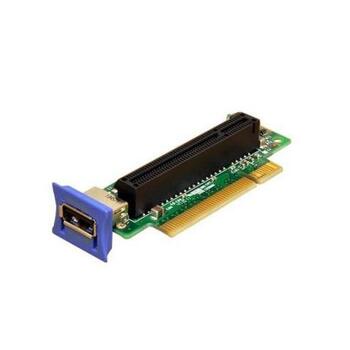
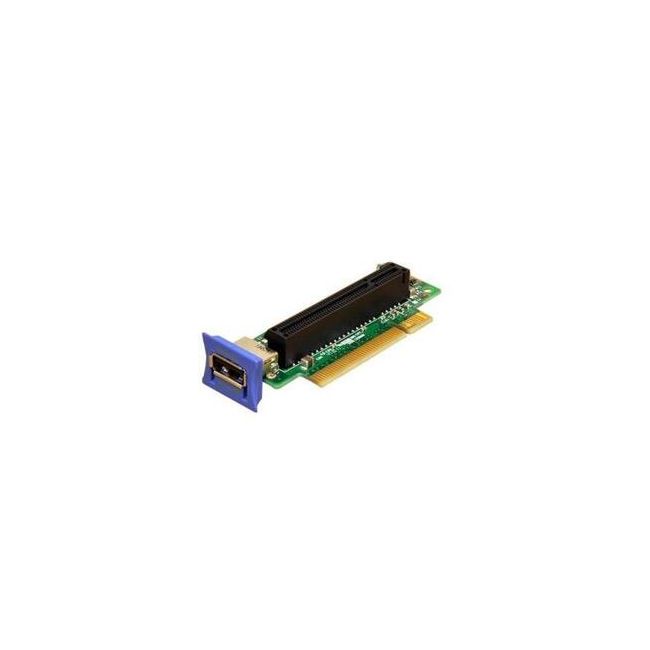
The IBM PCI Express riser card for x3550 M2 and x3650 M2 servers expands the number of available PCIe slots, allowing these servers to support extra expansion cards. It fits directly into the server's internal architecture, offering a straightforward way to enhance system capacity without major modifications. This riser card is a fundamental component when upgrading or customizing IBM rack servers to match specific performance or connectivity requirements. |
General Information |
|
|---|---|
| Brand | IBM |
| Part Number | 43W8888 |
Technical Specification |
|
|---|---|
| Host Interface | PCI Express |
| Compatibility | IBM System x3550 M2, IBM System x3650 M2 |
Physical Characteristics |
|
|---|---|
| Form Factor | Riser card (PCIe riser) |
| Weight | 3.00 |
| Condition | Refurbished |
Miscellaneous |
|
|---|---|
| Assembly Required | Yes |
| Eco Friendly | Yes |
| Compliance Standards | WEEE, RoHS, cURus, CE, FCC, CCC, UL, TUV, cULus, CSA, cUL |
Product Description |
|---|
This IBM PCI Express riser card is designed to expand the capabilities of IBM x3550 M2 and x3650 M2 servers by adding extra PCIe slots. It allows users to connect additional expansion cards such as network adapters or storage controllers, enhancing system flexibility and performance. Often found in data centers and enterprise environments, this riser card is built to provide stable, high-speed connections inside rack-mounted servers. IT professionals and system administrators typically use it when upgrading or customizing server configurations to meet evolving workload demands. Key Features
This riser card is commonly deployed in enterprise server setups where maximizing expansion options within limited space is crucial. By integrating this component, organizations can tailor their servers more precisely to their performance and connectivity needs without replacing the entire system. Its role in facilitating additional PCIe connections helps maintain server flexibility as workloads grow or change, making it a practical choice for IT teams managing evolving infrastructures. |
Use Cases |
|---|
The IBM PCI Express riser card is primarily utilized in data center environments where IBM x3550 M2 and x3650 M2 servers are deployed. IT professionals and system administrators focused on rack server optimization benefit from the enhanced expansion capabilities this riser card provides, particularly in virtualization and high-performance computing scenarios. How It's Used:
This riser card contributes to operational flexibility by allowing targeted hardware upgrades without full server replacements, thus supporting scalability and performance optimization in critical IT environments. |
 Shipping Options
 International Delivery
Requires a UPS, FedEx, or DHL account. Customers may arrange pickup from our US warehouse.
International Delivery
Requires a UPS, FedEx, or DHL account. Customers may arrange pickup from our US warehouse.
 Payment Methods
We accept Visa, Mastercard, AMEX, Discover, and Wire Transfer.
Payment Methods
We accept Visa, Mastercard, AMEX, Discover, and Wire Transfer.
 Purchase Orders
We process purchase orders for government agencies, enterprises, data centers, and SMBs.
Purchase Orders
We process purchase orders for government agencies, enterprises, data centers, and SMBs.