

Subscribe To Our Newsletter!
Subscribe to the newsletter to stay up to date with the latest news and most useful
Newsletter
↑
Back to Top



Product Overview |
|---|
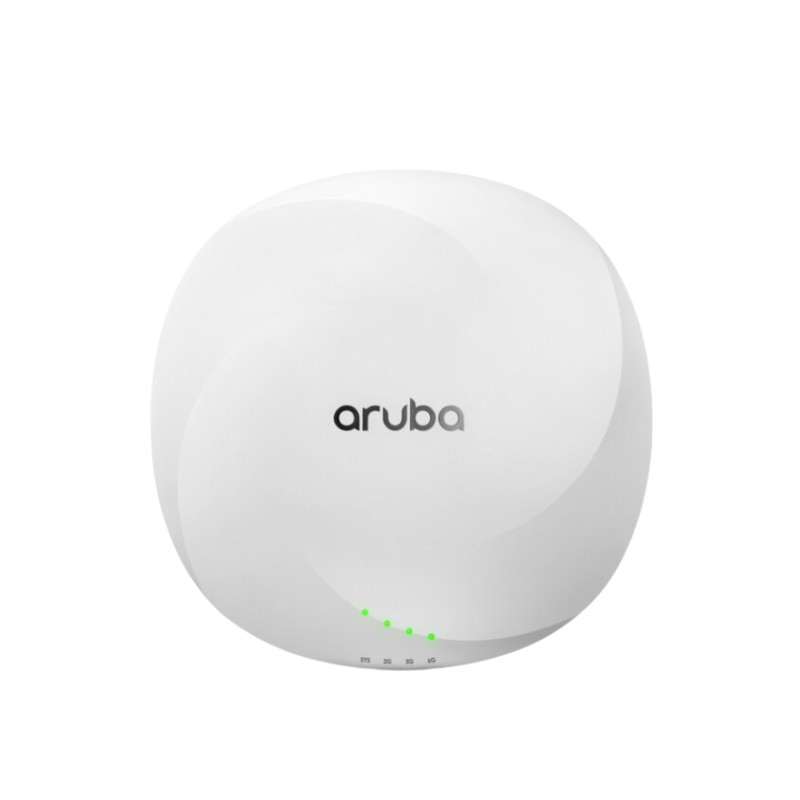
The HPE Aruba AP-635 Tri-Band Wi-Fi 6E Campus Access Point provides expanded wireless capacity by utilizing the new 6 GHz band alongside traditional frequencies. It fits within campus environments where high user density and secure, fast connections are essential. This access point offers network administrators a flexible solution to support growing device demands and evolving wireless standards. |
General Information |
|
|---|---|
| Brand | Aruba Networks |
| Part Number | R7J27A |
| Product Type | Wireless Access Points |
Technical Information |
|
|---|---|
| Frequency Bands | 2.4 GHz,5 GHz,6 GHz |
| WiFi Standard | 802.11a,802.11b,802.11g,802.11n,802.11ac,802.11ax (Wi‑Fi 6/6E) |
| Security | WPA2-PSK,WPA2-Enterprise,WPA3-SAE,WPA3-Enterprise,802.1X (EAP),RADIUS |
| MIMO | Yes |
| Management | Aruba Central,AirWave,Aruba Mobility Controller (ArubaOS),SNMP,CLI |
Physical Characteristics |
|
|---|---|
| Weight | 5.00 |
| Condition | Refurbished |
Miscellaneous |
|
|---|---|
| Eco Friendly | Yes |
| Compliance Standards | WEEE, RoHS, CE, FCC, UL, TUV |
Product Description |
|---|
The HPE Aruba AP-635 is a tri-band Wi-Fi 6E access point designed to provide fast, reliable wireless connectivity across campuses and enterprise environments. It adds the new 6 GHz band to traditional 5 GHz and 2.4 GHz frequencies, allowing for more channels and less interference. This access point is often found in busy office buildings, universities, and large venues where many users connect simultaneously. IT teams and network administrators rely on it to deliver consistent performance and secure wireless access. Key Features
The AP-635 is typically deployed throughout campus buildings, lecture halls, and collaborative spaces to maintain strong wireless coverage. Its ability to handle multiple devices smoothly helps organizations keep their networks running without interruptions during peak usage times. |
 Shipping Options
 International Delivery
Requires a UPS, FedEx, or DHL account. Customers may arrange pickup from our US warehouse.
International Delivery
Requires a UPS, FedEx, or DHL account. Customers may arrange pickup from our US warehouse.
 Payment Methods
We accept Visa, Mastercard, AMEX, Discover, and Wire Transfer.
Payment Methods
We accept Visa, Mastercard, AMEX, Discover, and Wire Transfer.
 Purchase Orders
We process purchase orders for government agencies, enterprises, data centers, and SMBs.
Purchase Orders
We process purchase orders for government agencies, enterprises, data centers, and SMBs.