

Subscribe To Our Newsletter!
Subscribe to the newsletter to stay up to date with the latest news and most useful
Newsletter
↑
Back to Top



Product Overview |
|---|
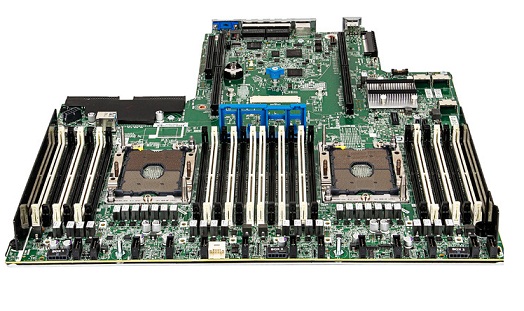
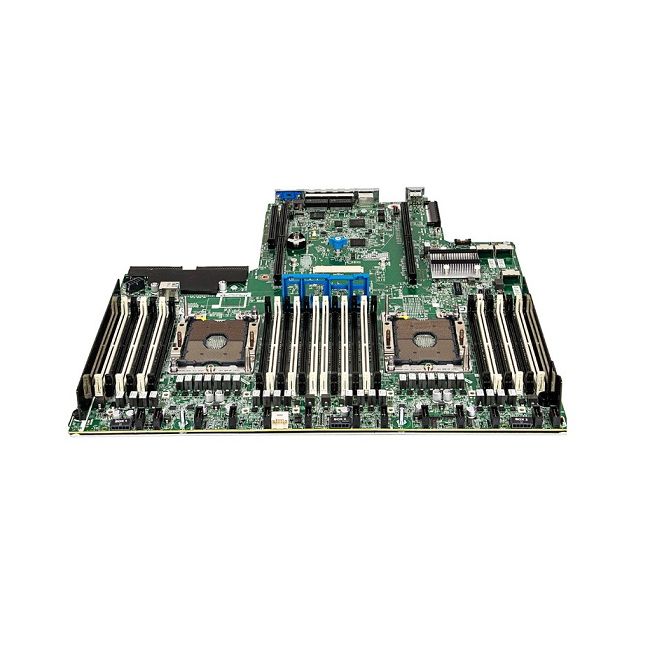
The HPE ProLiant DL380 Gen10 System Board serves as the core of the DL380 Gen10 server, handling essential system operations and component coordination. It fits within enterprise servers designed to deliver reliable performance and scalability, making it a key part of many data center setups and business IT environments. |
General Information |
|
|---|---|
| Brand | HP |
Technical Information |
|
|---|---|
| Compatible Processors | Intel Xeon Scalable processors (1st and 2nd Generation: Skylake-SP and Cascade Lake) — dual‑CPU capable |
| Board Socket Type | LGA 3647 |
| Memory Slots | 24 DIMM slots (12 per CPU) |
| Memory Support | DDR4 RDIMM, LRDIMM, 3DS LRDIMM, HPE SmartMemory; supports Intel Optane DC Persistent Memory (DCPMM) with supported CPUs; speeds up to 2933 MT/s depending on CPU and DIMM type |
Physical Characteristics |
|
|---|---|
| Form Factor | Proprietary (HPE ProLiant DL380 Gen10 server system board) |
| Weight | 5.00 |
| Condition | Refurbished |
Miscellaneous |
|
|---|---|
| Assembly Required | Yes |
| Eco Friendly | Yes |
Product Description |
|---|
The HPE ProLiant DL380 Gen10 System Board is the main circuit board designed specifically for the DL380 Gen10 servers. It manages communication between the server’s processor, memory, storage, and other components to keep systems running smoothly. Often found in data centers and enterprise-level IT environments, this system board is built for businesses that need dependable server infrastructure for applications like virtualization, database hosting, and cloud services. IT professionals and system administrators rely on it to maintain server stability and performance. Key Features
This system board plays a central role in enterprise servers where uptime and expandability are critical. It’s commonly deployed in corporate data centers, hosting facilities, and anywhere demanding workloads need consistent hardware support. By ensuring smooth operation of core server functions, it helps organizations maintain their IT infrastructure with confidence. |
 Shipping Options
 International Delivery
Requires a UPS, FedEx, or DHL account. Customers may arrange pickup from our US warehouse.
International Delivery
Requires a UPS, FedEx, or DHL account. Customers may arrange pickup from our US warehouse.
 Payment Methods
We accept Visa, Mastercard, AMEX, Discover, and Wire Transfer.
Payment Methods
We accept Visa, Mastercard, AMEX, Discover, and Wire Transfer.
 Purchase Orders
We process purchase orders for government agencies, enterprises, data centers, and SMBs.
Purchase Orders
We process purchase orders for government agencies, enterprises, data centers, and SMBs.