Subscribe To Our Newsletter!
Subscribe to the newsletter to stay up to date with the latest news and most useful
Newsletter
↑
Back to Top



Product Overview |
|---|
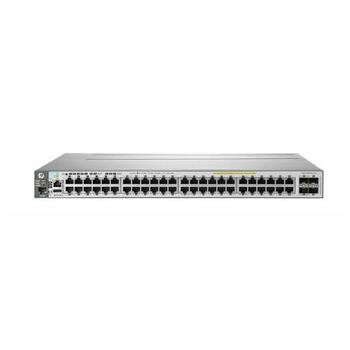
The HP E3800-48G-PoE+-4SFP+ switch is a managed Layer 3 device designed to support high-density gigabit connections with power delivery over Ethernet. Its multiple expansion slots and routing capabilities make it suitable for networks that require flexible configuration and efficient traffic handling without compromising on power needs. |
General Information |
|
|---|---|
| Brand | HP |
| Condition | Refurbished |
Technical Information |
|
|---|---|
| Switch Ports | 48 |
| Number of Ports | 48-Ports |
| Port Type | 10/100/1000Base-T, 10G SFP+ |
| Port Speed | 10/100/1000Base-T,10G |
| UpLink Ports | 4 x 10G SFP+ |
| POE Support | PoE+ |
| Switching Capacity | 176 Gbps |
| VLAN Support | Yes |
| Max VLANs Supported | 4094 |
| NIM Slot | 5 |
| Layer Support | Layer 3 |
| Connector Type | RJ-45,SFP+ |
Performance |
|
|---|---|
| Jumbo Frame Support | Up To 9216 Bytes |
Management and Configuration |
|
|---|---|
| Remote Protocols | Yes |
| Management Interfaces | Web GUI, CLI (Console/SSH), SNMP |
| Remote Management Protocol | SNMP,SSH,HTTP,HTTPS |
Physical Characteristics |
|
|---|---|
| Weight | 3.00 |
Miscellaneous |
|
|---|---|
| Compliance Standards | WEEE, RoHS, CE, FCC, UL |
Product Description |
|---|
The HP E3800-48G-PoE+-4SFP+ switch is built for medium to large enterprise networks needing reliable connectivity and power over Ethernet. It’s commonly found in office environments, data centers, and campus networks where multiple devices require both data and power through a single cable. This Layer 3 switch is often deployed by network administrators and IT professionals who need efficient traffic management and advanced routing within complex network setups. Its management features enable detailed control over network performance and security. Key Features
This switch is typically deployed in settings where multiple powered devices coexist and network segmentation is needed. It helps maintain network stability while reducing the need for separate power supplies. In practice, it streamlines infrastructure by combining data and power delivery, making it a practical choice for organizations aiming to keep their network efficient and manageable. |
 Shipping Options
 International Delivery
Requires a UPS, FedEx, or DHL account. Customers may arrange pickup from our US warehouse.
International Delivery
Requires a UPS, FedEx, or DHL account. Customers may arrange pickup from our US warehouse.
 Payment Methods
We accept Visa, Mastercard, AMEX, Discover, and Wire Transfer.
Payment Methods
We accept Visa, Mastercard, AMEX, Discover, and Wire Transfer.
 Purchase Orders
We process purchase orders for government agencies, enterprises, data centers, and SMBs.
Purchase Orders
We process purchase orders for government agencies, enterprises, data centers, and SMBs.