

Subscribe To Our Newsletter!
Subscribe to the newsletter to stay up to date with the latest news and most useful
Newsletter
↑
Back to Top



Product Overview |
|---|
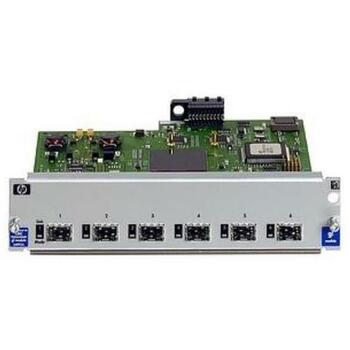
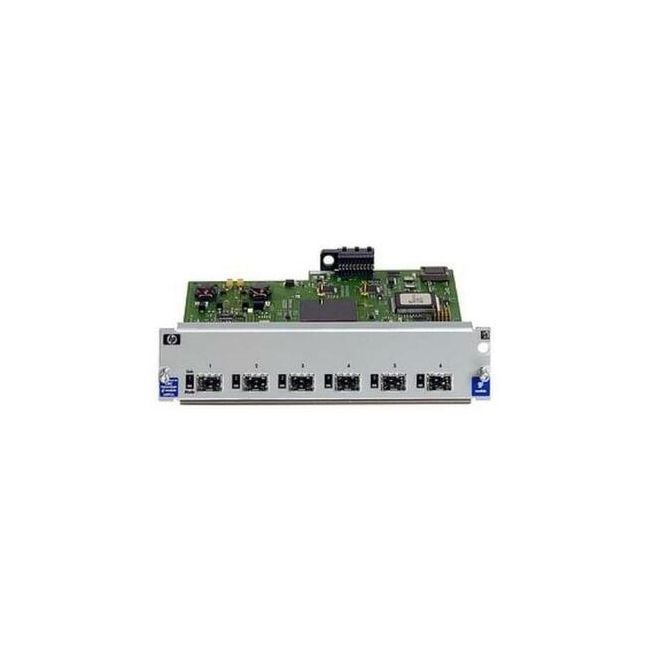
The J4893A HP ProCurve Mini-GBIC Ethernet Module adds six flexible transceiver slots to ProCurve 4104GL and 4108GL switches, allowing users to tailor their network connections with various fiber or copper optics. It fits into existing switch hardware to increase port versatility and supports gigabit speeds, making it a practical choice for network environments that require adaptable, high-speed connectivity. |
General Information |
|
|---|---|
| Brand | HP |
| Part Number | J4893A |
| Product Type | Switch Expansion Module |
| Series | ProCurve |
Technical Information |
|
|---|---|
| Ports | 6 |
| Data Rate | 1 Gbps |
| Compatibility | HP ProCurve Switch 4104GL, HP ProCurve Switch 4108GL |
| Connector Type | Mini-GBIC (SFP) slots |
| product type | Switch Expansion Module |
| Product Category | Network Switch |
Physical Characteristics |
|
|---|---|
| Form Factor | Hot-pluggable module |
| Weight | 3.00 |
| Condition | Refurbished |
Miscellaneous |
|
|---|---|
| Assembly Required | Yes |
| Eco Friendly | Yes |
| Compliance Standards | WEEE, RoHS, cURus, CE, FCC, CCC, UL, TUV, cULus, CSA, cUL |
Product Description |
|---|
The J4893A Mini-GBIC Ethernet Module is designed to expand the connectivity options of HP ProCurve Switch 4104GL and 4108GL series. It offers six open slots for Mini-GBIC transceivers, making it adaptable to various network environments by supporting fiber optic or copper cabling depending on the transceiver used. Often found in medium to large enterprise networks, this module helps network administrators customize their setup to meet specific bandwidth and distance requirements. Its flexibility makes it a useful component for IT teams aiming to optimize their existing switch infrastructure without replacing entire units. Key Features
This module is typically deployed in structured network setups where expanding uplink options is necessary. Its role is essential in adapting switches to evolving network demands without costly hardware changes. Network engineers rely on it to maintain performance and flexibility across their switching environments. |
 Shipping Options
 International Delivery
Requires a UPS, FedEx, or DHL account. Customers may arrange pickup from our US warehouse.
International Delivery
Requires a UPS, FedEx, or DHL account. Customers may arrange pickup from our US warehouse.
 Payment Methods
We accept Visa, Mastercard, AMEX, Discover, and Wire Transfer.
Payment Methods
We accept Visa, Mastercard, AMEX, Discover, and Wire Transfer.
 Purchase Orders
We process purchase orders for government agencies, enterprises, data centers, and SMBs.
Purchase Orders
We process purchase orders for government agencies, enterprises, data centers, and SMBs.