

Subscribe To Our Newsletter!
Subscribe to the newsletter to stay up to date with the latest news and most useful
Newsletter
↑
Back to Top



Product Overview |
|---|
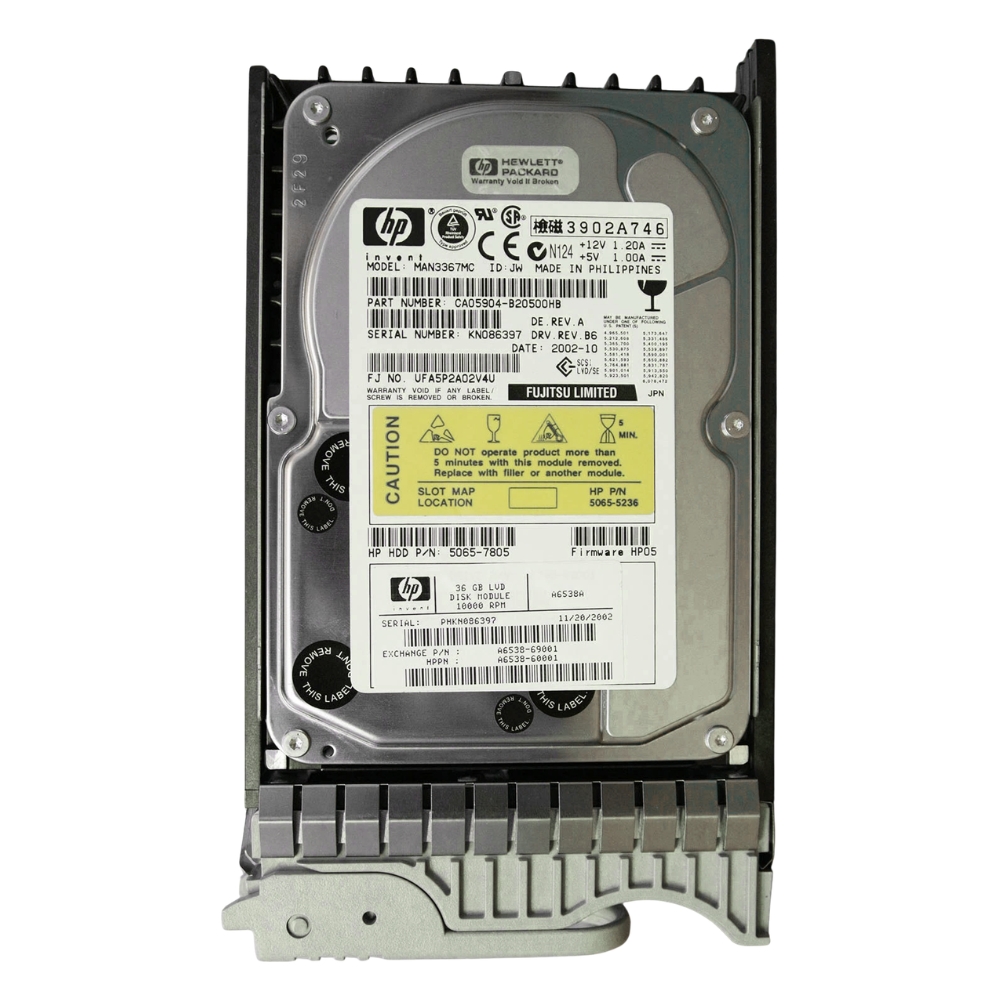
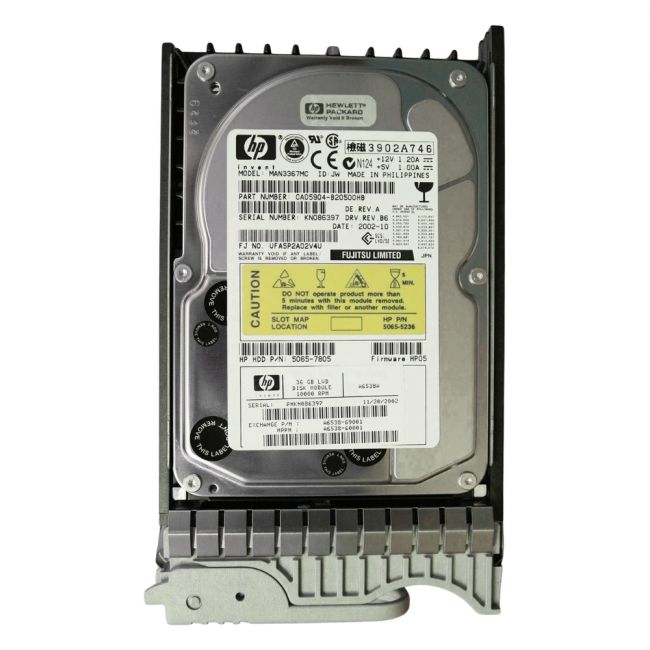
The HP 36.4GB 10K RPM Ultra-160 SCSI hard drive delivers reliable and fast storage with its high spindle speed and LVD SCSI interface. Its hot-pluggable 3.5-inch design with an 80-pin connector makes it well-suited for servers and workstations needing quick data access and straightforward maintenance. |
General Information |
|
|---|---|
| Brand | HP |
| Part Number | A6538-69001 |
Technical Information |
|
|---|---|
| Capacity | 36.4GB |
| Form Factor | 3.5-inch |
| Spindle Speed | 10000 RPM |
Interfaces/Ports |
|
|---|---|
| Interface | SCSI |
Physical Characteristics |
|
|---|---|
| Condition | Refurbished |
| Weight | 1.76 |
Miscellaneous |
|
|---|---|
| Eco Friendly | Yes |
Product Description |
|---|
This HP 36.4GB hard drive features a 10,000 RPM spindle speed and uses the Ultra-160 SCSI interface with Low Voltage Differential (LVD) technology. Designed as a hot-pluggable 3.5-inch drive with an 80-pin connector, it provides fast and reliable storage for legacy server and workstation systems. Key Features
This drive is ideal for enterprise environments relying on SCSI technology, offering fast performance and easy servicing in storage arrays and server applications. |
Use Cases |
|---|
The HP 36.4GB 10K RPM Ultra-160 SCSI hard drive is primarily utilized in legacy server environments and workstation arrays where durable and high-speed data access is essential. It is suited for IT infrastructures that rely on Ultra-160 SCSI standards, such as data centers with older hardware or specialized industrial applications requiring robust hot-swappable storage solutions. How It's Used:
By providing reliable hot-swappable capability and compatibility with LVD Ultra-160 SCSI interfaces, this drive supports operational continuity in established IT environments. Its performance characteristics help maintain scalability and efficiency in infrastructures that depend on proven storage technologies rather than newer interfaces. |
 Shipping Options
 International Delivery
Requires a UPS, FedEx, or DHL account. Customers may arrange pickup from our US warehouse.
International Delivery
Requires a UPS, FedEx, or DHL account. Customers may arrange pickup from our US warehouse.
 Payment Methods
We accept Visa, Mastercard, AMEX, Discover, and Wire Transfer.
Payment Methods
We accept Visa, Mastercard, AMEX, Discover, and Wire Transfer.
 Purchase Orders
We process purchase orders for government agencies, enterprises, data centers, and SMBs.
Purchase Orders
We process purchase orders for government agencies, enterprises, data centers, and SMBs.