

Subscribe To Our Newsletter!
Subscribe to the newsletter to stay up to date with the latest news and most useful
Newsletter
↑
Back to Top



Product Overview |
|---|
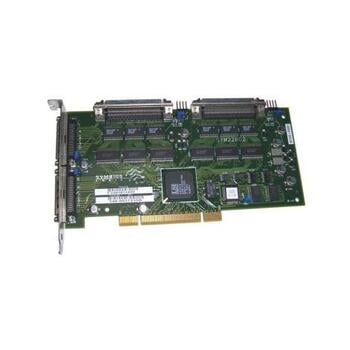
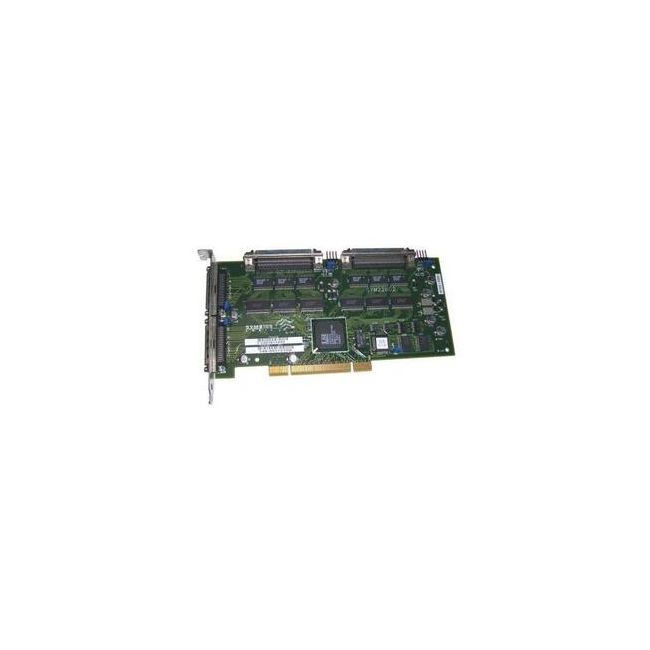
The A5159A HP PCI 2-port Fwd SCSI-2 Adapter serves as a practical solution for connecting legacy SCSI devices within HP or compatible systems. It sits in a PCI slot and enables straightforward expansion of storage options, mainly used in workstations or servers requiring stable SCSI communication. |
General Information |
|
|---|---|
| Brand | HP |
Technical Information |
|
|---|---|
| Port Count | 2-Port (Dual) |
| Bracket Height | Full Height (Standard) |
Physical Characteristics |
|
|---|---|
| Weight | 3.00 |
| Condition | Refurbished |
Product Description |
|---|
The A5159A HP PCI 2-port Fwd SCSI-2 Adapter is built to provide dependable connectivity for SCSI devices in various computing setups. It's often found in workstations or servers that require fast, stable connections to storage peripherals like hard drives or tape drives. IT professionals and system integrators typically rely on adapters like this to expand their system's storage capabilities without sacrificing performance. Key Features
This adapter is commonly deployed in environments where legacy SCSI devices are still in use or where reliable storage expansion is needed without upgrading the entire system. It helps maintain existing infrastructure while providing the performance needed for data-intensive tasks. |
Use Cases |
|---|
The A5159A HP PCI 2-port Fwd SCSI-2 Adapter is predominantly utilized in environments where legacy SCSI storage solutions remain integral. It benefits IT professionals managing older HP workstations or servers that require stable, high-speed SCSI connectivity to maintain operational continuity without migrating to newer interfaces prematurely. How It's Used:
This adapter enhances system scalability by enabling continued use of established SCSI hardware, reducing downtime caused by interface incompatibility. It ensures stable data throughput in specialized environments, thus supporting operational efficiency where legacy storage technology remains a necessity. |
 Shipping Options
 International Delivery
Requires a UPS, FedEx, or DHL account. Customers may arrange pickup from our US warehouse.
International Delivery
Requires a UPS, FedEx, or DHL account. Customers may arrange pickup from our US warehouse.
 Payment Methods
We accept Visa, Mastercard, AMEX, Discover, and Wire Transfer.
Payment Methods
We accept Visa, Mastercard, AMEX, Discover, and Wire Transfer.
 Purchase Orders
We process purchase orders for government agencies, enterprises, data centers, and SMBs.
Purchase Orders
We process purchase orders for government agencies, enterprises, data centers, and SMBs.