

Subscribe To Our Newsletter!
Subscribe to the newsletter to stay up to date with the latest news and most useful
Newsletter
↑
Back to Top



Product Overview |
|---|
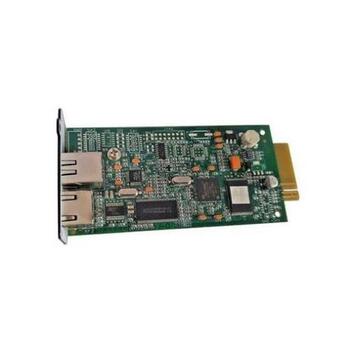
The HP 100Base-T/10Base-T Network Card is designed to add reliable wired Ethernet connectivity to desktop computers. It fits into standard PCI slots and supports both 10 Mbps and 100 Mbps speeds, making it suitable for various network setups. This card is a practical choice for users needing stable and straightforward network access in office or home environments. |
General Information |
|
|---|---|
| Brand | HP |
Connectivity & Physical |
|
|---|---|
| Weight | 3.00 |
| Condition | Refurbished |
Product Description |
|---|
The HP 100Base-T/10Base-T Network Card provides a straightforward solution for connecting desktop computers to wired Ethernet networks. It is often found in office environments or home setups where stable and consistent network performance is needed. Built for desktops requiring both fast and standard Ethernet speeds, it suits users who need dependable internet or intranet access without wireless complications. Key Features
This network card is typically deployed in office PCs, workstations, or personal computers where wired network access is essential. It helps maintain steady network connections for tasks like file sharing, printing, and internet browsing without the variability sometimes found in wireless setups. |
Use Cases |
|---|
The HP 100Base-T/10Base-T PCI Network Card is commonly deployed in environments requiring stable and efficient wired network connections for desktop systems. It is well-suited for small to medium-sized businesses, legacy system upgrades, and office workstations where reliable Ethernet access is critical to daily operations. How It's Used:
This network card facilitates operational efficiency by providing dependable wired connectivity critical for data integrity and network responsiveness. Its support for both 10 Mbps and 100 Mbps speeds allows organizations to maintain performance consistency across varied network topologies and evolving infrastructure demands. |
 Shipping Options
 International Delivery
Requires a UPS, FedEx, or DHL account. Customers may arrange pickup from our US warehouse.
International Delivery
Requires a UPS, FedEx, or DHL account. Customers may arrange pickup from our US warehouse.
 Payment Methods
We accept Visa, Mastercard, AMEX, Discover, and Wire Transfer.
Payment Methods
We accept Visa, Mastercard, AMEX, Discover, and Wire Transfer.
 Purchase Orders
We process purchase orders for government agencies, enterprises, data centers, and SMBs.
Purchase Orders
We process purchase orders for government agencies, enterprises, data centers, and SMBs.