

Subscribe To Our Newsletter!
Subscribe to the newsletter to stay up to date with the latest news and most useful
Newsletter
↑
Back to Top



Product Overview |
|---|
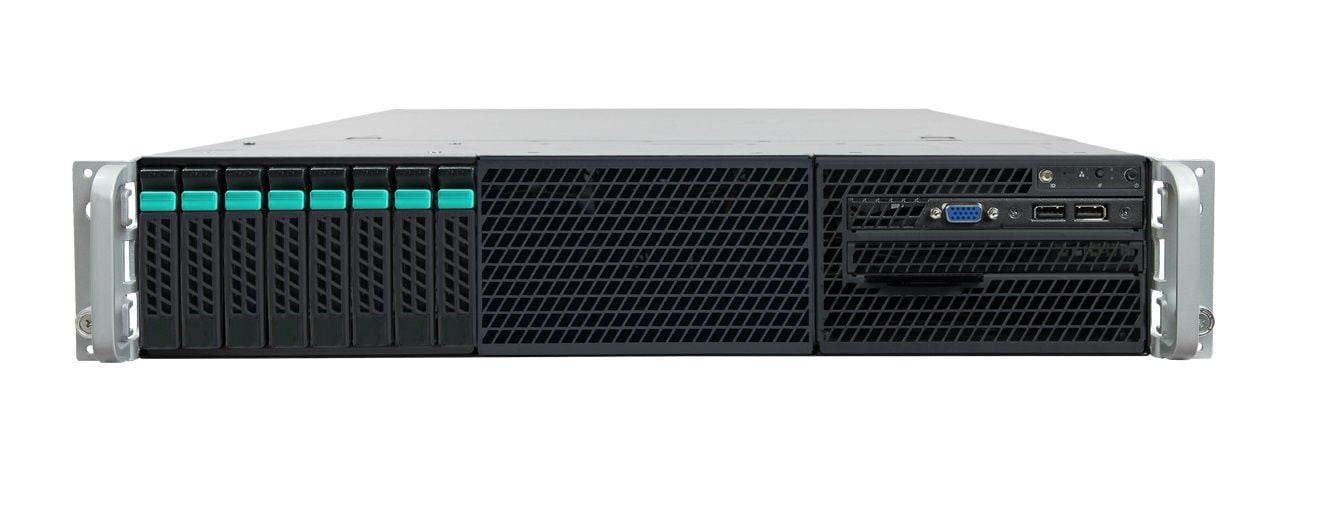
The HP ProLiant BL10e G2 with Intel Pentium III CPU is a blade server designed to handle basic server tasks within a compact chassis. It fits well in environments where conserving space and energy is important, offering reliable operation without unnecessary complexity. |
General Information |
|
|---|---|
| Brand | HP |
Technical Information |
|
|---|---|
| Memory | 512MB |
| Processor | Intel Pentium III 1GHz |
Physical Characteristics |
|
|---|---|
| Weight | 3.00 |
| Condition | Refurbished |
Miscellaneous |
|
|---|---|
| Assembly Required | Yes |
| Eco Friendly | Yes |
| Compliance Standards | WEEE, RoHS, cURus, CE, FCC, CCC, UL, TUV, cULus, CSA, cUL |
Product Description |
|---|
The HP ProLiant BL10e G2 is a compact blade server built for entry-level workloads and small-scale deployments. It often finds use in environments that require efficient space utilization, such as small data centers or branch offices. This model is commonly used by IT teams that need reliable performance without high power consumption or extensive hardware. Key Features
This server is typically deployed in situations where space and power efficiency are priorities, like small office networks or development labs. It provides straightforward processing power for applications that don't require the latest hardware. Users appreciate its compact design that fits well in HP blade enclosures, allowing easy scaling and maintenance. |
Use Cases |
|---|
The HP ProLiant BL10e G2 blade server with an Intel Pentium III 1GHz processor is typically deployed in compact data center environments where space and energy efficiency are priorities. It serves small-scale applications requiring reliable yet cost-effective computing power, making it suitable for IT teams managing lightweight server loads within dense blade chassis setups. How It's Used:
This server model enhances operational efficiency by consolidating essential services into a compact form factor, enabling organizations to optimize chassis space while maintaining manageable power consumption. It supports scalability by integrating smoothly into existing ProLiant blade infrastructures, allowing IT teams to extend capabilities incrementally without overprovisioning resources. |
 Shipping Options
 International Delivery
Requires a UPS, FedEx, or DHL account. Customers may arrange pickup from our US warehouse.
International Delivery
Requires a UPS, FedEx, or DHL account. Customers may arrange pickup from our US warehouse.
 Payment Methods
We accept Visa, Mastercard, AMEX, Discover, and Wire Transfer.
Payment Methods
We accept Visa, Mastercard, AMEX, Discover, and Wire Transfer.
 Purchase Orders
We process purchase orders for government agencies, enterprises, data centers, and SMBs.
Purchase Orders
We process purchase orders for government agencies, enterprises, data centers, and SMBs.