

Subscribe To Our Newsletter!
Subscribe to the newsletter to stay up to date with the latest news and most useful
Newsletter
↑
Back to Top



Product Overview |
|---|
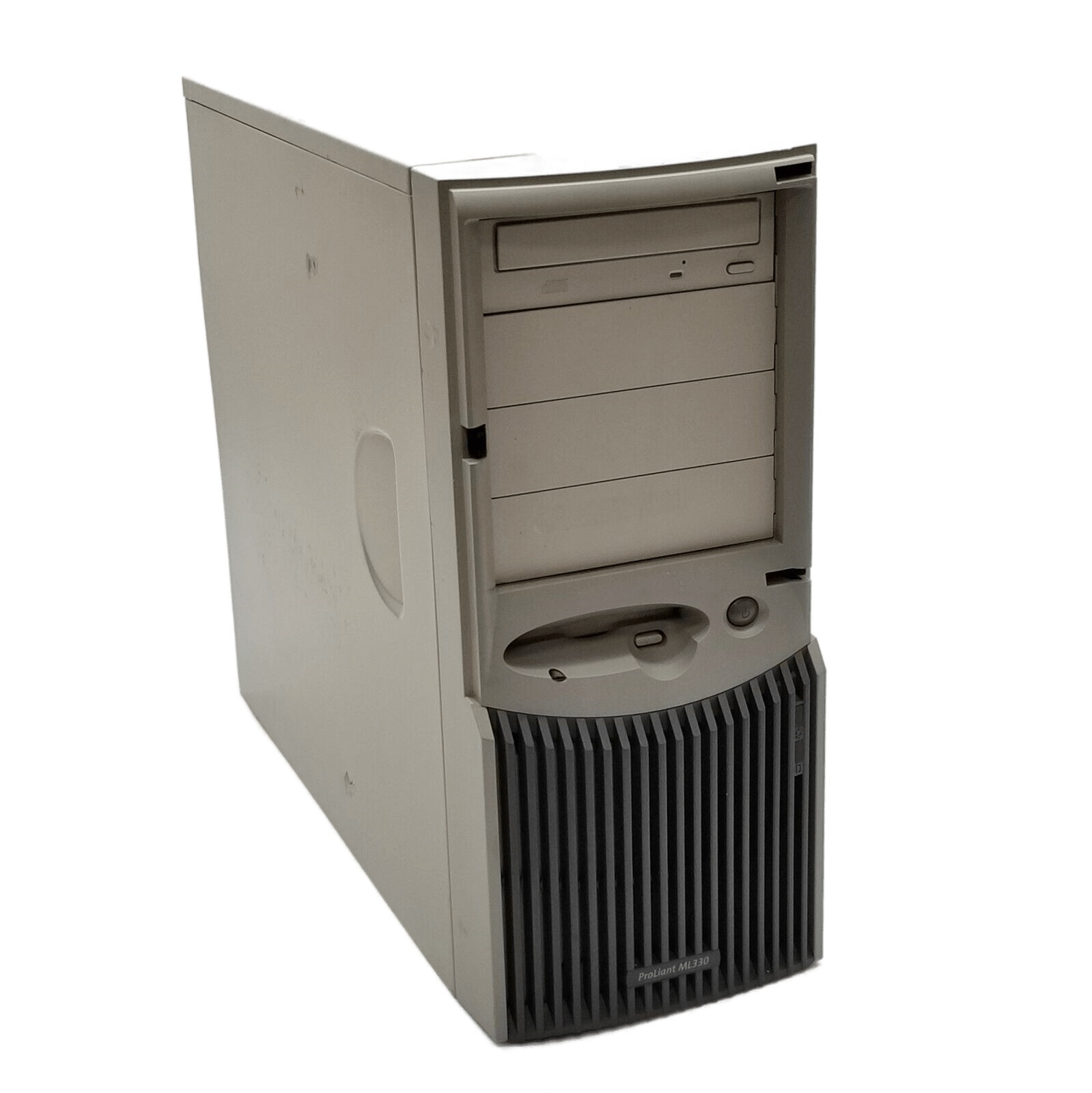
The HP ProLiant ML330 tower server offers straightforward performance with its 667MHz Pentium III CPU and 64MB RAM. It fits well in smaller office settings where basic server functions like file sharing and print management are needed, serving as a reliable backbone for light network workloads. |
General Information |
|
|---|---|
| Brand | HP |
Technical Information |
|
|---|---|
| Processor Family | Intel Pentium |
| Total Threads | 1 |
| Base Clock Speed | 667 MHz |
| Lithography | Other |
| Socket Type | Socket 370 |
| Cache | 256 KB |
Physical Characteristics |
|
|---|---|
| Weight | 3.00 |
| Condition | Refurbished |
Product Description |
|---|
This HP ProLiant ML330 is a tower server built for small businesses needing reliable basic computing power. It often handles file sharing, print management, and simple network services. With its Pentium III processor and 64MB of RAM, it’s best suited for light workloads and legacy applications. Key Features
This server typically finds a place in small offices or departments that don’t require heavy processing power but still need dependable network services. It plays a quiet but important role in keeping everyday tasks running smoothly without overcomplicating setup or maintenance. |
Use Cases |
|---|
The HP ProLiant ML330 with its Pentium III 667MHz processor and 64MB RAM is typically deployed in small office or branch office settings requiring basic server functions. Its tower form factor and modest specifications make it suitable for businesses needing simple, low-overhead network services without the complexities of enterprise-grade hardware. How It's Used:
By focusing on fundamental server roles, the HP ProLiant ML330 helps maintain operational continuity in low-demand scenarios. While its scalability is limited, it provides dependable service for organizations prioritizing cost-effective infrastructure over advanced processing needs. |
 Shipping Options
 International Delivery
Requires a UPS, FedEx, or DHL account. Customers may arrange pickup from our US warehouse.
International Delivery
Requires a UPS, FedEx, or DHL account. Customers may arrange pickup from our US warehouse.
 Payment Methods
We accept Visa, Mastercard, AMEX, Discover, and Wire Transfer.
Payment Methods
We accept Visa, Mastercard, AMEX, Discover, and Wire Transfer.
 Purchase Orders
We process purchase orders for government agencies, enterprises, data centers, and SMBs.
Purchase Orders
We process purchase orders for government agencies, enterprises, data centers, and SMBs.