

Subscribe To Our Newsletter!
Subscribe to the newsletter to stay up to date with the latest news and most useful
Newsletter
↑
Back to Top



Product Overview |
|---|
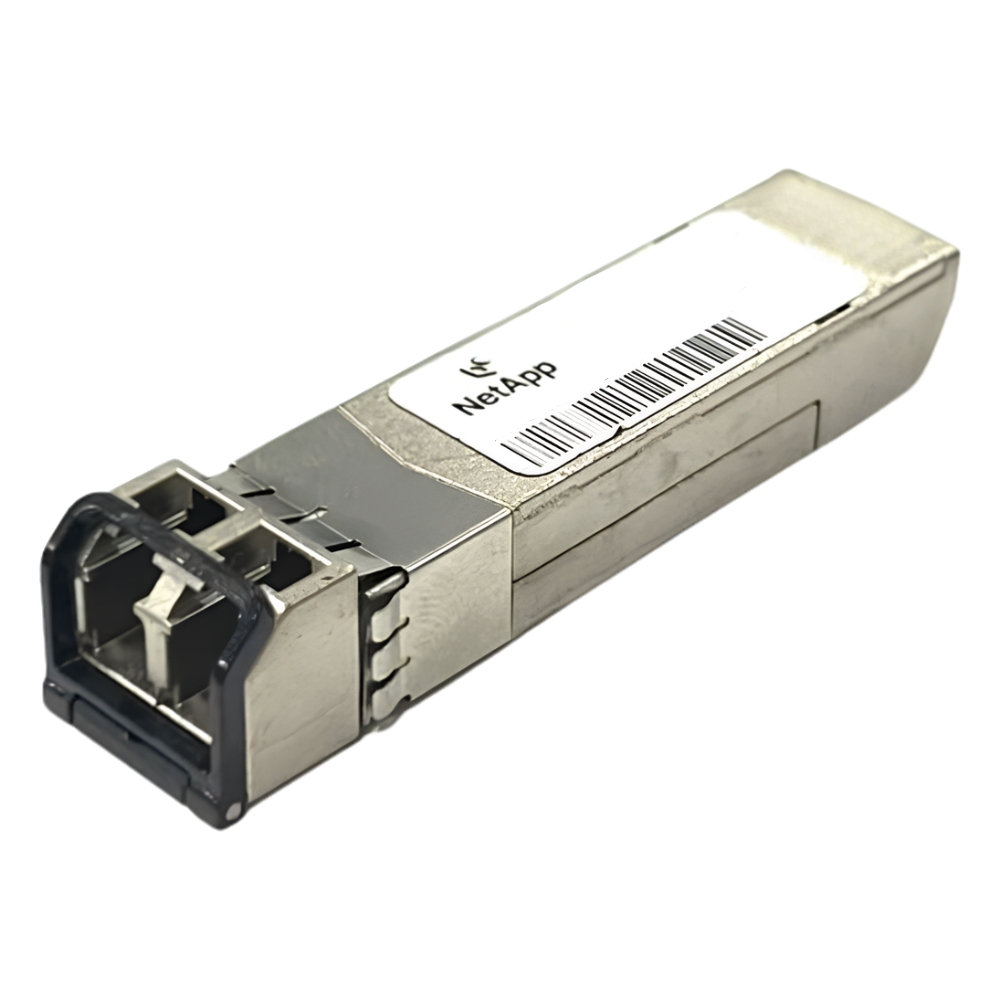
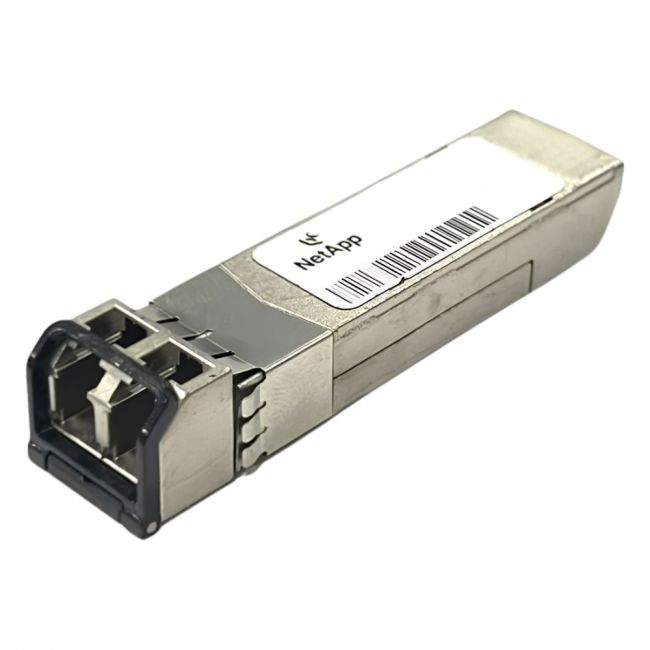
The FTLF8546P3BCV-LS is a NetApp optical transceiver that enables dual-protocol connectivity, supporting both 10Gb Ethernet and 16Gb Fibre Channel data transmission. Its SFP+ form factor allows for easy deployment in network and storage hardware requiring unified optical links over fiber. |
General Information |
|
|---|---|
| Brand | NetApp |
Technical Information |
|
|---|---|
| Form Factor | SFP+ |
| Media | SMF |
| Type | DFB |
| Power Consumption | 1.0 W |
| Protocols | 10G Ethernet, 16G Fibre Channel |
| Connector | LC Duplex |
| DOM Support | Yes |
Physical Characteristics |
|
|---|---|
| Weight | 3.00 |
| Condition | Refurbished |
Product Description |
|---|
The FTLF8546P3BCV-LS from NetApp is a unified optical transceiver module that supports both 10 Gigabit Ethernet (10GbE) and 16 Gigabit Fibre Channel (16Gb FC) connectivity. It integrates dual-protocol functionality into a single SFP+ form factor, allowing flexible deployment in storage area networks and data center environments. This transceiver is typically used by IT professionals managing complex storage and networking infrastructures where converged network solutions are essential. It fits into compatible switches, storage controllers, and host bus adapters to provide high-speed optical connections. Key Features
This transceiver module plays a pivotal role in simplifying network hardware by combining Ethernet and Fibre Channel capabilities into one device. It supports IT infrastructures that require flexibility in handling multiple protocols over fiber optics, often found in data centers and enterprise storage systems. |
Use Cases |
|---|
This unified optical transceiver is primarily used in enterprise data centers and storage area networks where both 10GbE and 16Gb FC protocols are in operation. It benefits environments that demand flexible, high-speed fiber connectivity across converged network infrastructures. How It's Used:
Its operational role is to provide versatile high-speed optical links that help streamline network infrastructure by supporting multiple protocols in a single module, aiding in effective management of storage and Ethernet traffic. |
FAQ's |
|---|
|
 Shipping Options
 International Delivery
Requires a UPS, FedEx, or DHL account. Customers may arrange pickup from our US warehouse.
 Payment Methods
We accept Visa, Mastercard, AMEX, Discover, and Wire Transfer.
 Purchase Orders
We process purchase orders for government agencies, enterprises, data centers, and SMBs.