

Subscribe To Our Newsletter!
Subscribe to the newsletter to stay up to date with the latest news and most useful
Newsletter
↑
Back to Top



Product Overview |
|---|
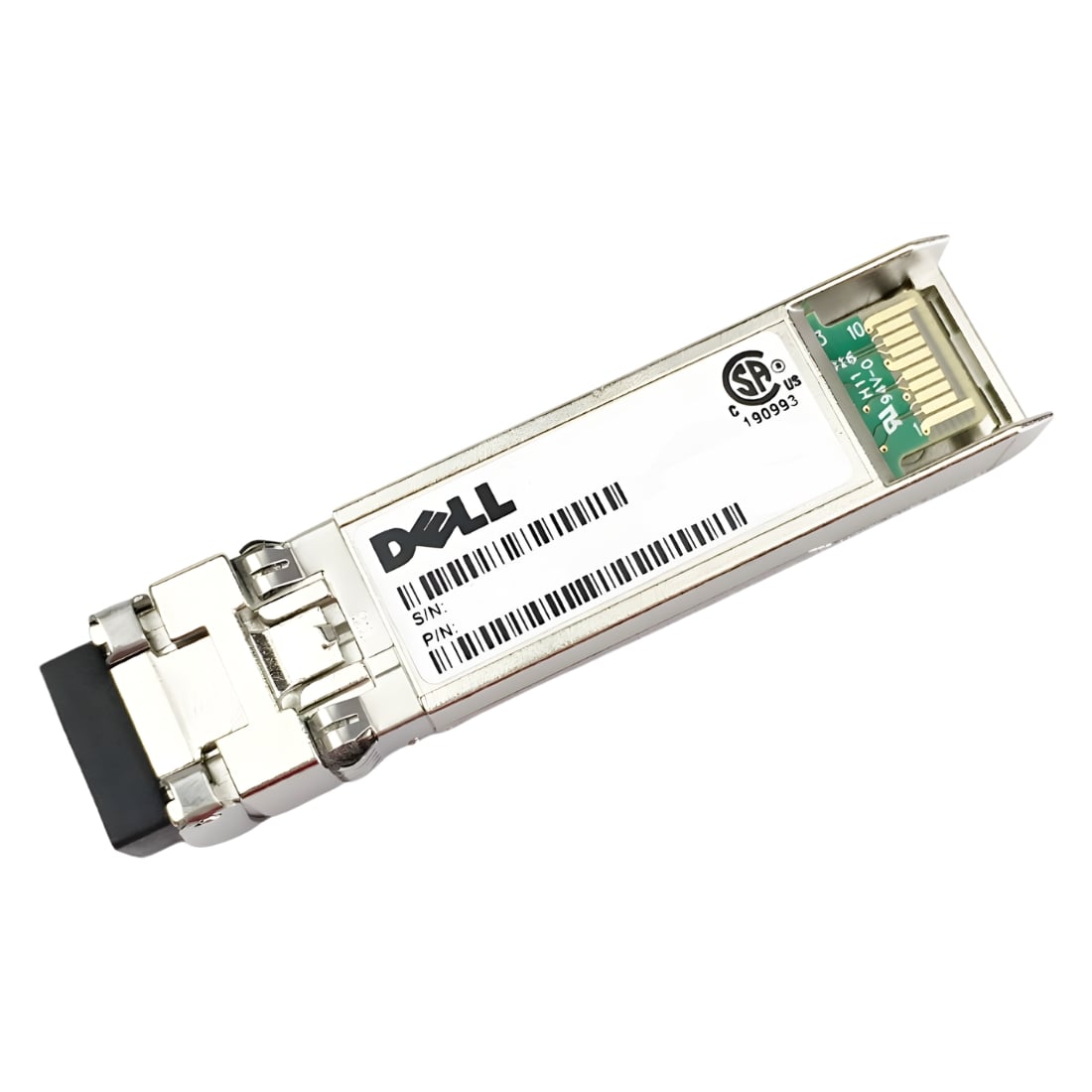
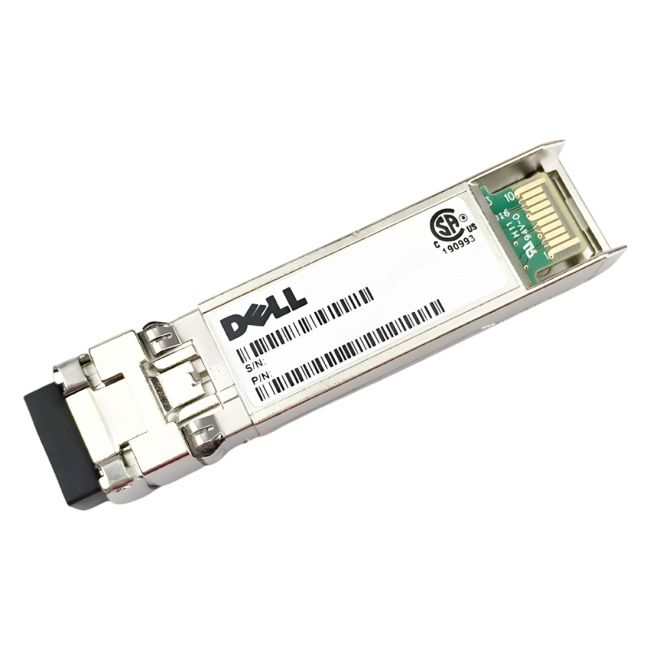
The Dell 25GbE SFP28 SR 850nm Short-Wavelength Optical Transceiver is a precision-engineered module designed to deliver reliable 25 Gigabit Ethernet connectivity over short distances. It leverages VCSEL technology at an 850nm wavelength to maximize performance on multimode fiber with LC Duplex connectors, offering efficient, low-latency data transmission suitable for high-density network environments. |
General Information |
|
|---|---|
| Brand | Dell |
| Part Number | FTLF8536P4BNL-E5 |
Technical Information |
|
|---|---|
| Form Factor | SFP28 |
| Media | MMF |
| Type | VCSEL |
| Protocols | 25GbE,25GBASE-SR |
| Connector | LC Duplex |
| DOM Support | Yes |
Physical Characteristics |
|
|---|---|
| Weight | 3.00 |
| Condition | Refurbished |
Product Description |
|---|
The FTLF8536P4BNL-E5 is a short-wavelength optical transceiver built for 25GbE data transmission over multimode fiber. Commonly found in data centers and enterprise networks, this module enables high-speed connectivity with compact SFP28 packaging. Network engineers and IT professionals rely on these transceivers to enhance bandwidth while maintaining compatibility with existing fiber infrastructure. Key Features
This transceiver plays a crucial role in maintaining fast, stable connections within dense network environments. Its reliable performance helps minimize downtime and supports seamless scaling of network capacity as demands grow. |
Use Cases |
|---|
This transceiver is commonly deployed in data centers, enterprise campus networks, and server farms where short-range, high-speed connectivity is essential. It benefits network administrators and IT professionals who require scalable and reliable fiber optic links between switches, servers, and storage arrays. How It's Used:
By integrating this transceiver, organizations can enhance operational efficiency with scalable bandwidth capacity and maintain high-performance network infrastructures that meet evolving data demands. |
 Shipping Options
 International Delivery
Requires a UPS, FedEx, or DHL account. Customers may arrange pickup from our US warehouse.
International Delivery
Requires a UPS, FedEx, or DHL account. Customers may arrange pickup from our US warehouse.
 Payment Methods
We accept Visa, Mastercard, AMEX, Discover, and Wire Transfer.
Payment Methods
We accept Visa, Mastercard, AMEX, Discover, and Wire Transfer.
 Purchase Orders
We process purchase orders for government agencies, enterprises, data centers, and SMBs.
Purchase Orders
We process purchase orders for government agencies, enterprises, data centers, and SMBs.